Want to be in the loop?
subscribe to
our notification
Business News
HANJIN SHIPPING GLOBAL CEASES OPERATIONS IN VN
The ministry recommended businesses to quickly complete procedures to receive imported goods at the ports and take them out of the Hanjin containers. With regard to export goods which were already inside the firm’s containers, the ministry asked businesses to get back the goods as soon as possible and contact their foreign partners to find ways to change to other shipping firms and to organise the goods booking schedule.
Those batches of goods that had already been shipped, the businesses were told to keep in touch with the Hanjin representative office in Viet Nam to keep track of the itinerary and co-ordinate with their foreign partners to ensure the goods were received at the ports on time.
The ministry, in co-ordination with the Ministry of Transport, said it would direct the ports to support businesses to ship and receive goods to avoid affecting the businesses’ schedule and traffic congestion at the sea ports.
According to the Associated Press (AP), Hanjin, the world’s seventh-largest container shipping company, filed for bankruptcy protection on August 31 and stopped accepting new cargo. With its assets being frozen, ships from China to Canada were refused to offload or take aboard containers because there were no guarantees that tugboat pilots or stevedores would be paid. This also led to a rise in shipping rates and could also hurt some trucking firms with contracts to pick up goods from Hanjin ships.
The South Korean giant represents nearly 8 per cent of the Trans-Pacific trade volume for the US market. While some retailers may already be hit with their merchandise for the holiday season getting delayed, experts say it is important for the issue to be resolved before the critical shipping month of October.
Regarding the bankruptcy of Hanjin Trần Thanh Hải deputy head of Import-Export Department of the Ministry of Industry and Trade (MIC) said the ministry has worked with authorised agencies to assist Vietnamese exporters after Hanjin Shipping Global stops operations in Viet Nam.
Hai said Hanjin accounted for 5 per cent of logistics market in Việt Nam. Therefore, industries with large volume of export such as garment, footwear, timber or fisheries would be affected by the bankruptcy.
To solve this problem, the Ministry of Industry and Trade announced on its website for those who have to change their shippers. The ministry will work with Ministry of Transport and port authorities to offer inventive for containers influenced by the bankruptcy.
Nguyá»…n Việt Hòa, CEO of Vietnam Container Corporation (Viconship) said the impact to Viconship was negligible. Hanjin just entered the Viconship’s Green Port for the last 3 to 4 months.
Hòa said in the last four months, Hanjin maintained only one ship every week and made a contribution of around 3 per cent and 5 per cent of revenue.
Currently, Hanjin owes a debt of about US$100,000 to Viconship. However, Viconship was holding 500 to 700 containers worth more than $1 million.
Äá»— Văn Minh, General Director of Gemadept JSC said his company did not suffer from the "incident" of Hanjin. At the moment, Gemadept did not work with this container shipping company.
In Việt Nam, Hanjin is the first container shipping company invested in domestic port market. Hanjin contributed its capital to Tân Cảng – Cái Mép International Terminal Joint Venture. Tân Cảng – Cái Mép International Terminal is a joint venture by Saigon Newport Company and 3 foreign partners including Hanjin Shipping Line (Korea), MOL (Japan) and Wanhai Line (Taiwan).
Source: VGP
Related News

MEMBER CORNER / PROMOTIONS
SENTRYSAFE CHW20201 - EFFECTIVE WATER RESISTANCE, MAXIMUM PROTECTION
In unexpected flooding situations, the most important thing is to keep your valuables dry and intact. SentrySafe CHW20201 is specially designed with superior water-resistant capabilities, helping protect documents, cash, and important belongings even when fully submerged. Proven in real testing: After water submersion, the documents inside remain dry - undamaged.

MEMBER CORNER / PROMOTIONS
AN ELECTRIFYING NIGHT WITH THE "QUEEN OF DANCE" THU MINH AT THE GRAND HO TRAM!
The stage at The Grand Ballroom is set to catch fire as Vietnam’s undisputed "Queen of Dance," Thu Minh, takes the spotlight. Renowned for her powerhouse vocals, magnetic stage presence, and sultry, high-energy performances, Thu Minh promises an evening of pure musical euphoria. The energy escalates with an exclusive appearance by special guest and The Voice champion, Vu Thao My.

HR / LABOUR/ EMPLOYMENT
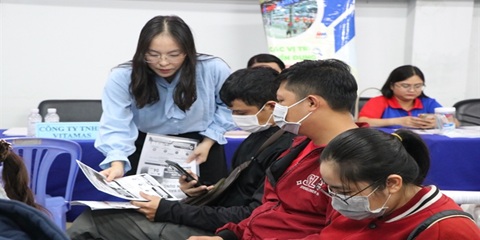
HIGH-QUALITY HUMAN RESOURCES NEEDED TO ATTRACT NEW TECH INVESTMENT CAPITAL
Besides infrastructure, Việt Nam must also rapidly develop a highly skilled workforce to attract investment in AI, semiconductors and advanced manufacturing, experts have said. Don Lam, CEO and co-founder of investment management company VinaCapital, said that global technology investors were increasingly looking at the readiness of the entire ecosystem, with high-quality human resources a decisive factor.
HR / LABOUR/ EMPLOYMENT
HIRING OUTLOOK STRENGTHENS IN Q4 AS SKILLS SHORTAGES PERSIST
Hiring intentions among employers in Việt Nam strengthened in the fourth quarter, with 52 per cent of surveyed companies planning to increase headcount between October and December, according to a ManpowerGroup survey released this week. Việt Nam's hiring outlook was stronger than the Asia Pacific and Middle East (APME) regional average of 33 per cent and the global average of 29 per cent, ranking third in the region and 11th globally among 42 markets surveyed.
BANKING / FINANCE / INSURANCE / TAX
LARGE BANKS FORECAST TO GAIN HIGHER PROFITABILITY IN H2 2026
The return on average assets (ROAA) of the banking sector will likely remain stable at around 1.5 per cent in the second half of 2026, but profitability divergence among banks will increase, with large banks outperforming peers on stronger margins and diversified earnings, analysts forecast. In a recent report on the banking sector, analysts from the Vietnam Investors Service Rating said the sector’s ROAA rose by 10 basis points quarter-on-quarter to 1.51 per cent in the first half of this year, driven by net interest margin (NIM) improvements at some State-owned banks and large private banks.
GARMENT / TEXTILE
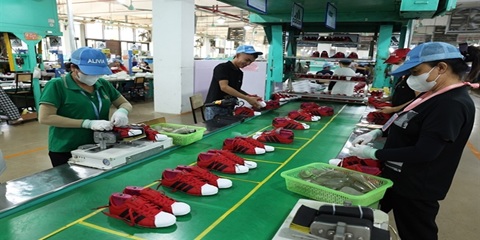
VIỆT NAM'S FOOTWEAR, BAG EXPORTS TO US TOP $8 BILLION IN EIGHT MONTHS
Việt Nam's exports of footwear and handbags to the US exceeded US$8 billion in the first eight months of 2026, as the US and EU remained the country's biggest markets despite sluggish growth in footwear shipments. Exports from Việt Nam's leather and footwear sector reached more than $2.45 billion in August, down 9 per cent from July but up 3 per cent from a year earlier, according to preliminary statistics.
Events Sponsors






















