Want to be in the loop?
subscribe to
our notification
Business News
GOVERNMENT EXTENDS VAT REDUCTION THROUGH 2024
The Government issued Decree 72/2024/ND-CP dated June 30, 2024 on the value-added tax (VAT) reduction as per Resolution 142/2024/QH15 dated June 29, 2024 of the lawmaking National Assembly.
Under the new decree, business facilities opting for the VAT discount method will enjoy a reduced VAT rate of 8% on eligible goods and services. Business entities, including business households and individual businesses, utilizing the revenue-based VAT calculation method will benefit from a 20% reduction in their VAT calculation percentage rate.
The VAT reduction applies to goods and services currently taxed at 10% VAT, with exceptions including telecommunications, financial and banking activities, securities, insurance, real estate, metals, mining products (excluding coal mining), coke, refined petroleum, certain chemicals as specified in Appendix I of the decree, products and services subject to special consumption tax listed in Appendix II, and information technology products and services outlined in Appendix III.
The VAT reduction for each type of goods and services is applied uniformly at all stages of import, production, processing and commercial trading. For sold coal products (including cases where coal is then screened and classified in a closed process before being sold) are subject to VAT reduction. Coal products included in Appendix I sold at stages other than the mining stage are not subject to VAT reduction.
Coal producers that apply a closed process before selling coal are also entitled to the VAT reduction on their coal sold.
In case goods and services listed in Appendices I, II and III are not subject to VAT or are subject to 5% VAT by the Law on VAT, they are governed by the Law on VAT and not subject to VAT reduction.
Decree 72/2024/ND-CP outlines specific protocols for VAT reduction. Businesses utilizing the VAT discount method must indicate "8%" on VAT rate lines, alongside the reduced VAT amount and the final payment due on invoices for eligible goods and services. Sellers declare reduced output VAT, while buyers declare input VAT based on these invoices.
For entities calculating VAT based on revenue percentages, invoices must reflect the original price of goods and services in the "Amount" column, with the reduced amount (after a 20% reduction) noted in the "Total amount" column. This adjustment is detailed as a 20% VAT reduction in compliance with Resolution 142/2024/QH15.
In addition, Decree 72/2024/ND-CP also clearly states: In case a business entity that uses the VAT discount method sells goods or provides services with different tax rates, it must clearly state the tax rate of each good sold and service provided on the VAT invoice. In case a business entity that calculates VAT on the percentage of revenue, it must clearly state the amount reduced on the goods sold or the services provided.
In case the business facility already made an invoice and declared the tax rate that has not been reduced as per this decree, the seller and buyer will handle the issued invoice according to laws on invoices and documents. Based on the handled invoice, the seller declares the revised output tax and the buyer declares the revised input tax (if any).
Decree 72/2024/ND-CP takes effect from July 1, 2024 to December 31, 2024.
Source: VCCI
Related News
VIETNAM ECONOMY INVESTMENT
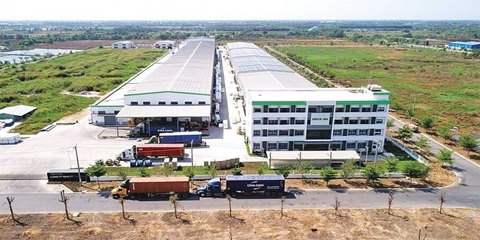
FOREIGN INVESTORS SEEKING A SYNCHRONISED MANUFACTURING ECOSYSTEM
Instead of focusing only on land costs and incentives as usual, foreign investors are seeking a synchronised manufacturing ecosystem, from stable power supply and logistics to shared infrastructure and the convenience of completing residence procedures for experts to serve their long-term investment in the country.
INFRASTRUCTURE / CONSTRUCTION / LOGISTIC / PORT
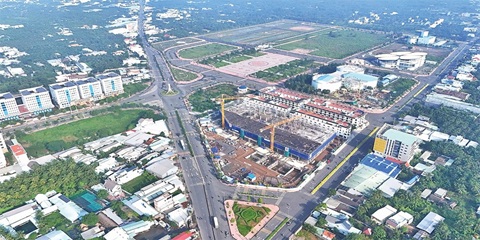
DONG THAP PROVINCE STEPS UP INDUSTRIAL EXPANSION AND INFRASTRUCTURE CONNECTIVITY
Accelerating public investment, strengthening inter-regional connectivity, and expanding industrial land are helping Dong Thap efficiently bolster competitiveness and drive economic growth. Following the 2025 merger of the former Dong Thap and Tien Giang provinces, the expanded Dong Thap province in the Mekong Delta faces mounting pressure to accelerate infrastructure development and strengthen connectivity among local economic zones, urban areas, industrial parks (IPs), and production centres.
PROPERTY / INDUSTRIAL ZONE
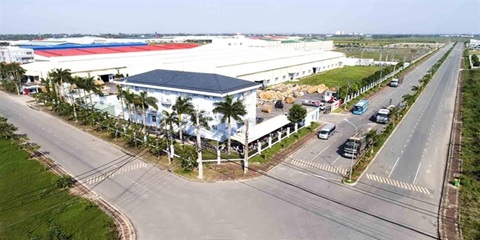
HCM CITY ATTRACTS US$5.7 BILLION INTO EXPORT PROCESSING AND INDUSTRIAL ZONES
HCM City attracted US$5.7 billion in domestic and foreign investment into its export processing and industrial zones during the first nine months of 2026. The figure exceeded the city's full-year target by 31 per cent, highlighting strong momentum in high-quality industrial investment under Resolution No.10-NQ/TW. Total investment reached 131 per cent of the 2026 target of $4.25 billion and represented a 29 per cent increase compared with the same period in 2025, according to the city's Export Processing and Industrial Zones Authority (HEPZA).

BANKING / FINANCE / INSURANCE / TAX
REMITTANCES TO HCM CITY RISE NEARLY 40% IN Q3
Remittances to HCM City reached more than US$2.83 billion in the third quarter of this year, up 39.5 per cent from the previous quarter and 3.6 per cent year-on-year. This was the first quarter showing positive annual growth this year, helping narrow the decline in remittance inflows over the first nine months. According to the State Bank of Vietnam (SBV)’s Regional Branch 2, remittances transferred to HCM City through credit institutions and economic organisations totalled $2.835 billion in Q3, an increase of more than $802 million from the previous quarter.

VIETNAM ECONOMY INVESTMENT
LOCALITIES REPORT BREAKTHROUGH RESULTS IN FDI IN FIRST NINE MONTHS
In Ho Chi Minh City, total registered capital reached $17.2 billion in the first nine months, up 4.2 times from the same period last year. The figure included more than $9.35 billion in newly registered capital and over $4.9 billion in additional capital for existing projects. Foreign investors also registered more than $2.9 billion through capital contributions and share purchases.

TECHNOLOGY
TECH SECTOR GROWTH OPENS UP OPPORTUNITIES FOR VIỆT NAM TO GO GLOBAL
The growth of the electronics, semiconductor and high-tech sectors worldwide is opening up a variety of opportunities for Vietnamese enterprises to integrate more deeply into the global supply chain. However, to become suppliers for these corporations, domestic enterprises must meet rigorous standards regarding quality, technology, productivity and order fulfilment capabilities.
Events Sponsors






















