Want to be in the loop?
subscribe to
our notification
Business News
REAL ESTATE BUSINESSES EXPAND INTEREST IN AVAILABLE LAND TO THRIVE IN 2025
Real estate companies are vigorously seeking available land to prepare for a new wave of investment in 2025.
The Ministry of Construction’s October report highlighted that legality, liquidity, and land use fees are the primary considerations for businesses selecting land investments. Recent market trends show that real estate firms are increasingly focused on developing land in preparation for the sector’s recovery.
Accordingly, companies are carefully formulating their plans to secure legally compliant, fully paid land projects that can be operational as soon as land rights are granted, the report said.
With limited supply, access to land resources has become not only a strategic objective for major corporations but also a critical lifeline for many real estate firms. To secure new land resources, businesses are employing a variety of approaches.
In the Mekong Delta province of Long An, Truong Son Real Estate Company and Him Lam Company formed a joint venture in September to develop a residential project in Duc Hoa district spanning over 215 hectares, with funding of $467 million. If approved, the project, which seeks to begin in 2026, will offer nearly 3,000 units, including town houses, villas, and social housing.
Meanwhile, Malaysian real estate giant SkyWorld has been actively pursuing new land opportunities in Vietnam. In the same month, SkyWorld Development Vietnam, acquired all 1.7 million shares of Thuan Thanh Real Estate Trade for $14.5 million. Thuan Thanh is the legal owner of a 2,000 sq.m plot in District 8 of Ho Chi Minh City.
Luong Tri Thin, chairman of Dat Xanh Group, also revealed plans to acquire 100-200ha of land nationwide with complete legal documentation for project development. “We aim to acquire and merge project land portfolios with the potential to meet real market needs. Our immediate focus is on legal, clean land in Binh Phuoc and Dong Nai provinces,” Thin said.
However, securing legally compliant land remains challenging. Rising land prices, intense competition, and legal risks are hurdles that businesses must navigate. With thorough preparation and flexible strategies, companies can overcome these difficulties and tap into promising investment opportunities.
Experts view this end-of-year push to expand land portfolios as a positive signal, reflecting an eagerness to gain a head start ahead of an anticipated market recovery next year.
According to Linh Tran, deputy director of Investment at Savills Vietnam, foreign interest in Vietnamese real estate has surged, bolstered by recent legal reforms. “The amended laws on land and real estate business have streamlined procedures, expanded real estate supply, and opened new avenues for foreign investors,” Tran said.
She added that the government’s efforts to refine the legal framework and stabilise the investment environment are expected to attract more foreign interest in the years ahead.
“For foreign investors entering Vietnam, projects with a clean legal status and ready for immediate execution are preferred. Therefore, businesses must restructure any projects failing to meet deadlines or profitability targets to align with their investment goals,” Tran explained.
Some companies are focusing on acquiring projects with financial challenges, while others seek partnerships with substantial landowners. Joint ventures, along with submissions of registration documents and project proposals in collaboration with local authorities, are also widely applied strategies, she added.
Source: VIR
Related News

CHARITY / EXHIBITION / OTHER EVENTS
INVESTMENT OPPORTUNITIES IN CA MAU PROVINCE: 96 PROJECTS AND 20 STRATEGIC PROJECTS
We are pleased to share with you information on investment projects currently seeking investors in Ca Mau Province. Should your esteemed company or association be interested, we kindly invite you to review the project information and complete the registration form via the links provided. The Ho Chi Minh City Investment and Trade Promotion Centre (ITPC) will consolidate the expressions of interest and facilitate connections with the leadership of Ca Mau Province at a meeting tentatively scheduled for 13 November 2026 in Ho Chi Minh City.

MEMBER CORNER / PROMOTIONS
BẰNG KIỀU LIVESHOW - A SYMPHONY OF LOVE UNDER THE GOLDEN GLOW
A masterclass in live music that takes the audience on a soulful journey through immortal love songs, guided by the peerless artistry and emotive storytelling of renowned singer Bằng Kiều. The highlight of the night is his seamless musical chemistry with special guest Triệu Hồng Ngọc, promising passionate and deeply resonant duets inside the magnificent Grand Ballroom.
INFRASTRUCTURE / CONSTRUCTION / LOGISTIC / PORT
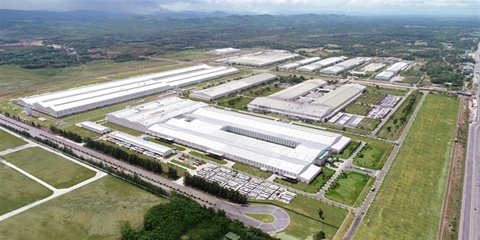
ĐÀ NẴNG GREEN-LIGHTS US$105 MILLION THAI DEVELOPMENT DEAL
The central city has approved an investment proposal by Thailand’s WHA Group to develop infrastructure for the 400ha WHA Đà Nẵng Industrial Park project on two communes of Thăng Bình and Đồng Dương, with an investment of more than VNĐ2.7 trillion (US$105 million). The city said it approved WHA Industrial Development International's status as an investor in the project, which is expected to take place between 2027 and 2034.
VIETNAM ECONOMY INVESTMENT
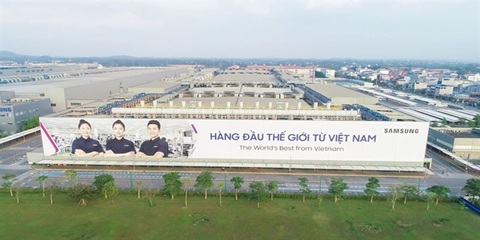
MOBILE PHONE EXPORTS RISE 20% TO $51.8 BILLION IN FIRST NINE MONTHS
Exports of mobile phones and components rose 20 per cent year-on-year to nearly US$51.8 billion in the first nine months of 2026, with China, the US and Republic of Korea accounting for more than half of the total. Shipments to the three markets reached a combined $26.18 billion, or 50.6 per cent of total exports of the product group during the period, according to data from the Vietnam Department of Customs under the Ministry of Finance.

INFRASTRUCTURE / CONSTRUCTION / LOGISTIC / PORT
VIỆT NAM-CAMBODIA TRADE GATHERS PACE TOWARDS $20 BILLION TARGET
Trade between Việt Nam and Cambodia continues to grow, remaining a bright spot and a key pillar of bilateral cooperation as the two countries aim to raise two-way trade to US$20 billion in the coming years. After setting a record of more than $11.3 billion last year, bilateral trade reached about $8.7 billion in the first eight months of this year, up 8.3 per cent year on year.
VIETNAM ECONOMY INVESTMENT
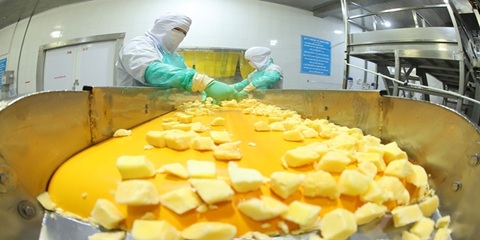
FRUIT AND VEGETABLE EXPORTS POISED TO HIT $10 BILLION IN 2026
Fruit and vegetable exports are on track to reach nearly US$10 billion in 2026, after rising 19.9 per cent year on year to nearly US$7.4 billion in the first nine months, driven by strong seasonal demand and abundant tropical fruit supplies. The Ministry of Agriculture and Environment said the growth reflected stronger international demand for fresh produce and processed agricultural products.
Events Sponsors






















