Want to be in the loop?
subscribe to
our notification
Business News
FREE TRADE AGREEMENTS GIVE VIỆT NAM’S EXPORTS POWERFUL BOOST
According to the Ministry of Industry and Trade, as of July this year, more than 1.2 million certificates of origin (C/Os) had been issued under various FTAs, covering exports worth nearly US$100 billion, equivalent to 28 per cent of Việt Nam’s total export value.
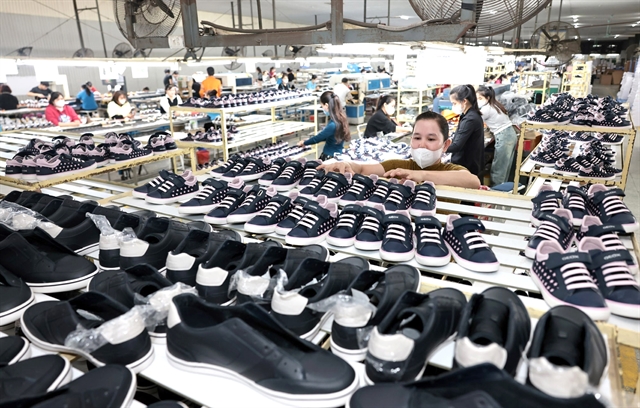
Shoes are key export goods from Việt Nam to the EU. Total two-way trade between Việt Nam and the EU from January 1995 to June 2026 surpassed US$900 billion. VNA/VNS Photo
HÀ NỘI — The effective use of new-generation free trade agreements (FTAs) has enabled Vietnamese businesses to expand into new markets, strengthen their competitiveness and integrate more deeply into global value chains.
According to the Ministry of Industry and Trade, as of July this year, more than 1.2 million certificates of origin (C/Os) had been issued under various FTAs, covering exports worth nearly US$100 billion, equivalent to 28 per cent of Việt Nam’s total export value.
The utilisation rate of FTA tariff preferences remains high, with some agreements, such as the EU-Việt Nam Free Trade Agreement (EVFTA), the ASEAN-India FTA, and the ASEAN-Australia-New Zealand FTA, recording rates of 30-50 per cent.
More than $383 billion generated in six years
Statistics from the Ministry of Finance show that total two-way trade between Việt Nam and the EU from January 1995 to June 2026 surpassed $900 billion.
Notably, $383.8 billion, or 42.6 per cent of the total, was generated during just the first six years of implementing the EVFTA from 2020 to 2026.
In the first half of this year alone, bilateral trade reached $41.4 billion, with Việt Nam exporting $31.8 billion to the bloc. The country posted a record trade surplus of $22 billion in the period, exceeding the $21.7 billion surplus recorded for the whole of 2019, before the EVFTA came into force.
According to a recent survey by the European Chamber of Commerce in Việt Nam (EuroCham), 50 per cent of EU businesses operating in Việt Nam reported benefiting directly from EVFTA tariff preferences, while 66 per cent said they had reduced costs by 5-30 per cent. Some European companies noted that more than 80 per cent of Vietnam-EU trade now qualifies for preferential tariffs, lowering product costs by 5-15 per cent and improving market competitiveness.
Beyond the EVFTA, many Vietnamese companies are also optimising other new-generation FTAs, including the Comprehensive and Progressive Agreement for Trans-Pacific Partnership (CPTPP), the Regional Comprehensive Economic Partnership (RCEP) and the Vietnam-Korea Free Trade Agreement (VKFTA), to diversify markets and deepen participation in global supply chains.
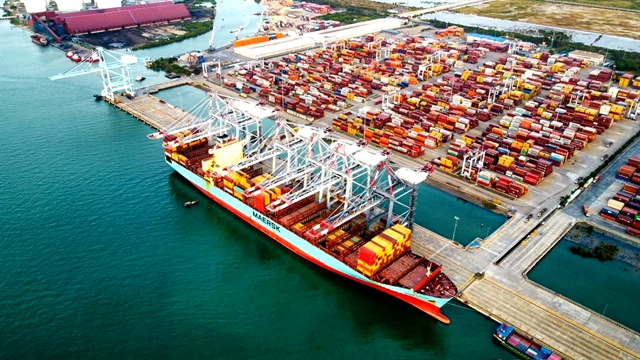
Cái Mép International Port. With preferential tariffs now available, Vietnamese companies could process products domestically and export them directly to Japan. Photo danviet.vn
Huỳnh Minh Tường, deputy general director of Bà Rịa - Vũng Tàu Seafood Processing And Import-Export JSC (BASEAFOOD), said that before the Vietnam-Japan FTA took effect, part of local seafood exports was shipped to China for processing before being re-exported to Japan. With preferential tariffs now available, Vietnamese companies could process products domestically and export them directly to Japan, significantly enhancing competitiveness. As a result, BASEAFOOD's exports to Japan had increased by 30-40 per cent.
Similarly, Minh Phu Seafood Corporation has used the CPTPP to expand shrimp exports to Canada, Japan and Australia, while Vinh Hoan Corporation has increased its Tra fish market share in Canada and other CPTPP members.
Lộc Trời Group has expanded rice exports to Asian markets, particularly China and ASEAN countries, by taking advantage of the CPTPP's flexible rules of origin and streamlined procedures. Vinamilk has utilised the VKFTA and ASEAN FTAs to boost dairy exports to the Republic of Korea, the Philippines, Singapore and other regional markets. Hòa Phát Group has increased steel exports across the Asia-Pacific while using regional raw materials to satisfy RCEP rules of origin. Meanwhile, Vinatex has secured more orders from Canada, Australia and New Zealand under the CPTPP and invested in an integrated fibre-weaving-dyeing supply chain to comply with origin requirements.
Considerable untapped potential remains
Assessing Việt Nam’s FTA performance, Nguyễn Lý Trường An, a trade expert at Long An University of Economics and Industry, said businesses' ability to utilise FTAs remained uneven.
Large enterprises with stronger management capacity, advanced technology and well-developed supply chains generally benefited more, while many small- and medium-sized ones continued to face difficulties accessing information, mobilising resources and meeting the stringent standards of export markets.
"The effectiveness of FTA utilisation depends heavily on business leaders' awareness and strategic vision," An said. "Some companies have achieved remarkable growth by proactively taking advantage of these agreements, while others have missed valuable opportunities despite having similar resources.”
"FTAs are not simply about tariff reductions; they are a catalyst for them to restructure production, enhance competitiveness, and integrate more deeply into global value chains," he noted.
From a broader perspective, Associate Professor Nguyễn Thường Lạng from the National Economics University’s Institute of Trade and International Economics, said FTAs were not only a powerful driver of exports but also an important catalyst for restructuring Việt Nam’s economy.
According to the expert, if Việt Nam fully capitalises on its FTA commitments, it will expand its development opportunities, attract higher-quality investment and become more appealing to international investors. At the same time, it will strengthen domestic production capacity and enhance the global standing of Vietnamese products.
“This is the key to creating new growth momentum at a time of intensifying international trade competition," he said. — VNA/VNS
Source: VNS
Related News
BANKING / FINANCE / INSURANCE / TAX
REMITTANCES TO HCM CITY RISE NEARLY 40% IN Q3
Remittances to HCM City reached more than US$2.83 billion in the third quarter of this year, up 39.5 per cent from the previous quarter and 3.6 per cent year-on-year. This was the first quarter showing positive annual growth this year, helping narrow the decline in remittance inflows over the first nine months. According to the State Bank of Vietnam (SBV)’s Regional Branch 2, remittances transferred to HCM City through credit institutions and economic organisations totalled $2.835 billion in Q3, an increase of more than $802 million from the previous quarter.
TECHNOLOGY
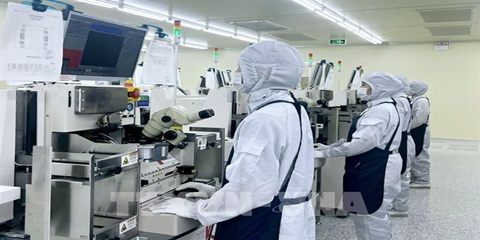
TECH SECTOR GROWTH OPENS UP OPPORTUNITIES FOR VIỆT NAM TO GO GLOBAL
The growth of the electronics, semiconductor and high-tech sectors worldwide is opening up a variety of opportunities for Vietnamese enterprises to integrate more deeply into the global supply chain. However, to become suppliers for these corporations, domestic enterprises must meet rigorous standards regarding quality, technology, productivity and order fulfilment capabilities.
VIETNAM ECONOMY INVESTMENT
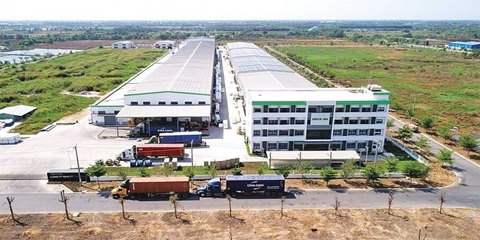
FOREIGN INVESTORS SEEKING A SYNCHRONISED MANUFACTURING ECOSYSTEM
Instead of focusing only on land costs and incentives as usual, foreign investors are seeking a synchronised manufacturing ecosystem, from stable power supply and logistics to shared infrastructure and the convenience of completing residence procedures for experts to serve their long-term investment in the country.

MEMBER CORNER / PROMOTIONS
SENTRYSAFE FHW40200 – PROTECT YOUR VALUABLES, ENJOY PEACE OF MIND!
Looking for a reliable solution to protect your important documents, cash, and valuables from fire and water damage? Genuine SENTRYSAFE - Reliable protection for your valuables and peace of mind! Contact Sen Wai Vietnam for more information and personalized product recommendations.
PROPERTY / INDUSTRIAL ZONE
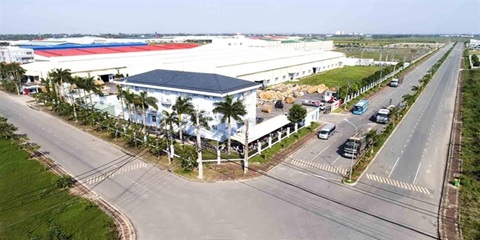
HCM CITY ATTRACTS US$5.7 BILLION INTO EXPORT PROCESSING AND INDUSTRIAL ZONES
HCM City attracted US$5.7 billion in domestic and foreign investment into its export processing and industrial zones during the first nine months of 2026. The figure exceeded the city's full-year target by 31 per cent, highlighting strong momentum in high-quality industrial investment under Resolution No.10-NQ/TW. Total investment reached 131 per cent of the 2026 target of $4.25 billion and represented a 29 per cent increase compared with the same period in 2025, according to the city's Export Processing and Industrial Zones Authority (HEPZA).
INFRASTRUCTURE / CONSTRUCTION / LOGISTIC / PORT
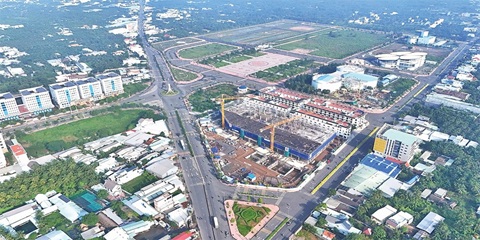
DONG THAP PROVINCE STEPS UP INDUSTRIAL EXPANSION AND INFRASTRUCTURE CONNECTIVITY
Accelerating public investment, strengthening inter-regional connectivity, and expanding industrial land are helping Dong Thap efficiently bolster competitiveness and drive economic growth. Following the 2025 merger of the former Dong Thap and Tien Giang provinces, the expanded Dong Thap province in the Mekong Delta faces mounting pressure to accelerate infrastructure development and strengthen connectivity among local economic zones, urban areas, industrial parks (IPs), and production centres.
Events Sponsors






















