Want to be in the loop?
subscribe to
our notification
Business News
EXPERTS SEE PROPERTY MARKET UNTURN IN RUN-UP TO TET
The HCM City real estate market will be positive from now until the Lunar New Year in early 2019, according to HCM City Real Estate Association (HoREA). The year-end is usually the time when Vietnamese buy property.
HoREA expected the low- and medium-priced segments to grow strongly and retain their role as the drivers of the market.
It also forecast the start of a new trend, smart buildings.
Talking about land, Le Hoang Chau, the chairman of the association, said prices would fall back to their real value.
Authorities would crack down on land parcels that have been illegally divided, he said.
HoREA said the condotel segment would plateau and new regulations would be passed to manage the condotel, hometel, officetel, serviced apartment, and shophouse segments to ensure the rights of buyers.
In the first half of this year the HCM City property market saw a downtrend.
Supply of condominiums fell by 44.5 per cent and there was an imbalance between the high-end and low-end condo segments, it said.
The number of M&A deals also fell with only six out of 15 proposals getting approval from authorities.
The association advised property developers to be well-prepared before seeking banking credit.
But they should know that the State Bank of Viet Nam would tighten credit at the beginning of next year, it said.
It urged them to focus on small-sized condos costing around VND1 billion (US$43,800), saying it would be the key segment.
It also suggested tie-ups with foreign investors.
More foreigners to buy housing
The number of foreigners buying condos in the city has surged in recent year, with many projects reaching the maximum level permitted by the law of 30 per cent.
For instance, many new projects in the Phu My Hung City Centre in District 7 attracted foreign buyers in droves.
The company has to strictly control secondary market sales to ensure the 30 per cent cap holds.
A similar situation can also be seen in District 2, where many foreigners live.
One person who wanted to sell his condo in District 2 to a foreigner could not do so because the developer said that would breach the 30 per cent limit.
Song Hai, a broker in District 2, said a large number of foreigners have bought housing there, with many projects selling 30 per cent to them.
Foreigners who want to buy should wait for the other foreigner to re-sell, he added.
Viet Nam News spoke with many developers, all of whom merely said there has been an increase in the number of foreigner customers without revealing the exact figure.
Nguyen Xuan Quang, chairman of major developer Nam Long Investment Joint Stock Company, told Viet Nam News that many foreign investors have bought condos in recent times.
Foreign investors recognise the potential of the market and realise their return would be higher than the bank interest rates in their countries, he explained.
Nguyen Loc Hanh, deputy marketing director of Danh Khoi Real Estate Company, was quoted as saying by vnexpress.net that the 30 per cent cap has been reached mostly in the east of the city, especially in projects with less than 500 apartments.
He attributed foreigners’ interest to the cheaper prices in HMC City than places like Hong Kong, Singapore, Taiwan, and South Korea.
Experts said the interest would remain strong since foreign investors often have long-term strategies.
Besides, the HCM City market remains highly promising, they said.
Source: VIR
Related News

CHARITY / EXHIBITION / OTHER EVENTS
INVESTMENT OPPORTUNITIES IN CA MAU PROVINCE: 96 PROJECTS AND 20 STRATEGIC PROJECTS
We are pleased to share with you information on investment projects currently seeking investors in Ca Mau Province. Should your esteemed company or association be interested, we kindly invite you to review the project information and complete the registration form via the links provided. The Ho Chi Minh City Investment and Trade Promotion Centre (ITPC) will consolidate the expressions of interest and facilitate connections with the leadership of Ca Mau Province at a meeting tentatively scheduled for 13 November 2026 in Ho Chi Minh City.

MEMBER CORNER / PROMOTIONS
BẰNG KIỀU LIVESHOW - A SYMPHONY OF LOVE UNDER THE GOLDEN GLOW
A masterclass in live music that takes the audience on a soulful journey through immortal love songs, guided by the peerless artistry and emotive storytelling of renowned singer Bằng Kiều. The highlight of the night is his seamless musical chemistry with special guest Triệu Hồng Ngọc, promising passionate and deeply resonant duets inside the magnificent Grand Ballroom.
INFRASTRUCTURE / CONSTRUCTION / LOGISTIC / PORT
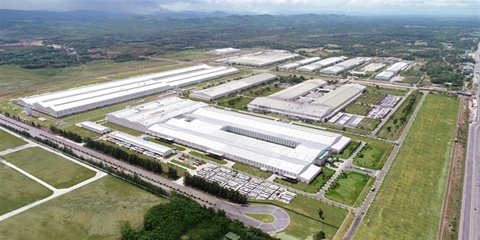
ĐÀ NẴNG GREEN-LIGHTS US$105 MILLION THAI DEVELOPMENT DEAL
The central city has approved an investment proposal by Thailand’s WHA Group to develop infrastructure for the 400ha WHA Đà Nẵng Industrial Park project on two communes of Thăng Bình and Đồng Dương, with an investment of more than VNĐ2.7 trillion (US$105 million). The city said it approved WHA Industrial Development International's status as an investor in the project, which is expected to take place between 2027 and 2034.
VIETNAM ECONOMY INVESTMENT
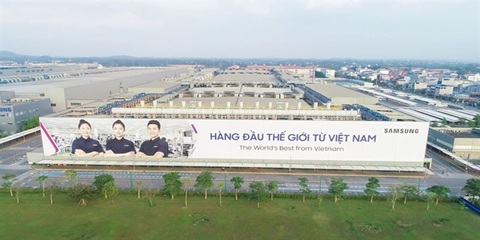
MOBILE PHONE EXPORTS RISE 20% TO $51.8 BILLION IN FIRST NINE MONTHS
Exports of mobile phones and components rose 20 per cent year-on-year to nearly US$51.8 billion in the first nine months of 2026, with China, the US and Republic of Korea accounting for more than half of the total. Shipments to the three markets reached a combined $26.18 billion, or 50.6 per cent of total exports of the product group during the period, according to data from the Vietnam Department of Customs under the Ministry of Finance.
INFRASTRUCTURE / CONSTRUCTION / LOGISTIC / PORT
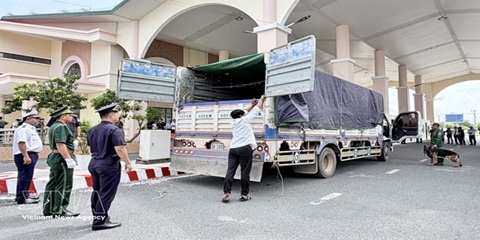
VIỆT NAM-CAMBODIA TRADE GATHERS PACE TOWARDS $20 BILLION TARGET
Trade between Việt Nam and Cambodia continues to grow, remaining a bright spot and a key pillar of bilateral cooperation as the two countries aim to raise two-way trade to US$20 billion in the coming years. After setting a record of more than $11.3 billion last year, bilateral trade reached about $8.7 billion in the first eight months of this year, up 8.3 per cent year on year.
VIETNAM ECONOMY INVESTMENT
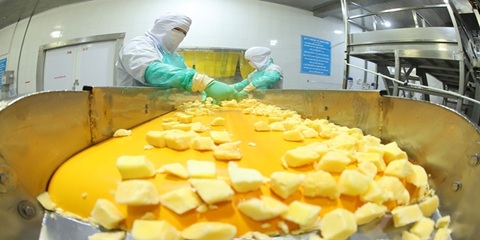
FRUIT AND VEGETABLE EXPORTS POISED TO HIT $10 BILLION IN 2026
Fruit and vegetable exports are on track to reach nearly US$10 billion in 2026, after rising 19.9 per cent year on year to nearly US$7.4 billion in the first nine months, driven by strong seasonal demand and abundant tropical fruit supplies. The Ministry of Agriculture and Environment said the growth reflected stronger international demand for fresh produce and processed agricultural products.
Events Sponsors






















