Want to be in the loop?
subscribe to
our notification
Business News
CROSS-BORDER E-COMMERCE TO BE BOOSTED
Commodities export through cross-border sites is expected to create booming development for Vietnam’s e-commerce business.
Lai Viet Anh, deputy director general of the Vietnam E-commerce and Digital Economy Agency under the Ministry of Industry and Trade (MoIT), revealed that cross-border e-commerce comprises about 20-25 per cent of global e-commerce value.
Anh made the remark at an online workshop on developing e-commerce organised by the government's news portal on August 14.
As Vietnam is an export-oriented economy with abounding potential for the development of textile apparel, footwear, rice and agricultural products, the room for cross-border e-commerce development proves enormous, Anh added.
This is mirrored through the fact that the export revenue through cross-border e-commerce platforms, which approximated $3.3 billion in 2022, is anticipated to surpass $11 billion in 2027.
However, reaching this goal requires a slew of consistent measures from both state management agencies, businesses, and local people in promoting commodities export via e-commerce platforms.
Anh explained that the ministry is about to submit the government the country’s e-commerce development master plan for the next five years, in which e-commerce aims to bring Vietnamese export items to the global markets, particularly supporting small- and medium-sized enterprises and producers to sell globally.
“Digital technology application and digital transformation is crucial in e-commerce," Anh said. "The customers can easily trace product origin, geographical indication, ensuring the products meet requirements on environmental protection. These issues need to be tacked through digitalisation, applicable to every stage in production to ensure the competitiveness of Vietnamese-made products in the global markets,” said Anh.
Tran Minh Tuan, director general of Digital Economy and Digital Society under the Ministry of Information and Communications, said that transboundary e-commerce now eyes huge potential for development.
"Vietnam’s tech firms have now established diverse business-to-business e-commerce platforms to connect with global e-commerce sites such as Amazon, Alibaba, or Timo to grow the presence of Vietnamese products on global marketplaces, directly linking buyers to sellers as well as producers," Tuan said.
Currently, the MoIT is working with major e-commerce sites at home and abroad to boost the sale of domestically made items, particularly agricultural produce.
Tran Tuan Anh, managing director of Shopee Vietnam, revealed that the site is helping more local firms to expand global reach, particularly to markets in Southeast Asia in the near term.
“We aim to reach the target that from now to the end of 2024 to bring the products of a thousand local businesses to regional markets leveraging e-commerce advantages. In the near future, the figure is expected to reach tens of thousands firms,” said Tuan Anh.
Figures by the MoIT show that the total revenue from e-commerce reached an estimated $13.2 billion in the first six months of 2024, up 28 per cent on-year.
During the period, the total revenue from the five top e-commerce sites in Vietnam - Shopee, Lazada, Tiki, Sendo, and TikTok - approximated $6.5 billion, according to data platform Metric.
Source: VIR
Related News
VIETNAM ECONOMY INVESTMENT
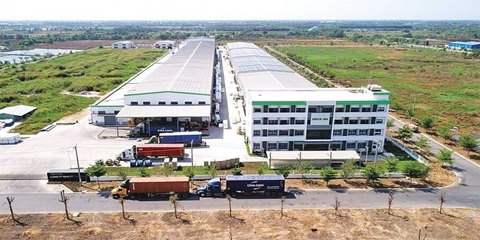
FOREIGN INVESTORS SEEKING A SYNCHRONISED MANUFACTURING ECOSYSTEM
Instead of focusing only on land costs and incentives as usual, foreign investors are seeking a synchronised manufacturing ecosystem, from stable power supply and logistics to shared infrastructure and the convenience of completing residence procedures for experts to serve their long-term investment in the country.
INFRASTRUCTURE / CONSTRUCTION / LOGISTIC / PORT
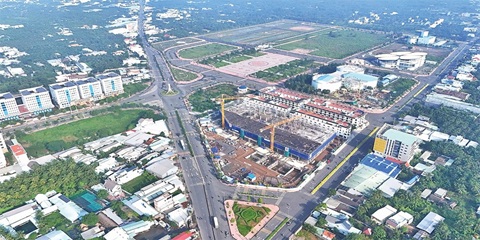
DONG THAP PROVINCE STEPS UP INDUSTRIAL EXPANSION AND INFRASTRUCTURE CONNECTIVITY
Accelerating public investment, strengthening inter-regional connectivity, and expanding industrial land are helping Dong Thap efficiently bolster competitiveness and drive economic growth. Following the 2025 merger of the former Dong Thap and Tien Giang provinces, the expanded Dong Thap province in the Mekong Delta faces mounting pressure to accelerate infrastructure development and strengthen connectivity among local economic zones, urban areas, industrial parks (IPs), and production centres.
PROPERTY / INDUSTRIAL ZONE
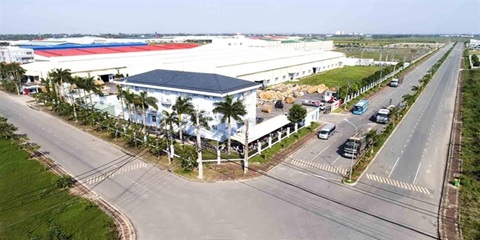
HCM CITY ATTRACTS US$5.7 BILLION INTO EXPORT PROCESSING AND INDUSTRIAL ZONES
HCM City attracted US$5.7 billion in domestic and foreign investment into its export processing and industrial zones during the first nine months of 2026. The figure exceeded the city's full-year target by 31 per cent, highlighting strong momentum in high-quality industrial investment under Resolution No.10-NQ/TW. Total investment reached 131 per cent of the 2026 target of $4.25 billion and represented a 29 per cent increase compared with the same period in 2025, according to the city's Export Processing and Industrial Zones Authority (HEPZA).

BANKING / FINANCE / INSURANCE / TAX
REMITTANCES TO HCM CITY RISE NEARLY 40% IN Q3
Remittances to HCM City reached more than US$2.83 billion in the third quarter of this year, up 39.5 per cent from the previous quarter and 3.6 per cent year-on-year. This was the first quarter showing positive annual growth this year, helping narrow the decline in remittance inflows over the first nine months. According to the State Bank of Vietnam (SBV)’s Regional Branch 2, remittances transferred to HCM City through credit institutions and economic organisations totalled $2.835 billion in Q3, an increase of more than $802 million from the previous quarter.

VIETNAM ECONOMY INVESTMENT
LOCALITIES REPORT BREAKTHROUGH RESULTS IN FDI IN FIRST NINE MONTHS
In Ho Chi Minh City, total registered capital reached $17.2 billion in the first nine months, up 4.2 times from the same period last year. The figure included more than $9.35 billion in newly registered capital and over $4.9 billion in additional capital for existing projects. Foreign investors also registered more than $2.9 billion through capital contributions and share purchases.

TECHNOLOGY
TECH SECTOR GROWTH OPENS UP OPPORTUNITIES FOR VIỆT NAM TO GO GLOBAL
The growth of the electronics, semiconductor and high-tech sectors worldwide is opening up a variety of opportunities for Vietnamese enterprises to integrate more deeply into the global supply chain. However, to become suppliers for these corporations, domestic enterprises must meet rigorous standards regarding quality, technology, productivity and order fulfilment capabilities.
Events Sponsors






















