Want to be in the loop?
subscribe to
our notification
Business News
CORPORATE GOVERNANCE KEY TO ATTRACTING INTERNATIONAL INVESTMENT
Strengthening corporate governance (CG) standards has become essential for building investor confidence, particularly as environmental, social and governance (ESG) principles gain global prominence.
Robust CG practices are recognised by market insiders not only for enhancing the value of Vietnamese businesses, but also for fostering a transparent and stable business environment, thereby attracting sustainable capital from both domestic and international investors.
Corporate governance, as the governance component of ESG, is increasingly regarded as a key measure of a company’s competitiveness and its ability to gain trust from markets and partners. It also serves as a vital tool to assess businesses' commitment to managing environmental and social impacts, while ensuring transparency and accountability in the pursuit of sustainable development goals.
Research by McKinsey and the World Bank indicates that companies with strong governance are valued 10–20 per cent higher and enjoy 10–15 per cent lower capital costs when raising funds.
These figures underscore the long-term value that effective governance delivers, not only for businesses but also for broader community growth.
At a recent forum in HCM City focused on attracting responsible investors, Vũ Quang Thịnh, CEO of Dynam Capital, highlighted a significant shift in global investment trends over the past two decades.
"The responsible investment market is currently valued at US$158 trillion and improving corporate governance has become a top priority for investors looking to mitigate risks,” Thịnh said.
Despite these advantages, corporate governance standards in Việt Nam remain among the lowest in ASEAN, according to the ASEAN Corporate Governance Scorecard (ACGS). The Vietnam Institute of Directors (VIOD) has stressed the urgent need for targeted initiatives to elevate governance standards and strengthen investor trust.
In response, VIOD launched the 'VNCG50' Corporate Governance Scorecard, a framework adapted from the ACGS but tailored to Việt Nam’s unique circumstances. This initiative aims to help leading companies adopt best practices in governance, contributing to the overall improvement of national CG standards.
Chairwoman of VIOD, Hà Thu Thanh, said that CG was not only crucial for attracting investment but also one of the seven pillars of corporate competitiveness. Senior leaders, particularly board chairs, would play a decisive role in guiding companies to embrace the highest standards of governance, including ESG principles.
Governance’s role in upgrading market status
At a recent conference on "Enhancing Corporate Governance Capacity for Listed Companies", Vũ Thị Chân Phương, Chairwoman of the State Securities Commission (SSC), emphasised the pivotal role of CG in boosting business efficiency.
Phương noted that strong CG practices would reduce capital costs, enhance enterprise value and improve market credibility.
The SSC views enhanced governance as a cornerstone for upgrading Việt Nam’s stock market from frontier to emerging market status, according to Phương. Achieving this milestone requires companies to adhere to stricter financial reporting and governance standards that meet international investor expectations.
Compliance with such standards not only strengthens investor confidence but also mitigates risks of misinformation and fraud, enhances stock liquidity and attracts foreign capital.
Chairman of FPT Group, Trương Gia Bình, shared insights into how his company leveraged information technology, green transformation and artificial intelligence to improve governance.
“Effective governance requires the use of technology to optimise management processes while meeting increasingly stringent global investor demands,” Bình explained.
FPT employs a real-time data-driven governance system, enabling swift and precise decision-making. In 2023, the group implemented 42 internal digital transformation projects, saving VNĐ617 billion (US$24 million) in costs.
Centralised data management has optimised operational efficiency, enhanced employee and customer experiences and fostered sustainable growth, according to Bình. Most of FPT’s governance and operational activities have been digitised, ranging from task assignments to invoice processing and internal management.
In 2023, the company processed over 100,000 electronic contracts, representing 39 per cent of its total contracts, a 6.6 per cent increase from 2022. These efforts reaffirm FPT’s position as a pioneer in digital transformation in Việt Nam.
Source: VNS
Related News

BANKING / FINANCE / INSURANCE / TAX
REMITTANCES TO HCM CITY RISE NEARLY 40% IN Q3
Remittances to HCM City reached more than US$2.83 billion in the third quarter of this year, up 39.5 per cent from the previous quarter and 3.6 per cent year-on-year. This was the first quarter showing positive annual growth this year, helping narrow the decline in remittance inflows over the first nine months. According to the State Bank of Vietnam (SBV)’s Regional Branch 2, remittances transferred to HCM City through credit institutions and economic organisations totalled $2.835 billion in Q3, an increase of more than $802 million from the previous quarter.

TECHNOLOGY
TECH SECTOR GROWTH OPENS UP OPPORTUNITIES FOR VIỆT NAM TO GO GLOBAL
The growth of the electronics, semiconductor and high-tech sectors worldwide is opening up a variety of opportunities for Vietnamese enterprises to integrate more deeply into the global supply chain. However, to become suppliers for these corporations, domestic enterprises must meet rigorous standards regarding quality, technology, productivity and order fulfilment capabilities.
VIETNAM ECONOMY INVESTMENT
FOREIGN INVESTORS SEEKING A SYNCHRONISED MANUFACTURING ECOSYSTEM
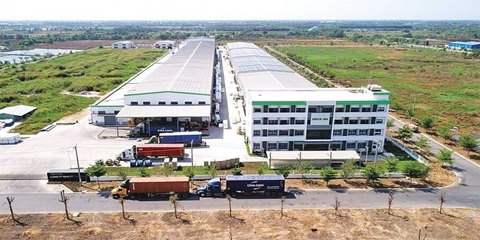
Instead of focusing only on land costs and incentives as usual, foreign investors are seeking a synchronised manufacturing ecosystem, from stable power supply and logistics to shared infrastructure and the convenience of completing residence procedures for experts to serve their long-term investment in the country.
MEMBER CORNER / PROMOTIONS
SENTRYSAFE FHW40200 – PROTECT YOUR VALUABLES, ENJOY PEACE OF MIND!
Looking for a reliable solution to protect your important documents, cash, and valuables from fire and water damage? Genuine SENTRYSAFE - Reliable protection for your valuables and peace of mind! Contact Sen Wai Vietnam for more information and personalized product recommendations.
PROPERTY / INDUSTRIAL ZONE
HCM CITY ATTRACTS US$5.7 BILLION INTO EXPORT PROCESSING AND INDUSTRIAL ZONES
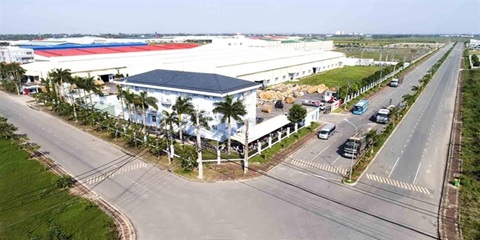
HCM City attracted US$5.7 billion in domestic and foreign investment into its export processing and industrial zones during the first nine months of 2026. The figure exceeded the city's full-year target by 31 per cent, highlighting strong momentum in high-quality industrial investment under Resolution No.10-NQ/TW. Total investment reached 131 per cent of the 2026 target of $4.25 billion and represented a 29 per cent increase compared with the same period in 2025, according to the city's Export Processing and Industrial Zones Authority (HEPZA).
INFRASTRUCTURE / CONSTRUCTION / LOGISTIC / PORT
DONG THAP PROVINCE STEPS UP INDUSTRIAL EXPANSION AND INFRASTRUCTURE CONNECTIVITY
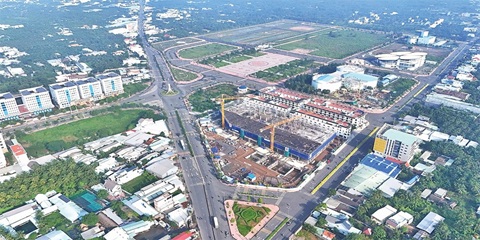
Accelerating public investment, strengthening inter-regional connectivity, and expanding industrial land are helping Dong Thap efficiently bolster competitiveness and drive economic growth. Following the 2025 merger of the former Dong Thap and Tien Giang provinces, the expanded Dong Thap province in the Mekong Delta faces mounting pressure to accelerate infrastructure development and strengthen connectivity among local economic zones, urban areas, industrial parks (IPs), and production centres.
Events Sponsors






















