Want to be in the loop?
subscribe to
our notification
Business News
AS BUSINESS CONDITIONS REFORM SLOWS, BUSINESSES FACE MORE RISKS
Business environment reform is tending to slow down, some fields are even creating additional barriers, causing more difficulties and increasing compliance costs for people and businesses, exposing businesses to more risks, according to the former Director of the Central Institute for Economic Management Nguyễn Đình Cung.
Heavier barriers in implementing investment projects
On international rankings, in terms of market efficiency, Việt Nam significantly increased its position on the Heritage Foundation's Economic Freedom Index, from 105th in 2020 to 90th in 2021, 84th in 2022 and 72nd in 2023.
According to the United Nations (UN), Việt Nam's Sustainable Development Goals Index (SDGs) has continuously increased over the years, to rank 55th in 2022. According to the ranking of the World Intellectual Property Organisation (WIPO), Việt Nam's global innovation index (GII) ranks 46th in 2023, up two places compared to 2022. The country's logistics efficiency is also recognised for quality improvement.
“Improving the business environment and enhancing national competitiveness are indispensable elements for the cause of socio-economic development, which have proven to be useful and effective during the past few government terms,” Cung told the Việt Nam Finance Magazine.
In addition, Cung said, barriers in implementing investment projects, which are somewhat heavier due to ineffective coordination, continue to impede investment and business activities and can lead to reduced business trust and motivation. There are also many other painful issues that businesses have complained of but there have been no practical changes.
Cung stressed that with the decline in growth drivers (in fields of export, consumption and investment), the economy in 2024 is forecast to not overcome difficulties. Therefore, achieving goals of the socio-economic development plan for the 2021-25 period and the 2021-30 strategic period becomes extremely challenging.
In that context, the need to reform institutions, improve the business and investment environment and enhance national competitiveness is becoming imperative.
Domestic policy stability offsets global policy fluctuations
Deputy Secretary General and Head of the Legal Department of the Việt Nam Confederation of Commerce and Industry (VCCI) Đậu Anh Tuấn said, in addition to business support policies, to create strong development momentum and continue to increase competitiveness, Government authorities need to carry out many solutions such as continuing to improve the quality of infrastructure and human resources, promoting domestic industrial production. In particular, it is necessary to focus on two main groups of solutions, including reducing business costs and reforming law enforcement.
According to Tuấn, VCCI's annual business survey on the Provincial Competitiveness Index shows that the stability and predictability of Việt Nam's laws are relatively low, in both the promulgation and implementation stages. The rate of businesses that "always" or "often" predict changes in legal regulations by the provincial government decreased from 16 per cent in 2014 to 5 per cent in 2021 and 3.42 per cent in 2022.
In 2023 and many years before, perfecting institutions and enhancing the quality of legal documents are issues of great concern to the National Assembly and the Government. In 2023, many major laws were amended and will be put into effect soon, such as the Land Law, Housing Law, Real Estate Business Law and Credit Institutions Law.
However, businesses still suggested some solutions to improve the quality and predictability of laws, such as increasing consultation and opinion gathering, especially for circulars, regulations and plans.
Regulations that expand the obligations of businesses need to have a longer implementation roadmap, instead of just 45 days as prescribed in the Law on Promulgation of Legal Documents. They also suggested the Government gradually abolish regulations on the duration of sublicences and apply risk management in business inspection and examination to reduce arbitrariness in law enforcement.
Businesses said that legal quality is very important, but along with that comes the need to ensure law enforcement. The directions and solutions recently issued by the Government's Resolution 2, if implemented with a good monitoring mechanism, will create a strong impetus for the economy in general and create favourable conditions for the business community in particular.
“Việt Nam can use domestic policy stability to compensate for global and financial instability. If we implement reform solutions in a real way, ensuring a safe environment for businesses will help them overcome immediate difficulties as well as accumulate resources for the long term," Cung added.
Source: VNS
Related News

BANKING / FINANCE / INSURANCE / TAX
REMITTANCES TO HCM CITY RISE NEARLY 40% IN Q3
Remittances to HCM City reached more than US$2.83 billion in the third quarter of this year, up 39.5 per cent from the previous quarter and 3.6 per cent year-on-year. This was the first quarter showing positive annual growth this year, helping narrow the decline in remittance inflows over the first nine months. According to the State Bank of Vietnam (SBV)’s Regional Branch 2, remittances transferred to HCM City through credit institutions and economic organisations totalled $2.835 billion in Q3, an increase of more than $802 million from the previous quarter.

TECHNOLOGY
TECH SECTOR GROWTH OPENS UP OPPORTUNITIES FOR VIỆT NAM TO GO GLOBAL
The growth of the electronics, semiconductor and high-tech sectors worldwide is opening up a variety of opportunities for Vietnamese enterprises to integrate more deeply into the global supply chain. However, to become suppliers for these corporations, domestic enterprises must meet rigorous standards regarding quality, technology, productivity and order fulfilment capabilities.
VIETNAM ECONOMY INVESTMENT
FOREIGN INVESTORS SEEKING A SYNCHRONISED MANUFACTURING ECOSYSTEM
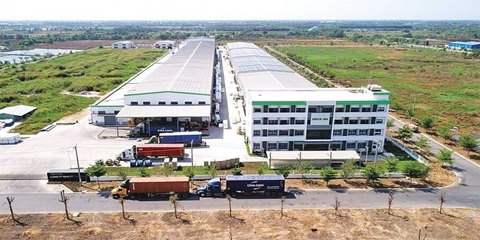
Instead of focusing only on land costs and incentives as usual, foreign investors are seeking a synchronised manufacturing ecosystem, from stable power supply and logistics to shared infrastructure and the convenience of completing residence procedures for experts to serve their long-term investment in the country.
MEMBER CORNER / PROMOTIONS
SENTRYSAFE FHW40200 – PROTECT YOUR VALUABLES, ENJOY PEACE OF MIND!
Looking for a reliable solution to protect your important documents, cash, and valuables from fire and water damage? Genuine SENTRYSAFE - Reliable protection for your valuables and peace of mind! Contact Sen Wai Vietnam for more information and personalized product recommendations.
PROPERTY / INDUSTRIAL ZONE
HCM CITY ATTRACTS US$5.7 BILLION INTO EXPORT PROCESSING AND INDUSTRIAL ZONES
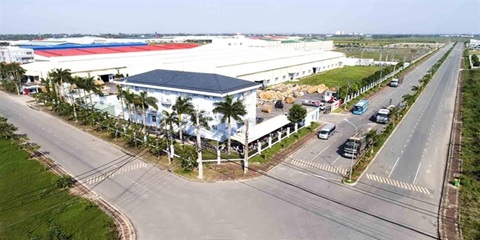
HCM City attracted US$5.7 billion in domestic and foreign investment into its export processing and industrial zones during the first nine months of 2026. The figure exceeded the city's full-year target by 31 per cent, highlighting strong momentum in high-quality industrial investment under Resolution No.10-NQ/TW. Total investment reached 131 per cent of the 2026 target of $4.25 billion and represented a 29 per cent increase compared with the same period in 2025, according to the city's Export Processing and Industrial Zones Authority (HEPZA).
INFRASTRUCTURE / CONSTRUCTION / LOGISTIC / PORT
DONG THAP PROVINCE STEPS UP INDUSTRIAL EXPANSION AND INFRASTRUCTURE CONNECTIVITY
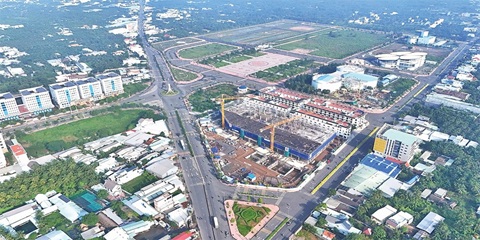
Accelerating public investment, strengthening inter-regional connectivity, and expanding industrial land are helping Dong Thap efficiently bolster competitiveness and drive economic growth. Following the 2025 merger of the former Dong Thap and Tien Giang provinces, the expanded Dong Thap province in the Mekong Delta faces mounting pressure to accelerate infrastructure development and strengthen connectivity among local economic zones, urban areas, industrial parks (IPs), and production centres.
Events Sponsors






















