Want to be in the loop?
subscribe to
our notification
Business News
AEC INTEGRATES LOGISTICS NETWORK
Logistics is a priority sector for ASEAN integration, and the Roadmap for the Integration of Logistics Services under the AEC makes firm commitments to liberalise ASEAN’s logistics sector including everything from cargo handling, storage, and warehousing, to courier services, customs clearance, and international freight.
As road freight is more cost-effective than air freight, and faster than ocean freight, DHL Global Forwarding has expanded its road freight network in ASEAN in anticipation of a boom in trade in the AEC in the years to come.
The firm first launched its road freight network in 2011 connecting Singapore, Malaysia, and Thailand, which now links to the existing Vietnam-China connection. Its latest integrated road freight network links all five countries and caters for the further expansion of trade and production networks across the region.
According to Blanc, Vietnam is an exciting country to be in right now – booming with investment especially in the hi-tech sector. It has a young workforce, and a reform-minded government. From a logistics provider’s perspective, the firm is particularly satisfied with the consistent alignment with international best practices.
“Vietnam is the only ASEAN country which has a truly paperless customs environment. All this has been done within a relatively short time frame. DHL will continue to work with the government on all aspects of customs and trade facilitation reforms,” he said.
Another foreign logistics firm, DB Schenker, has also witnessed an increasing volume following the establishment of the AEC. The last few months have been especially exciting for the firm, as it has received many enquiries from its international customer base about trade opportunities in the region, DB Schenker claims.
Christoph Matthes, managing director of DB Schenker in Vietnam, told VIR that the AEC is a critical enabler for the entire region because of the enormous market of over 600 million consumers. The ten member states have diverse economic profiles, and it will be interesting to see how the journey to full economic integration develops.
Indeed, the AEC is a great opportunity for Vietnam to expand its international trade prospects. Vietnam is located at the heart of the ASEAN region and is well positioned to enjoy the benefits of the single market and production base.
“To prepare ourselves, we will focus more and more on developing cross border logistics solutions. A good example is our Landbridge Asia road transport service where we take freight by truck to cross the borders of our neighboring countries,” he said, adding that, “We expect that the demand for this type of service will grow significantly in light of ASEAN’s substantial tariff reductions.”
DHL-VNPT Express is also uniquely set up for ASEAN with its newly expanded South Asia Hub in Singapore and another hub in Bangkok. Currently, the firm’s intra-regional Asia Air Network is one of its key strengths. DHL-VNPT Express says it benefits from having the fastest network intra Asia-Pacific, as the firm is the only service provider that can provide same-day uplift on its own aircraft for a next day delivery across most of the region.
According to George Berczely, the firm’s general director, participation in the AEC will give Vietnam more opportunities to attract foreign direct investment, expand its export markets, and help boost the capabilities of its logistics service providers through physical connectivity, such as hard infrastructure for transport within the regional network. However, it should also be noted that the AEC will undoubtedly intensify competition within the region.
“For us, the AEC brings about more opportunities than competitive challenges, and we are continuously investing to capitalise on these opportunities. We are seeing strong growth within ASEAN, which has been the trend for a few years now,” he said, adding that, “Our primary focus is the expansion our air network and ground network.”
DHL-VNPT Express has recently expanded its Saigon gateway by 50 per cent, and plans to open more facilities across the country over the next few years to further its reach and improve services across the region.
Source: VIR
Related News

MEMBER CORNER / PROMOTIONS
SENTRYSAFE CHW20201 - EFFECTIVE WATER RESISTANCE, MAXIMUM PROTECTION
In unexpected flooding situations, the most important thing is to keep your valuables dry and intact. SentrySafe CHW20201 is specially designed with superior water-resistant capabilities, helping protect documents, cash, and important belongings even when fully submerged. Proven in real testing: After water submersion, the documents inside remain dry - undamaged.

MEMBER CORNER / PROMOTIONS
AN ELECTRIFYING NIGHT WITH THE "QUEEN OF DANCE" THU MINH AT THE GRAND HO TRAM!
The stage at The Grand Ballroom is set to catch fire as Vietnam’s undisputed "Queen of Dance," Thu Minh, takes the spotlight. Renowned for her powerhouse vocals, magnetic stage presence, and sultry, high-energy performances, Thu Minh promises an evening of pure musical euphoria. The energy escalates with an exclusive appearance by special guest and The Voice champion, Vu Thao My.
HR / LABOUR/ EMPLOYMENT
HIGH-QUALITY HUMAN RESOURCES NEEDED TO ATTRACT NEW TECH INVESTMENT CAPITAL
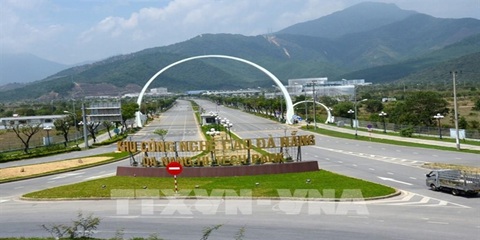
Besides infrastructure, Việt Nam must also rapidly develop a highly skilled workforce to attract investment in AI, semiconductors and advanced manufacturing, experts have said. Don Lam, CEO and co-founder of investment management company VinaCapital, said that global technology investors were increasingly looking at the readiness of the entire ecosystem, with high-quality human resources a decisive factor.
HR / LABOUR/ EMPLOYMENT
HIRING OUTLOOK STRENGTHENS IN Q4 AS SKILLS SHORTAGES PERSIST
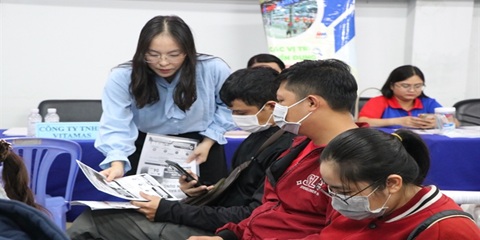
Hiring intentions among employers in Việt Nam strengthened in the fourth quarter, with 52 per cent of surveyed companies planning to increase headcount between October and December, according to a ManpowerGroup survey released this week. Việt Nam's hiring outlook was stronger than the Asia Pacific and Middle East (APME) regional average of 33 per cent and the global average of 29 per cent, ranking third in the region and 11th globally among 42 markets surveyed.
BANKING / FINANCE / INSURANCE / TAX
LARGE BANKS FORECAST TO GAIN HIGHER PROFITABILITY IN H2 2026
The return on average assets (ROAA) of the banking sector will likely remain stable at around 1.5 per cent in the second half of 2026, but profitability divergence among banks will increase, with large banks outperforming peers on stronger margins and diversified earnings, analysts forecast. In a recent report on the banking sector, analysts from the Vietnam Investors Service Rating said the sector’s ROAA rose by 10 basis points quarter-on-quarter to 1.51 per cent in the first half of this year, driven by net interest margin (NIM) improvements at some State-owned banks and large private banks.
GARMENT / TEXTILE
VIỆT NAM'S FOOTWEAR, BAG EXPORTS TO US TOP $8 BILLION IN EIGHT MONTHS
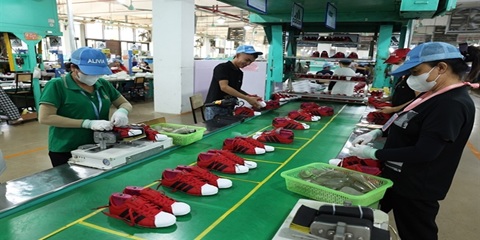
Việt Nam's exports of footwear and handbags to the US exceeded US$8 billion in the first eight months of 2026, as the US and EU remained the country's biggest markets despite sluggish growth in footwear shipments. Exports from Việt Nam's leather and footwear sector reached more than $2.45 billion in August, down 9 per cent from July but up 3 per cent from a year earlier, according to preliminary statistics.
Events Sponsors






















