Want to be in the loop?
subscribe to
our notification
Business News
ADVANCING SMART, GREEN, AND SUSTAINABLE INDUSTRIAL PARKS
Over the past two decades, industrial parks have become one of Vietnam’s key economic growth drivers. To date, more than 400 IPs have been planned nationwide, with over 380 already in operation. These IPs have attracted hundreds of billions of USD in investment capital, created millions of jobs, and contributed substantially to Vietnam’s industrialization and modernization.
Attracting huge investment capital from domestic and foreign businesses
After nearly 35 years of development, Vietnam’s network of IPs now spans almost the entire country. A total of 431 industrial parks and export processing zones have been established, covering approximately 132,300 ha, including about 89,900 ha of industrial land. These IPs have attracted a huge volume of capital from both domestic and foreign investors, providing crucial additional resources for socioeconomic development.
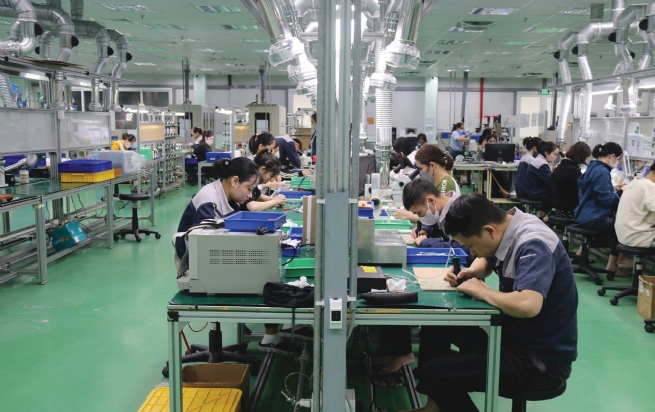
A manufacturing firm operating in an industrial park
As of the first quarter of 2025, the average occupancy rate of IPs in Vietnam was around 81%, a slight increase over the same period of 2024. By region, the North is home to over 100 IPs, led by major industrial hubs like Bac Ninh (VSIP Bac Ninh IP, Yen Phong IP and Que Vo IP), Hai Phong (DEEP C Hai Phong and Trang Due 3 IP), and Hanoi (Bac Thang Long IP and Sai Dong B IP). Thanks to its proximity to China and a well-connected infrastructure system (Noi Bai - Lao Cai Expressway, Hai Phong Port and Noi Bai Airport), the North continues to be a strategic destination for the electronics, automotive, components and high-tech sectors.
The Central region is emerging with new momentum due to its abundant land, lower rental costs and open local policies. Typical destinations include Nghe An (VSIP Nghe An IP and WHA Industrial Zone), Da Nang (Dien Nam - Dien Ngoc IP and Hoa Khanh IP), and Hue (Phu Bai IP and Chan May - Lang Co IP). However, this region still needs to improve its transport infrastructure and the quality of its labor force.
As Vietnam’s largest industrial center, the South has nearly 180 IPs, highlighted by Ho Chi Minh City (VSIP I, VSIP II, VSIP III and Prodezi EIP IP - a pioneer in the eco-industrial park model), Dong Nai (Amata IP, Long Duc IP, Bien Hoa I IP and Bien Hoa II IP), and Tay Ninh (Tan Duc IP, Hoa Binh IP and Nam Tan Lap IP). This region attracts strong investment in food processing, logistics, light industry and equipment manufacturing.
Today, IPs in Vietnam host a diverse range of industries, not only focusing on traditional sectors like apparel and food processing but also developing high-tech areas such as electronics, automotive and machinery manufacturing. This fosters economic diversification and creates added value for local businesses.
According to the Vietnam Chamber of Commerce and Industry (VCCI), powered by their stronger growth, tenants in IPs contribute around 50% of Vietnam’s total export value, significantly contributed to the state budget, generated trade surpluses and facilitated the country’s economic restructuring.
Additionally, IPs are increasingly being developed with modern infrastructure, logistics systems, business support services and work environments to attract international investors from South Korea, China, Japan, the United States and Europe.
However, alongside the continuous development of IPs, their maintenance and further expansion are facing several significant challenges, including environmental pollution, a shortage of high-quality human resources and inadequate supporting infrastructure. In addition, the occupancy rate in some IPs remains low, and many are still in the process of land clearance and compensation, failing to fully leverage the country’s abundant land resources for economic development.
The IP development model remains slow to be renovated. The number of eco-industrial parks and industrial - urban service parks is still limited. IP development planning often lacks a long-term, holistic vision aligned with other socioeconomic sectors. Worker housing and infrastructure remain insufficient and are not fully synchronized with IP development. Many IPs still follow a multi-sectoral model that relies heavily on land resources and have yet to evolve into next-generation models such as high-tech IPs or eco-IPs to capture opportunities and meet requirements of international investors for green development goals and environmental sustainability. As a result, they fail to meet expectations for green economic development trends in Vietnam.
The trending rise of smart and eco-IPs
The year 2025 marks a turning point in Vietnam’s industrialization and modernization, with IPs undergoing rapid transformation nationwide. As the global economy is experiencing the post-pandemic recovery, Vietnam’s IPs are becoming strategic destinations for foreign direct investment (FDI) flows, particularly in high-tech manufacturing, clean energy and flexible supply chains. Over 60% of FDI firms in Vietnam now prefer IPs that integrate smart management systems and offer real-time operational data.
Vietnam possesses many favorable conditions for developing smart IPs based on strategic geographic locations, policy momentum, improving infrastructure and human capital, steady GDP growth, flexible governance, and low-tariff access through free trade agreements (FTAs) like EVFTA and RCEP.
Notably, there is a growing investment trend in next-generation green-smart IPs, driven by more global supply chain shifts of multinational corporations toward Vietnam.
Mr. Nguyen Van Tien, Vice Chairman of the Vietnam Industrial Real Estate Association, said, smart IPs in Vietnam have attracted investment in high-value, eco-friendly sectors integrated with digital technology in recent years. Key areas include electronics, semiconductors, precision components, electric vehicles and energy storage. Many IPs are now installing rooftop solar systems to supply green energy to these industries.
Logistics is also advancing, with smart IPs hosting logistics centers equipped with robots, sensors and intelligent management platforms to optimize supply chains. In renewable energy and the circular economy, smart IPs are deploying circular models that combine wastewater treatment, energy reuse, waste sorting and solar power integration.
At the same time, digital production support services are growing, with some companies providing industrial software, big data solutions, remote maintenance and operation services, AI-based inspection and digital training. These companies are increasingly investing in IPs with strong ICT infrastructure, data centers, specialized 5G networks and cloud platforms which are currently considered the “backbone” of smart manufacturing.
To develop next-generation smart IPs, Vietnam must adopt comprehensive and consistent solutions. According to Tien, the country should focus on restructuring planning, upgrading technological infrastructure, developing a high-quality workforce, and promoting smart, green and circular IP models. This will create a solid foundation for Vietnam to not only attract high-quality FDI but also affirm its position in the Fourth Industrial Revolution.
In the long term, integrated solutions are essential, including cross-sectoral thinking and accelerated regional coordination to promote integrated regional planning because IPs must be closely connected to urban centers, seaports, highways, innovation - education - logistics hubs. Vietnam should also complete mechanisms for supporting smart IPs by developing licensing criteria and offering tax and credit incentives for circular practices such as water reuse, waste recycling and clean energy usage.
Importantly, digital infrastructure for IPs must be developed, with a focus on establishing IP operation centers and applying IoT and Big Data technologies for monitoring the environment, security, energy and logistics. At the same time, Vietnam must train a digital workforce equipped with green skills and expertise in AI and automation to stay ready to meet the demands of smart manufacturing.
The development of next-generation smart IPs, combined with digital transformation and high-tech investment, is not only essential but is also a pivotal engine for Vietnam to become a modern, sustainable manufacturing hub in the region. It is the key to securing Vietnam’s position in the global supply chain.
Source: VCCI
Related News

MEMBER CORNER / PROMOTIONS
AN ELECTRIFYING NIGHT WITH THE "QUEEN OF DANCE" THU MINH AT THE GRAND HO TRAM!
The stage at The Grand Ballroom is set to catch fire as Vietnam’s undisputed "Queen of Dance," Thu Minh, takes the spotlight. Renowned for her powerhouse vocals, magnetic stage presence, and sultry, high-energy performances, Thu Minh promises an evening of pure musical euphoria. The energy escalates with an exclusive appearance by special guest and The Voice champion, Vu Thao My.
HR / LABOUR/ EMPLOYMENT
HIGH-QUALITY HUMAN RESOURCES NEEDED TO ATTRACT NEW TECH INVESTMENT CAPITAL
Besides infrastructure, Việt Nam must also rapidly develop a highly skilled workforce to attract investment in AI, semiconductors and advanced manufacturing, experts have said. Don Lam, CEO and co-founder of investment management company VinaCapital, said that global technology investors were increasingly looking at the readiness of the entire ecosystem, with high-quality human resources a decisive factor.

HR / LABOUR/ EMPLOYMENT
HIRING OUTLOOK STRENGTHENS IN Q4 AS SKILLS SHORTAGES PERSIST
Hiring intentions among employers in Việt Nam strengthened in the fourth quarter, with 52 per cent of surveyed companies planning to increase headcount between October and December, according to a ManpowerGroup survey released this week. Việt Nam's hiring outlook was stronger than the Asia Pacific and Middle East (APME) regional average of 33 per cent and the global average of 29 per cent, ranking third in the region and 11th globally among 42 markets surveyed.

BANKING / FINANCE / INSURANCE / TAX
LARGE BANKS FORECAST TO GAIN HIGHER PROFITABILITY IN H2 2026
The return on average assets (ROAA) of the banking sector will likely remain stable at around 1.5 per cent in the second half of 2026, but profitability divergence among banks will increase, with large banks outperforming peers on stronger margins and diversified earnings, analysts forecast. In a recent report on the banking sector, analysts from the Vietnam Investors Service Rating said the sector’s ROAA rose by 10 basis points quarter-on-quarter to 1.51 per cent in the first half of this year, driven by net interest margin (NIM) improvements at some State-owned banks and large private banks.
GARMENT / TEXTILE
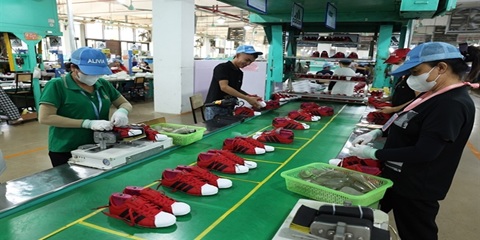
VIỆT NAM'S FOOTWEAR, BAG EXPORTS TO US TOP $8 BILLION IN EIGHT MONTHS
Việt Nam's exports of footwear and handbags to the US exceeded US$8 billion in the first eight months of 2026, as the US and EU remained the country's biggest markets despite sluggish growth in footwear shipments. Exports from Việt Nam's leather and footwear sector reached more than $2.45 billion in August, down 9 per cent from July but up 3 per cent from a year earlier, according to preliminary statistics.
VIETNAM ECONOMY INVESTMENT
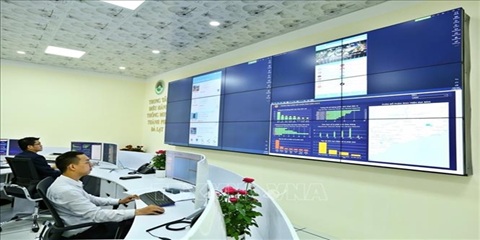
LÂM ĐỒNG TARGETS DIGITAL ECONOMY TO ACCOUNT FOR 30 PER CENT OF GRDP BY 2030
Lâm Đồng Province aims to raise the digital economy’s contribution to around 30 per cent of its gross regional domestic product (GRDP) by 2030, as part of a five-year plan to develop digital economy and society issued recently. Under Plan No. 15358/KH-UBND, the province targets more than 60 per cent of small- and medium-sized enterprises (SMEs) to adopt digital technologies by 2030 while increasing the value of cashless payments to 30 times its GRDP.
Events Sponsors






















