Want to be in the loop?
subscribe to
our notification
Business News
VINH LONG PROVINCE TURNS ITS DIGITAL TRANSFORMATION INTO NEW GROWTH ENGINE
Vinh Long is turning sci-tech, innovation, and digital transformation into powerful drivers of better governance and stronger economic growth.
The province, part of the Mekong Delta region, has completed 57 of the 61 tasks set out under Resolution No.57-NQ/TW. It has also completed 163 of the 165 tasks assigned by the Central Steering Committee.
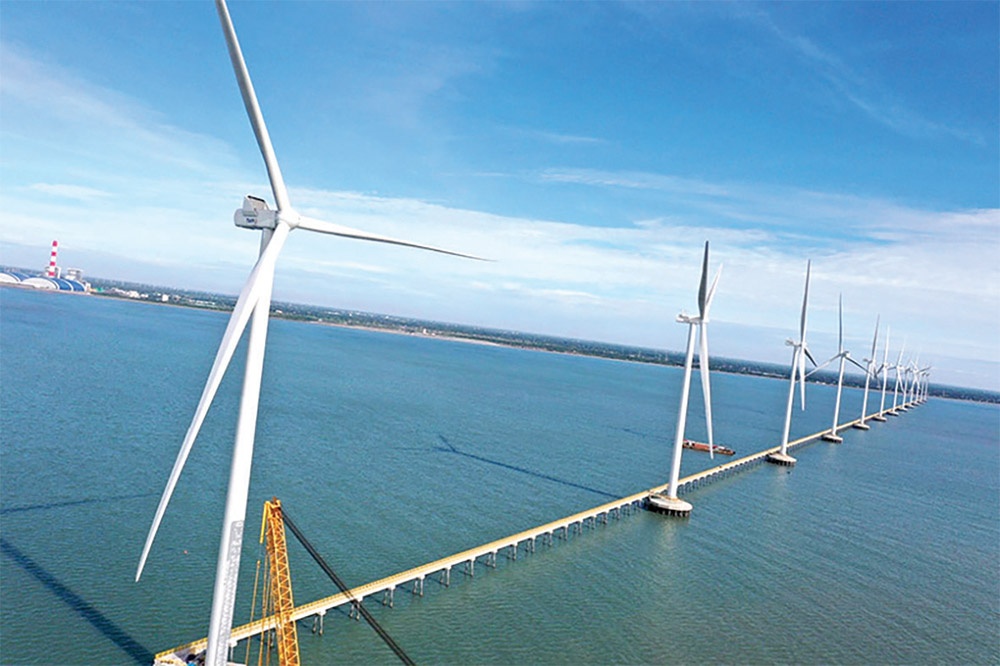
Along with digital capabilities, Vinh Long is also focused on developing clean energy
In the past 18 months since Resolution 57 was enacted, Vinh Long has made a strong shift from awareness to action, and from implementing individual tasks to adopting a comprehensive approach, making science and technology, innovation, and digital transformation new drivers of the province’s development.
The province has also made concerted efforts in order to swiftly translate central government policies into plans suited to local conditions.
In terms of the results under the assessment of the quality of services provided to individuals and businesses in administrative procedures and public services, Vinh Long ranks first among 34 provinces and centrally governed cities.
Chairman of Vinh Long People’s Committee Tran Tri Quang noted that building on the results achieved thus far, the province will strive to complete data cleansing and standardisation, ensuring that all specialised systems are connected and capable of sharing data through the province’s integration platform.
“The province will make a strong shift from technology application to digital governance with all directives and administrative documents processed online,” he said.
By 2030, Vinh Long aims for the digital economy to contribute about 10 per cent of local regional GDP, all of the population to be covered by internet and mobile networks, all businesses to apply digital tech, 80 per cent of residents to use online public services, and 60 per cent to make cashless payments. By 2045, the digital economy is targeted to account for about 25 per cent of the province’s regional GDP.
Chairman Quang called for the establishment of a provincial shared database; completion of the integration of population, civil status, insurance, and land data; and pilot applications of big data analytics to support land management, social welfare, and economic development forecasting.
The province also aims to make eligible administrative procedures available as fully online services, while significantly increasing cashless payments in healthcare, education, and rural areas.
Digital infrastructure continues to receive inclusive investment, with all communes covered by broadband internet and the specialised data transmission network connected to all provincial- and commune-level agencies.
Vinh Long continues to maintain the operation of nearly 350 community digital technology teams and roll out the ‘Digital Literacy for All’ movement, contributing to improved digital skills among residents.
Speaking at a conference in late July to review implementation of Resolution 57, Tran Van Lau, Secretary of Vinh Long Party Committee and head of the provincial steering committee on implementation of the resolution, acknowledged the results the province has attained.
“Although these are new tasks with a broad scope and involving many stakeholders, thanks to the high determination of the entire political system, Resolution 57 has gradually been translated into reality and achieved positive results, creating an important impetus to drive the province’s socioeconomic development,” he said.
The provincial leader asked local Party committees and steering committees at all levels, as well as heads of agencies and units to continue thoroughly disseminating relevant plans of the central government and the province; and to mobilise the participation of the entire political system, the business community and local people in the development of sci-tech, innovation, and digital transformation.
Vinh Long is also focused on developing the marine economy and clean energy as drivers of the green economy, developing key coastal economic sectors and the circular economy in association with ecological conservation and climate change adaptation.
By 2030, Vinh Long aims to become a centre for the marine economy and renewable energy production for the Mekong Delta region.
Source: VIR
Related News

BANKING / FINANCE / INSURANCE / TAX
REMITTANCES TO HCM CITY RISE NEARLY 40% IN Q3
Remittances to HCM City reached more than US$2.83 billion in the third quarter of this year, up 39.5 per cent from the previous quarter and 3.6 per cent year-on-year. This was the first quarter showing positive annual growth this year, helping narrow the decline in remittance inflows over the first nine months. According to the State Bank of Vietnam (SBV)’s Regional Branch 2, remittances transferred to HCM City through credit institutions and economic organisations totalled $2.835 billion in Q3, an increase of more than $802 million from the previous quarter.

TECHNOLOGY
TECH SECTOR GROWTH OPENS UP OPPORTUNITIES FOR VIỆT NAM TO GO GLOBAL
The growth of the electronics, semiconductor and high-tech sectors worldwide is opening up a variety of opportunities for Vietnamese enterprises to integrate more deeply into the global supply chain. However, to become suppliers for these corporations, domestic enterprises must meet rigorous standards regarding quality, technology, productivity and order fulfilment capabilities.

VIETNAM ECONOMY INVESTMENT
FOREIGN INVESTORS SEEKING A SYNCHRONISED MANUFACTURING ECOSYSTEM
Instead of focusing only on land costs and incentives as usual, foreign investors are seeking a synchronised manufacturing ecosystem, from stable power supply and logistics to shared infrastructure and the convenience of completing residence procedures for experts to serve their long-term investment in the country.

MEMBER CORNER / PROMOTIONS
SENTRYSAFE FHW40200 – PROTECT YOUR VALUABLES, ENJOY PEACE OF MIND!
Looking for a reliable solution to protect your important documents, cash, and valuables from fire and water damage? Genuine SENTRYSAFE - Reliable protection for your valuables and peace of mind! Contact Sen Wai Vietnam for more information and personalized product recommendations.

PROPERTY / INDUSTRIAL ZONE
HCM CITY ATTRACTS US$5.7 BILLION INTO EXPORT PROCESSING AND INDUSTRIAL ZONES
HCM City attracted US$5.7 billion in domestic and foreign investment into its export processing and industrial zones during the first nine months of 2026. The figure exceeded the city's full-year target by 31 per cent, highlighting strong momentum in high-quality industrial investment under Resolution No.10-NQ/TW. Total investment reached 131 per cent of the 2026 target of $4.25 billion and represented a 29 per cent increase compared with the same period in 2025, according to the city's Export Processing and Industrial Zones Authority (HEPZA).

INFRASTRUCTURE / CONSTRUCTION / LOGISTIC / PORT
DONG THAP PROVINCE STEPS UP INDUSTRIAL EXPANSION AND INFRASTRUCTURE CONNECTIVITY
Accelerating public investment, strengthening inter-regional connectivity, and expanding industrial land are helping Dong Thap efficiently bolster competitiveness and drive economic growth. Following the 2025 merger of the former Dong Thap and Tien Giang provinces, the expanded Dong Thap province in the Mekong Delta faces mounting pressure to accelerate infrastructure development and strengthen connectivity among local economic zones, urban areas, industrial parks (IPs), and production centres.
Events Sponsors






















