Want to be in the loop?
subscribe to
our notification
Business News
VIETNAM TARGETS STRATEGIC FDI FOR INNOVATION AND LONG-TERM VALUE
Vietnam is reshaping its foreign direct investment strategy to prioritise high-quality, technology-driven, and sustainable projects, aiming to boost innovation, productivity, and national competitiveness in a changing global landscape.
The Q&A session on June 19 of the ongoing 15th National Assembly (NA) Legislature centred on the effectiveness and future direction of foreign direct investment (FDI) attraction policies.
Minister of Finance Nguyen Van Thang, who chaired the session, appreciated the vital role that foreign investment plays in the development journey of many countries and noted that Vietnam has adopted sound and appropriate policies to entice foreign capital, contributing significantly to the country’s industrialisation drive.
Responding to concerns from deputy Nguyen Cong Long from the NA delegation of the southern province of Dong Nai about the rights and interests of workers employed in foreign-invested enterprises (FIEs), Minister Thang revealed that the FDI sector currently employs 5.1 million workers, accounting for nearly 10 per cent of the national labour force and 20 per cent of salaried workers.
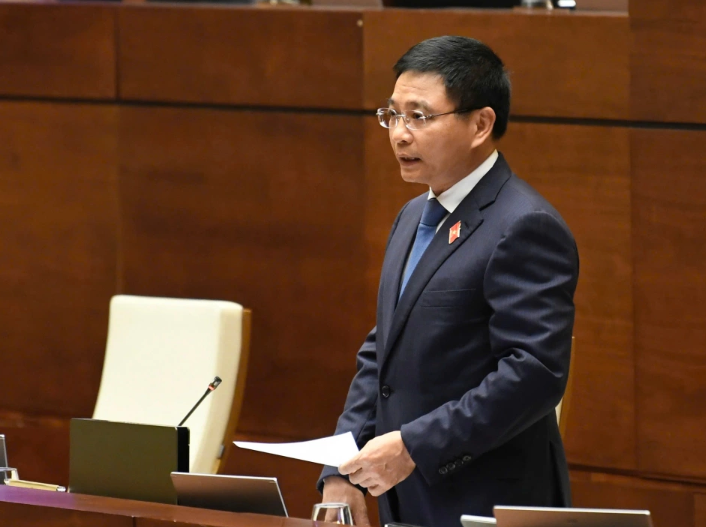
Minister of Finance Nguyen Van Thang
"In addition to direct employment, this sector indirectly creates jobs for many others," said the minister.
He also noted that 57 per cent of FIEs provide training for their employees. This has helped improve labour quality and productivity within FIEs and fostered broader human resource development through workforce mobility across sectors.
However, Minister Thang acknowledged shortcomings within the FDI sector, especially concerning labour management.
"Currently, 43 per cent of FIEs do not have training plans for their workers. This is a matter of concern. To better protect and improve labour quality in this sector, workforce training should be a prerequisite for attracting overseas funding," said Thang.
Earlier in the session, NA deputy Pham Hung Thang from Ha Nam province highlighted a key advantage of foreign investment in facilitating technology transfer and enhancing innovation, research, and development capacity.
He urged Minister Thang to elaborate on the impact of FDI on Vietnam’s scientific and technological advancement and the solutions for more effective technology transfer through foreign-invested projects.
Meanwhile, deputy Mai Van Hai from Thanh Hoa province requested clarification on current global investment trends and Vietnam’s orientation in attracting high-quality FDI amid complex geopolitical, geo-economic, and supply chain shifts worldwide.
Addressing these points, Minister Thang stated that Vietnam’s stable political environment and favourable investment climate constitute strong advantages, and despite global uncertainties, inflows of funding from abroad into Vietnam continue on a positive trajectory.
"Vietnam is developing a distinct competitive strategy to draw in sustainable foreign investment," he said.
This strategy involves moving away from reliance on tax incentives and towards improving the quality of investment-related services, industrial and economic zone infrastructure, electricity supply, ensuring clean land availability, skilled labour, and post-licensing administrative reforms.
Regarding future FDI directions, Minister Thang underscored the need for selectivity.
"To achieve its ambition of becoming a developed nation by 2045, Vietnam must prioritise high-tech, innovative, value-added, and environmentally sustainable projects rather than pursuing investment volume at all costs. Strategic partners such as the G7 nations, South Korea, Singapore, Taiwan, the US, and the EU will remain key targets in our investment promotion efforts, especially in sectors aligned with Vietnam’s development priorities," he added.
In Minister Thang’s words, by the end of May, Vietnam was home to nearly 44,000 foreign-led projects with the total registered investment capital of $517 billion. Disbursed capital reached $331.5 billion, equal to 64.6 per cent of the total committed volume.
In 2024 alone, foreign-invested enterprises contributed approximately $20.5 billion to the state budget, representing a 12 per cent increase and accounting for 24.7 per cent of total government revenue.
Source: VIR
Related News

BANKING / FINANCE / INSURANCE / TAX
REMITTANCES TO HCM CITY RISE NEARLY 40% IN Q3
Remittances to HCM City reached more than US$2.83 billion in the third quarter of this year, up 39.5 per cent from the previous quarter and 3.6 per cent year-on-year. This was the first quarter showing positive annual growth this year, helping narrow the decline in remittance inflows over the first nine months. According to the State Bank of Vietnam (SBV)’s Regional Branch 2, remittances transferred to HCM City through credit institutions and economic organisations totalled $2.835 billion in Q3, an increase of more than $802 million from the previous quarter.
TECHNOLOGY
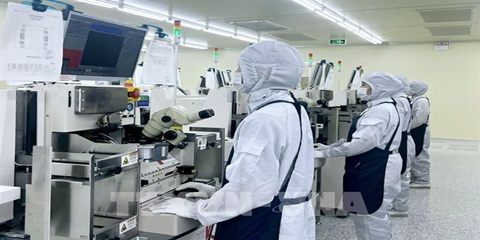
TECH SECTOR GROWTH OPENS UP OPPORTUNITIES FOR VIỆT NAM TO GO GLOBAL
The growth of the electronics, semiconductor and high-tech sectors worldwide is opening up a variety of opportunities for Vietnamese enterprises to integrate more deeply into the global supply chain. However, to become suppliers for these corporations, domestic enterprises must meet rigorous standards regarding quality, technology, productivity and order fulfilment capabilities.
VIETNAM ECONOMY INVESTMENT
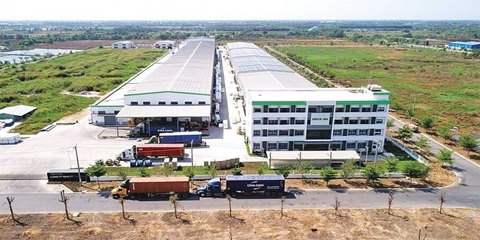
FOREIGN INVESTORS SEEKING A SYNCHRONISED MANUFACTURING ECOSYSTEM
Instead of focusing only on land costs and incentives as usual, foreign investors are seeking a synchronised manufacturing ecosystem, from stable power supply and logistics to shared infrastructure and the convenience of completing residence procedures for experts to serve their long-term investment in the country.
MEMBER CORNER / PROMOTIONS
SENTRYSAFE FHW40200 – PROTECT YOUR VALUABLES, ENJOY PEACE OF MIND!
Looking for a reliable solution to protect your important documents, cash, and valuables from fire and water damage? Genuine SENTRYSAFE - Reliable protection for your valuables and peace of mind! Contact Sen Wai Vietnam for more information and personalized product recommendations.
PROPERTY / INDUSTRIAL ZONE
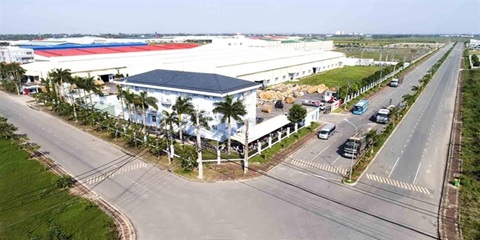
HCM CITY ATTRACTS US$5.7 BILLION INTO EXPORT PROCESSING AND INDUSTRIAL ZONES
HCM City attracted US$5.7 billion in domestic and foreign investment into its export processing and industrial zones during the first nine months of 2026. The figure exceeded the city's full-year target by 31 per cent, highlighting strong momentum in high-quality industrial investment under Resolution No.10-NQ/TW. Total investment reached 131 per cent of the 2026 target of $4.25 billion and represented a 29 per cent increase compared with the same period in 2025, according to the city's Export Processing and Industrial Zones Authority (HEPZA).
INFRASTRUCTURE / CONSTRUCTION / LOGISTIC / PORT
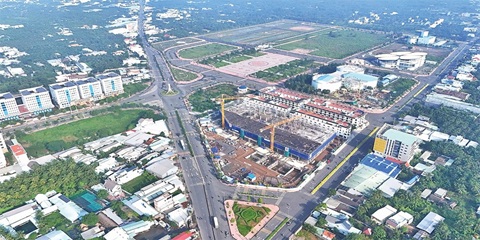
DONG THAP PROVINCE STEPS UP INDUSTRIAL EXPANSION AND INFRASTRUCTURE CONNECTIVITY
Accelerating public investment, strengthening inter-regional connectivity, and expanding industrial land are helping Dong Thap efficiently bolster competitiveness and drive economic growth. Following the 2025 merger of the former Dong Thap and Tien Giang provinces, the expanded Dong Thap province in the Mekong Delta faces mounting pressure to accelerate infrastructure development and strengthen connectivity among local economic zones, urban areas, industrial parks (IPs), and production centres.
Events Sponsors






















