Want to be in the loop?
subscribe to
our notification
Business News
VIETNAM SET TO BECOME NEXT DIGITAL TIGER IN ASIA
Vietnam is expected to become the next digital tiger in Asia as the country pushes forward with its digital transformation strategies, according to the Vietnam Economics report by MayBank.
The report said that Vietnam aspires to break through the middle-income trap by becoming a high-income country by 2045.
Digital transformation is regarded as one of the key strategies to boost productivity and long-term growth. Vietnam’s digital economy has grown significantly over the past decade, reaching 8.2 per cent of GDP by 2021. The government aims to grow the digital economy to 20 per cent of GDP by 2025 and 30 of GDP by 2030.
A young and tech-savvy population provides a headstart for digitalisation, with around 70 per cent of the population below 35. Internet penetration is fast-growing at roughly 70 per cent of the population and is predominantly mobile-based. Internet speeds have risen rapidly. Mobile internet speeds have become the second-fastest in ASEAN.
Moreover, Vietnam's internet economy has grown into the third-largest in ASEAN. It is expected to hit $57 billion by 2025, only behind Indonesia. E-commerce has been a key driver, with shoppertainment activities and online grocery shopping gaining popularity.
Meanwhile, cashless payments are growing rapidly, with usage estimated at between 72-95 per cent. Vietnamese consumers are second in ASEAN (behind Thailand) in terms of positive attitudes towards cashless payments.
Mobile wallets are strongly preferred over credit cards. The launch of the Mobile Money pilot in early 2022 will promote greater financial inclusion, particularly for the rural unbanked.
Another important indicator is that Vietnam is becoming a magnet for startups in ASEAN, part of the golden triangle with Singapore and Indonesia. There are four homegrown unicorns and 11 startups worth more than $100 million out of 4,000 startups. Three unicorns were minted over the past two years.
Like many other countries, the pandemic was a catalyst for businesses to step up on digitalisation efforts to reach customers amid social distancing restrictions and enable employees to work remotely.
The percentage of firms investing in digital tools rose from 5 per cent in June 2020 to 21 per cent in Jan 2021. The usage rate of digital platforms, e-commerce websites, online social media and specialised apps grew from 48 per cent of firms to 73 per cent over the same period, according to the World Bank’s phone surveys.
On top of that, Vietnam aims to digitalise all public services by 2030 and rank within the top 30 of the UN E-Government Development Index (86th currently). Notable initiatives include the National Public Service Portal which has integrated more than 3,500 online public services; the National Data Exchange Platform to improve data collection and sharing practices; and chip-based citizen ID cards.
Assistance programmes are supporting the digitalisation of small- and medium-sized businesses (SME) and promoting startup formation. Digital skills will be taught at all levels of the education system.
The e-Conomy SEA Report 2021 also predicts that Vietnam is entering its ‘digital decade’ as the internet increasingly becomes an integral part of consumers’ daily lives.
Commenting on this prospect, Florian Hoppe, partner and head of Digital Practice in Asia-Pacific, Bain & Company said, “Vietnam holds the potential to become the region's second-largest economy at close to $220 billion by 2030 with strong investor interest and as more of its non-metro populations come online. To accelerate growth in the digital decade ahead, Vietnam must continue to invest in momentum drivers and critical enablers such as digital payments and talent development."
Hoppe added, “We believe increasing penetration of digital financial services and corresponding infrastructure, continued investments in last-mile logistics, coupled with the ubiquitous access to the internet and structural shifts in consumer and SME behaviours will leapfrog Vietnam's internet economy by 2030."
Source: VIR
Related News

BANKING / FINANCE / INSURANCE / TAX
REMITTANCES TO HCM CITY RISE NEARLY 40% IN Q3
Remittances to HCM City reached more than US$2.83 billion in the third quarter of this year, up 39.5 per cent from the previous quarter and 3.6 per cent year-on-year. This was the first quarter showing positive annual growth this year, helping narrow the decline in remittance inflows over the first nine months. According to the State Bank of Vietnam (SBV)’s Regional Branch 2, remittances transferred to HCM City through credit institutions and economic organisations totalled $2.835 billion in Q3, an increase of more than $802 million from the previous quarter.
TECHNOLOGY
TECH SECTOR GROWTH OPENS UP OPPORTUNITIES FOR VIỆT NAM TO GO GLOBAL
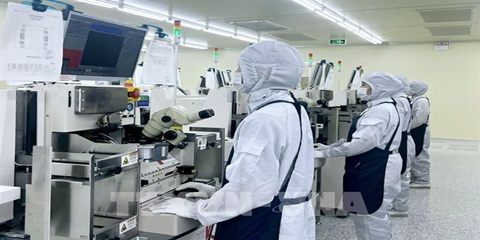
The growth of the electronics, semiconductor and high-tech sectors worldwide is opening up a variety of opportunities for Vietnamese enterprises to integrate more deeply into the global supply chain. However, to become suppliers for these corporations, domestic enterprises must meet rigorous standards regarding quality, technology, productivity and order fulfilment capabilities.
VIETNAM ECONOMY INVESTMENT
FOREIGN INVESTORS SEEKING A SYNCHRONISED MANUFACTURING ECOSYSTEM
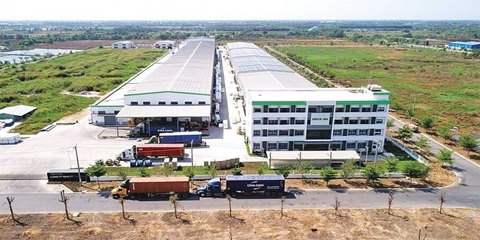
Instead of focusing only on land costs and incentives as usual, foreign investors are seeking a synchronised manufacturing ecosystem, from stable power supply and logistics to shared infrastructure and the convenience of completing residence procedures for experts to serve their long-term investment in the country.

MEMBER CORNER / PROMOTIONS
SENTRYSAFE FHW40200 – PROTECT YOUR VALUABLES, ENJOY PEACE OF MIND!
Looking for a reliable solution to protect your important documents, cash, and valuables from fire and water damage? Genuine SENTRYSAFE - Reliable protection for your valuables and peace of mind! Contact Sen Wai Vietnam for more information and personalized product recommendations.
PROPERTY / INDUSTRIAL ZONE
HCM CITY ATTRACTS US$5.7 BILLION INTO EXPORT PROCESSING AND INDUSTRIAL ZONES
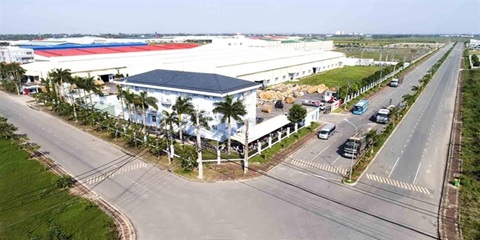
HCM City attracted US$5.7 billion in domestic and foreign investment into its export processing and industrial zones during the first nine months of 2026. The figure exceeded the city's full-year target by 31 per cent, highlighting strong momentum in high-quality industrial investment under Resolution No.10-NQ/TW. Total investment reached 131 per cent of the 2026 target of $4.25 billion and represented a 29 per cent increase compared with the same period in 2025, according to the city's Export Processing and Industrial Zones Authority (HEPZA).
INFRASTRUCTURE / CONSTRUCTION / LOGISTIC / PORT
DONG THAP PROVINCE STEPS UP INDUSTRIAL EXPANSION AND INFRASTRUCTURE CONNECTIVITY
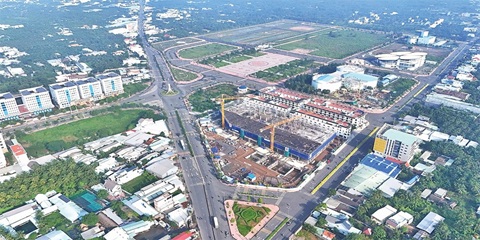
Accelerating public investment, strengthening inter-regional connectivity, and expanding industrial land are helping Dong Thap efficiently bolster competitiveness and drive economic growth. Following the 2025 merger of the former Dong Thap and Tien Giang provinces, the expanded Dong Thap province in the Mekong Delta faces mounting pressure to accelerate infrastructure development and strengthen connectivity among local economic zones, urban areas, industrial parks (IPs), and production centres.
Events Sponsors






















