Want to be in the loop?
subscribe to
our notification
Business News
VIETNAM'S EXPORT TO EU HIT NEARLY $10 BILLION IN FIRST QUARTER
Despite the adverse impacts of COVID-19, Vietnam’s export to the EU picked up 18 per cent in the first quarter of this year, to approximately $10 billion.
According to figures from the Ministry of Industry and Trade (MoIT), since the landmark EU-Vietnam Free Trade Agreement (EVFTA) came into force, Vietnamese exports to EU member states managed impressive growth and hit nearly $10 billion in the first quarter of 2021, up 18 per cent on-year.
The best-performing sectors were textile and clothing, electronics, and agro-fishery products, among others. In particular, shrimp exports surpassed $150 million, up 11 per cent over the same period of last year.
Besides, Vietnam's leather and footwear export turnover in the first eight months of 2020 dropped more than 10 per cent due to the COVID-19 pandemic but quickly regained its growth momentum after the EVFTA took effect. In January alone, the turnover expanded 26 per cent compared to the corresponding period in 2020.
Key import markets including Belgium, Portugal, Denmark, and Italy have shown rosy growth of 20-35 per cent between January and March. Many shipments touched down at the EU, passed customs clearance, and received preferential treatment.
Tran Thanh Hai, deputy director of the MoIT’s Agency of Foreign Trade, said that businesses have taken advantage of the EVFTA to increase foreign trade.
Key import markets including Belgium, Portugal, Denmark, and Italy have shown rosy growth of 20-35 per cent between January and March.
For instance, under the agreement, the EU provides an exemption from tariffs with a quota of 80,000 tonnes to Vietnam and will completely abolish tariffs on broken rice after five years. Therefore, some firms have signed orders to sell fragrant rice with higher values. Some rice export shipments even fetched a record price level of more than $1,000 per tonne, casting very positive impacts on Vietnam’s rice export situation both in volume and pricing.
Besides, other items are also enjoying tax exemption such as passion fruit, shrimp, pomelo, dragon fruit, suitcase, bag, or shoes.
According to Le Van Quang, chairman of Minh Phu Seafood JSC, the shrimp export value has been growing impressively amidst the COVID-19 pandemic. He added that this year his company had set a target to export 71,000 tonnes of processed shrimp worth $790 million.
Vinatex deputy director Cao Huu Hieu said that even as COVID-19 became a global threat, many enterprises including May 10, Donagamex, and Nha Be maintained growth by ramping up operations in the personal equipment segment.
With export value surpassing $6 billion annually, the footwear and handbag sector is making good use of EVFTA advantages. Phan Thi Thanh Xuan, general secretary of the Vietnam Leather, Footwear and Handbag Association informed that sports shoes enjoyed more than 10 per cent hike in export value in the first quarter this year. In addition, the footwear and handbag sector is forecast to see double growth by 2025 based on the Ministry of Planning and Investment’s EVFTA impact assessment.
Moreover, a cooperation programme to connect Vietnamese businesses with EU partners has been launched recently by the MoIT’s E-Commerce and Digital Economy Agency, the Vietnam Institute of Digital Economy and Management Science (VIDEM) and Vietnam Association of Small and Medium Enterprises, helping to boost the export of Vietnamese items to the EU.
The MoIT commented that new-generation FTAs would be one of the important factors driving Vietnam’s exports in the forthcoming time.
Source: VIR
Related News

BANKING / FINANCE / INSURANCE / TAX
REMITTANCES TO HCM CITY RISE NEARLY 40% IN Q3
Remittances to HCM City reached more than US$2.83 billion in the third quarter of this year, up 39.5 per cent from the previous quarter and 3.6 per cent year-on-year. This was the first quarter showing positive annual growth this year, helping narrow the decline in remittance inflows over the first nine months. According to the State Bank of Vietnam (SBV)’s Regional Branch 2, remittances transferred to HCM City through credit institutions and economic organisations totalled $2.835 billion in Q3, an increase of more than $802 million from the previous quarter.

TECHNOLOGY
TECH SECTOR GROWTH OPENS UP OPPORTUNITIES FOR VIỆT NAM TO GO GLOBAL
The growth of the electronics, semiconductor and high-tech sectors worldwide is opening up a variety of opportunities for Vietnamese enterprises to integrate more deeply into the global supply chain. However, to become suppliers for these corporations, domestic enterprises must meet rigorous standards regarding quality, technology, productivity and order fulfilment capabilities.
VIETNAM ECONOMY INVESTMENT
FOREIGN INVESTORS SEEKING A SYNCHRONISED MANUFACTURING ECOSYSTEM
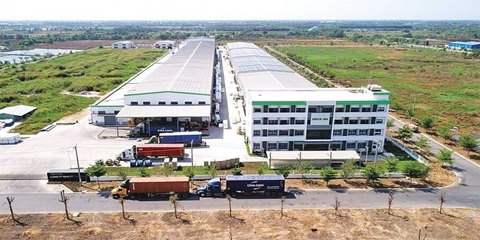
Instead of focusing only on land costs and incentives as usual, foreign investors are seeking a synchronised manufacturing ecosystem, from stable power supply and logistics to shared infrastructure and the convenience of completing residence procedures for experts to serve their long-term investment in the country.
MEMBER CORNER / PROMOTIONS
SENTRYSAFE FHW40200 – PROTECT YOUR VALUABLES, ENJOY PEACE OF MIND!
Looking for a reliable solution to protect your important documents, cash, and valuables from fire and water damage? Genuine SENTRYSAFE - Reliable protection for your valuables and peace of mind! Contact Sen Wai Vietnam for more information and personalized product recommendations.
PROPERTY / INDUSTRIAL ZONE
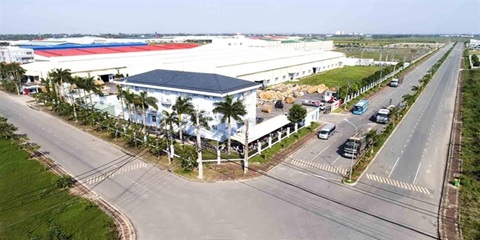
HCM CITY ATTRACTS US$5.7 BILLION INTO EXPORT PROCESSING AND INDUSTRIAL ZONES
HCM City attracted US$5.7 billion in domestic and foreign investment into its export processing and industrial zones during the first nine months of 2026. The figure exceeded the city's full-year target by 31 per cent, highlighting strong momentum in high-quality industrial investment under Resolution No.10-NQ/TW. Total investment reached 131 per cent of the 2026 target of $4.25 billion and represented a 29 per cent increase compared with the same period in 2025, according to the city's Export Processing and Industrial Zones Authority (HEPZA).
INFRASTRUCTURE / CONSTRUCTION / LOGISTIC / PORT
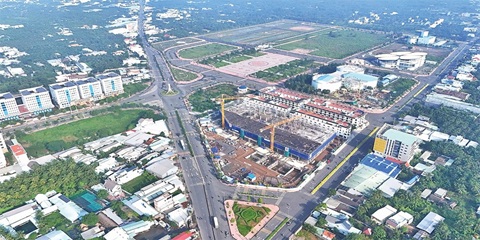
DONG THAP PROVINCE STEPS UP INDUSTRIAL EXPANSION AND INFRASTRUCTURE CONNECTIVITY
Accelerating public investment, strengthening inter-regional connectivity, and expanding industrial land are helping Dong Thap efficiently bolster competitiveness and drive economic growth. Following the 2025 merger of the former Dong Thap and Tien Giang provinces, the expanded Dong Thap province in the Mekong Delta faces mounting pressure to accelerate infrastructure development and strengthen connectivity among local economic zones, urban areas, industrial parks (IPs), and production centres.
Events Sponsors