Want to be in the loop?
subscribe to
our notification
Business News
VIỆT NAM TARGETS FULL MOBILE BROADBAND COVERAGE ON HIGHWAYS, INDUSTRIAL ZONES BY 2025
By 2025, Việt Nam aims to achieve one hundred per cent mobile broadband coverage on all national highways, expressways and railways under a plan to enhance the quality of Việt Nam’s mobile telecommunications network by 2025, which has been approved by the Ministry of Information and Communications (MIC).
With a focus on effective deployment of 5G services, the plan is to elevate user experience for both individuals and businesses, thereby contributing to the growth of the digital economy, digital society and e-government.
According to the Việt Nam Telecommunications Authority (VNTA), the draft plan has been sent to relevant agencies within the MIC, Department of Information and Communications of provinces and cities and major telecommunications companies such as Viettel, Vietnam Posts and Telecommunications Group (VNPT) and MobiFone for feedback.
The plan also targets the provision of mobile broadband coverage to all remote villages and hamlets currently without service, ensuring uninterrupted coverage along major transport routes.
Under the plan, 2G technology services will be ended in all areas apart from Trường Sa (Spratly) and Hoàng Sa (Paracel) Islands and offshore oil rigs.
Meanwhile, by 2025 all provinces and cities are expected to enjoy 5G coverage along with high-tech zones, research and innovation centres, industrial parks, airports and seaports.
The average download speed for 5G Internet services is projected to reach a minimum of 100 Mbps.
The VNTA has been assigned to coordinate with relevant agencies in the implementation of the plan as well as devise policies to remove obstacles for telecommunications companies in enhancing network quality.
Source: VNS
Related News

CHARITY / EXHIBITION / OTHER EVENTS
INVESTMENT OPPORTUNITIES IN CA MAU PROVINCE: 96 PROJECTS AND 20 STRATEGIC PROJECTS
We are pleased to share with you information on investment projects currently seeking investors in Ca Mau Province. Should your esteemed company or association be interested, we kindly invite you to review the project information and complete the registration form via the links provided. The Ho Chi Minh City Investment and Trade Promotion Centre (ITPC) will consolidate the expressions of interest and facilitate connections with the leadership of Ca Mau Province at a meeting tentatively scheduled for 13 November 2026 in Ho Chi Minh City.

MEMBER CORNER / PROMOTIONS
BẰNG KIỀU LIVESHOW - A SYMPHONY OF LOVE UNDER THE GOLDEN GLOW
A masterclass in live music that takes the audience on a soulful journey through immortal love songs, guided by the peerless artistry and emotive storytelling of renowned singer Bằng Kiều. The highlight of the night is his seamless musical chemistry with special guest Triệu Hồng Ngọc, promising passionate and deeply resonant duets inside the magnificent Grand Ballroom.
INFRASTRUCTURE / CONSTRUCTION / LOGISTIC / PORT
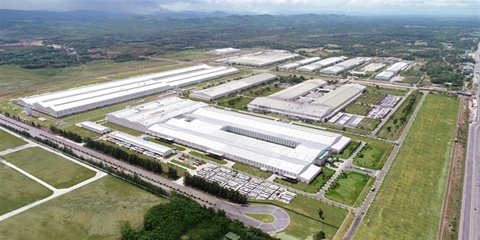
ĐÀ NẴNG GREEN-LIGHTS US$105 MILLION THAI DEVELOPMENT DEAL
The central city has approved an investment proposal by Thailand’s WHA Group to develop infrastructure for the 400ha WHA Đà Nẵng Industrial Park project on two communes of Thăng Bình and Đồng Dương, with an investment of more than VNĐ2.7 trillion (US$105 million). The city said it approved WHA Industrial Development International's status as an investor in the project, which is expected to take place between 2027 and 2034.
VIETNAM ECONOMY INVESTMENT
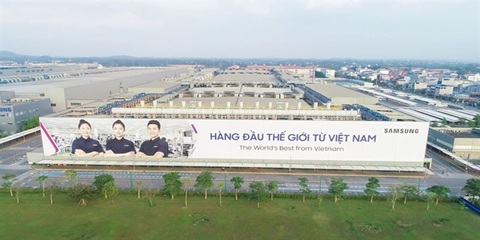
MOBILE PHONE EXPORTS RISE 20% TO $51.8 BILLION IN FIRST NINE MONTHS
Exports of mobile phones and components rose 20 per cent year-on-year to nearly US$51.8 billion in the first nine months of 2026, with China, the US and Republic of Korea accounting for more than half of the total. Shipments to the three markets reached a combined $26.18 billion, or 50.6 per cent of total exports of the product group during the period, according to data from the Vietnam Department of Customs under the Ministry of Finance.
INFRASTRUCTURE / CONSTRUCTION / LOGISTIC / PORT
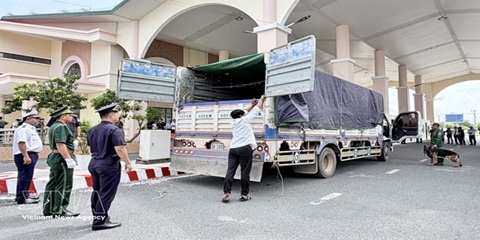
VIỆT NAM-CAMBODIA TRADE GATHERS PACE TOWARDS $20 BILLION TARGET
Trade between Việt Nam and Cambodia continues to grow, remaining a bright spot and a key pillar of bilateral cooperation as the two countries aim to raise two-way trade to US$20 billion in the coming years. After setting a record of more than $11.3 billion last year, bilateral trade reached about $8.7 billion in the first eight months of this year, up 8.3 per cent year on year.
VIETNAM ECONOMY INVESTMENT
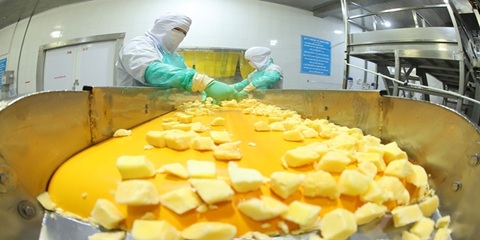
FRUIT AND VEGETABLE EXPORTS POISED TO HIT $10 BILLION IN 2026
Fruit and vegetable exports are on track to reach nearly US$10 billion in 2026, after rising 19.9 per cent year on year to nearly US$7.4 billion in the first nine months, driven by strong seasonal demand and abundant tropical fruit supplies. The Ministry of Agriculture and Environment said the growth reflected stronger international demand for fresh produce and processed agricultural products.
Events Sponsors






















