Want to be in the loop?
subscribe to
our notification
Business News
VIETNAM’S BEVERAGE MARKET ATTRACTS NEW WAVES OF INVESTMENT
The growth potential of the nation is attracting more investors to the beverage industry, fuelling a new wave of competition in products and technology.

Photo: baodautu.vn
After three years of preparation, AP Beverage Trading Production, a Vietnamese-owned enterprise, announced its entry into the beverage market in early June, through the operation of a manufacturing plant in Dong Nai province.
The initiative, with a total investment of approximately $80 million, focuses on producing bottled non-alcoholic beverages with the goal of establishing 500,000 sales points nationwide by 2030 and expanding its product presence to five international markets in the coming years.
Bui Minh Nhut, director of strategy at AP Beverage Company, said that the decision was made following an extensive assessment of the domestic market and consumer trends.
“Vietnam is one of the beverage markets with the greatest growth potential in the region thanks to its large population, rising incomes, and the growing popularity of healthier consumption habits,” he said.
According to data from Statista, revenue in Vietnam’s non-alcoholic beverage market increased from approximately $6.4 billion in 2023 to $8.78 billion in 2025. Among product categories, carbonated soft drinks continue to account for the largest share of the market at 42 per cent, followed by bottled water at 27 per cent, fruit juices at 15 per cent, tea and bottled tea products at 10 per cent, while energy drinks and other beverages comprise the remainder.
By region, southern Vietnam is currently the largest consumption market, representing around 54 per cent of total national demand. The north accounts for 29 per cent, while the central region contributes approximately 17 per cent.
Statista forecasts Vietnam’s non-alcoholic beverage market will continue to expand during the 2023-2028 period, with an average annual growth rate of approximately 7-9 per cent.
“This is considered an important driver for businesses in the industry to continue investing in product innovation, expanding distribution channels in the coming years,” said director of AP Beverage.
Beyond market size, changes in consumer behaviour are also creating new momentum for the beverage industry. According to a NielsenIQ report on consumer trends in May, 86 per cent of Vietnamese consumers prioritise quality over quantity, 92 per cent are willing to try new brands, and 91 per cent place a high value on the consumer experience.
In particular, Generation Z and Generation Alpha are becoming the key drivers of new consumption trends, fuelling demand for products with novel flavours, low sugar content, fewer calories, and added nutritional benefits that align with healthier lifestyles.
Against this backdrop, Vietnam’s beverage market continues to attract a new wave of investment from both domestic companies and international corporations.
In February, F&N, a member of the Thai Beverage ecosystem, spent approximately $3.9 million to acquire the Nhon Trach 3 beverage plant from Chuong Duong SJC. Of this, approximately $2.64 million represented tangible assets such as machinery and inventories, while the remainder was largely derived from the value of the Chuong Duong Sarsi brand.
In July 2025, Coca-Cola Vietnam inaugurated a new factory in Tay Ninh with a total investment of $136 million. This is the largest production facility in Coca-Cola’s system in Vietnam, equipped with five modern bottling and filling lines with a designed capacity of up to 1 billion litres of beverages per year.
Milly Cheng, CEO of Coca-Cola Vietnam, said that the facility is one of the company’s most advanced manufacturing plants, demonstrating the company’s confidence in the growth potential of the Vietnamese market and its long-term commitment to investment in the country.
“More than an investment in infrastructure, this factory demonstrates our commitment to sustainable development and our aspiration to make meaningful contributions to the communities we call home across Vietnam,” Milly said.
Along with Coca-Cola, Suntory PepsiCo also continues to expand its presence in Vietnam after more than three decades of operation. From its first factory in Ho Chi Minh City, the business now owns six production facilities in various localities.
By the end of 2025, Suntory PepsiCo Vietnam increased its charter capital to approximately $330 million, a nearly 11 per cent increase compared to before.
Suntory PepsiCo was established in 2013 with as a strategic joint venture between Japan’s Suntory Group and US-based PepsiCo. The company currently owns a portfolio of well-known brands in the Vietnamese market such as Pepsi, 7Up, Sting, and Tea+.
Suntory PepsiCo Vietnam’s capital increase came at a time when its business performance in the Vietnamese market has not yet shown significant improvement. Suntory Group’s 2025 financial report shows that beverage revenue in Vietnam reached an equivalent of approximately $838 million, representing a decline of nearly 14 per cent on-year.
According to Vietnam Industry Research and Consultancy, the country’s non-alcoholic beverage market remains highly concentrated, with Suntory PepsiCo Vietnam, Coca-Cola, URC Vietnam, and Tan Hiep Phat Beverage Group together holding around 57 per cent of total market share. Even so, ongoing investment by both domestic and foreign players signals strong confidence in the sector’s long-term growth prospects and is expected to intensify competition in the years ahead.
Source: VIR
Related News

BANKING / FINANCE / INSURANCE / TAX
REMITTANCES TO HCM CITY RISE NEARLY 40% IN Q3
Remittances to HCM City reached more than US$2.83 billion in the third quarter of this year, up 39.5 per cent from the previous quarter and 3.6 per cent year-on-year. This was the first quarter showing positive annual growth this year, helping narrow the decline in remittance inflows over the first nine months. According to the State Bank of Vietnam (SBV)’s Regional Branch 2, remittances transferred to HCM City through credit institutions and economic organisations totalled $2.835 billion in Q3, an increase of more than $802 million from the previous quarter.
TECHNOLOGY
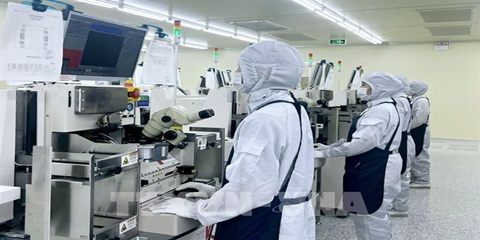
TECH SECTOR GROWTH OPENS UP OPPORTUNITIES FOR VIỆT NAM TO GO GLOBAL
The growth of the electronics, semiconductor and high-tech sectors worldwide is opening up a variety of opportunities for Vietnamese enterprises to integrate more deeply into the global supply chain. However, to become suppliers for these corporations, domestic enterprises must meet rigorous standards regarding quality, technology, productivity and order fulfilment capabilities.
VIETNAM ECONOMY INVESTMENT
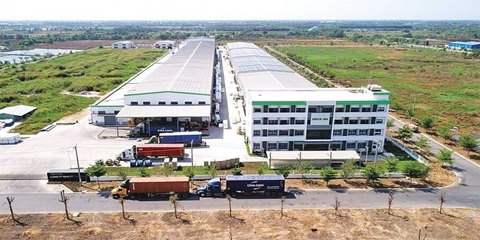
FOREIGN INVESTORS SEEKING A SYNCHRONISED MANUFACTURING ECOSYSTEM
Instead of focusing only on land costs and incentives as usual, foreign investors are seeking a synchronised manufacturing ecosystem, from stable power supply and logistics to shared infrastructure and the convenience of completing residence procedures for experts to serve their long-term investment in the country.
MEMBER CORNER / PROMOTIONS
SENTRYSAFE FHW40200 – PROTECT YOUR VALUABLES, ENJOY PEACE OF MIND!
Looking for a reliable solution to protect your important documents, cash, and valuables from fire and water damage? Genuine SENTRYSAFE - Reliable protection for your valuables and peace of mind! Contact Sen Wai Vietnam for more information and personalized product recommendations.
PROPERTY / INDUSTRIAL ZONE
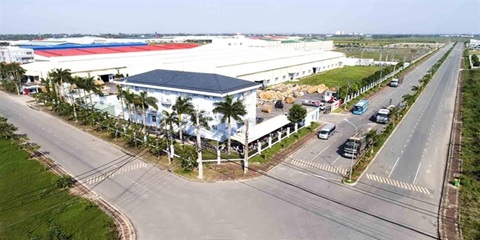
HCM CITY ATTRACTS US$5.7 BILLION INTO EXPORT PROCESSING AND INDUSTRIAL ZONES
HCM City attracted US$5.7 billion in domestic and foreign investment into its export processing and industrial zones during the first nine months of 2026. The figure exceeded the city's full-year target by 31 per cent, highlighting strong momentum in high-quality industrial investment under Resolution No.10-NQ/TW. Total investment reached 131 per cent of the 2026 target of $4.25 billion and represented a 29 per cent increase compared with the same period in 2025, according to the city's Export Processing and Industrial Zones Authority (HEPZA).
INFRASTRUCTURE / CONSTRUCTION / LOGISTIC / PORT
DONG THAP PROVINCE STEPS UP INDUSTRIAL EXPANSION AND INFRASTRUCTURE CONNECTIVITY
Accelerating public investment, strengthening inter-regional connectivity, and expanding industrial land are helping Dong Thap efficiently bolster competitiveness and drive economic growth. Following the 2025 merger of the former Dong Thap and Tien Giang provinces, the expanded Dong Thap province in the Mekong Delta faces mounting pressure to accelerate infrastructure development and strengthen connectivity among local economic zones, urban areas, industrial parks (IPs), and production centres.
Events Sponsors






















