Want to be in the loop?
subscribe to
our notification
Business News
VIETNAM REMAINS PROMISING DESTINATION FOR EUROPEAN INVESTMENT IN ASIA
Against the backdrop of the volatile and unpredictable global environment, Vietnam remains one of the most promising destinations for European investment in Asia.
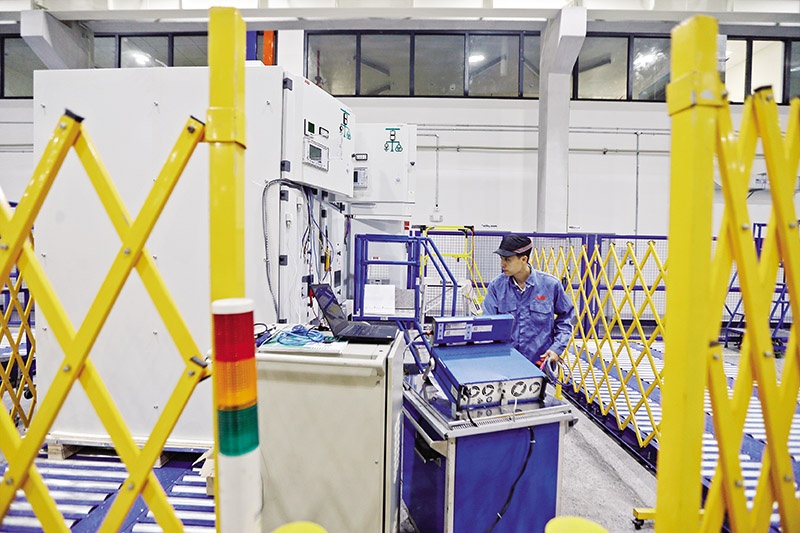
On October 14, EuroCham announced the Q3/2025 edition of the Business Confidence Index (BCI), which revealed a renewed surge of optimism among European firms operating in Vietnam. The index climbed to 66.5 points, surpassing pre-tariffs level and reaching its highest in three years – showcasing resilience and adaptability amid global headwinds and evolving US tariff pressures.
“This steady confidence is particularly striking in a world defined by volatility and uncertainty – where the ripple effects of geopolitics, technological shifts, and climate change are rewriting trade and investment strategies across continents,” remarked EuroCham chairman Bruno Jaspaert.
The BCI Q3/2025 report goes beyond macroeconomic sentiment to capture structural shifts quietly reshaping Vietnam's business environment: forward-looking reforms in visa and work permit policies, growing momentum for green investment, and the ongoing digitalisation of administrative procedures. Together, these changes reflect how European investors perceive Vietnam's future, full of promise, yet not without friction.
The shifting trade landscape is beginning to leave its mark. As the US implements new tariff measures and global supply chains realign, 31 per cent of surveyed businesses reported a net negative impact on their financial performance, a sizeable adjustment compared to 15 per cent in Q2/2025. Similarly, the share of firms seeing a net positive impact also followed a similar trend, rising to 9 per cent from 5 per cent in Q2, reflecting the potential upside for companies able to reposition themselves amid global trade re-routing.
Despite these adjustments, relocation remains limited: only 3 per cent are considering moving operations out of Vietnam, while another 3 per cent are considering relocating into or within the country, reaffirming Vietnam's reputation as a resilient and reliable base for production and investment.
While clarity around US transshipment rules and future trade deals remains limited, most firms reported no major change to their investment plans or operations. Regulatory compliance, market dynamics, and sourcing strategies have become “slightly more challenging”, but few see these headwinds as strong enough to change their long-term commitment to Vietnam.
Jaspaert observed, "The pressures are now materialising, but they remain proportionate to our earlier findings. What's remarkable is the leap in sentiment: 80 per cent of respondents are optimistic about their prospects over the next five years, and 76 per cent would recommend Vietnam as an investment destination. It affirms that Vietnam's structural story still holds strong. The recent upgrade of Vietnam's stock market classification by FTSE Russell, from frontier to secondary emerging market status, underwrites the findings of our BCI survey. It recognises Vietnam's rising importance as an investment destination for future business.”
This renewed confidence aligns with Vietnam's broader economic ambitions. Nearly half of respondents (42 per cent) believed that Vietnam will reach its ambitious GDP growth target of 8.3-8.5 per cent for 2025, while 23 per cent remained neutral and 35 per cent expressed some reservations. The General Statistics Office's most recent data said GDP in Q3 increased by 8.23 per cent on-year, underscoring Vietnam's robust momentum.
Decision Lab CEO Thue Quist Thomsen noted, “While neutrality still dominates in the short-term outlook, sentiment becomes distinctly more positive when firms discuss the future. Notably, 68 per cent expect economic stabilization and improvement in the next quarter, up 18 percentage points since Q2/2025, a clear indication that businesses are expecting to close the year on a stronger footing.”
Administrative inefficiency remains one of the most significant challenges facing European businesses in Vietnam, with 65 per cent highlighting procedural burdens as an obstacle. Tax-related procedures, particularly VAT refunds, continue to cause frustration, while inconsistent interpretations of work-permit rules between provinces create operational uncertainty.
However, a major step forward was made in August 2025 when the government introduced three new decrees designed to modernise visa and work-permit regulations and make the process more predictable.
Decree No.219/2025/ND-CP empowers local authorities to issue work permits, enables online applications, reduces experience requirements for foreign experts in prioritised and emerging fields, expands categories eligible for exemptions, and simplifies paperwork.
Decree No.221/2025/ND-CP introduces a limited-term visa exemption for selected groups of foreigners contributing to Vietnam's socioeconomic development, reflecting a more flexible approach to attract international talent. Meanwhile, Resolution No.229/NQ-CP expands Vietnam's visa exemption policy to include 18 EU member states, further strengthening the link between Europea and Vietnam.
Almost half (48 per cent) of the firms surveyed reported that these policy changes have already made a positive difference in their operations, while 42 per cent said the impacts are yet to materialise, often due to transitional administrative issues. Nevertheless, these decrees represent a substantial leap towards more open, business-friendly mobility regulations, echoing EuroCham's long-standing recommendations in its annual Whitebook publications.
Jaspaert emphasised, “As Vietnam aspires to become a high-income, developed nation within the next two decades, talent mobility and skills transfer must be placed at the heart of this journey. These reforms are critical to ensure that international expertise can flow freely to where it is most needed, unlocking innovation and strengthening Vietnam's private-sector capacity.”
The Q3/2025 BCI ultimately reaffirms Vietnam's position as one of the most promising destinations for European investment in Asia. Yet, as the world grows more volatile and unpredictable, optimism must be anchored in continued reform and resilience. Respondents consistently stressed that Vietnam's long-term competitiveness depends on regulatory predictability, consistency across provinces, and efficient administrative procedures.
Source: VIR
Related News

BANKING / FINANCE / INSURANCE / TAX
REMITTANCES TO HCM CITY RISE NEARLY 40% IN Q3
Remittances to HCM City reached more than US$2.83 billion in the third quarter of this year, up 39.5 per cent from the previous quarter and 3.6 per cent year-on-year. This was the first quarter showing positive annual growth this year, helping narrow the decline in remittance inflows over the first nine months. According to the State Bank of Vietnam (SBV)’s Regional Branch 2, remittances transferred to HCM City through credit institutions and economic organisations totalled $2.835 billion in Q3, an increase of more than $802 million from the previous quarter.

TECHNOLOGY
TECH SECTOR GROWTH OPENS UP OPPORTUNITIES FOR VIỆT NAM TO GO GLOBAL
The growth of the electronics, semiconductor and high-tech sectors worldwide is opening up a variety of opportunities for Vietnamese enterprises to integrate more deeply into the global supply chain. However, to become suppliers for these corporations, domestic enterprises must meet rigorous standards regarding quality, technology, productivity and order fulfilment capabilities.

VIETNAM ECONOMY INVESTMENT
FOREIGN INVESTORS SEEKING A SYNCHRONISED MANUFACTURING ECOSYSTEM
Instead of focusing only on land costs and incentives as usual, foreign investors are seeking a synchronised manufacturing ecosystem, from stable power supply and logistics to shared infrastructure and the convenience of completing residence procedures for experts to serve their long-term investment in the country.
MEMBER CORNER / PROMOTIONS
SENTRYSAFE FHW40200 – PROTECT YOUR VALUABLES, ENJOY PEACE OF MIND!
Looking for a reliable solution to protect your important documents, cash, and valuables from fire and water damage? Genuine SENTRYSAFE - Reliable protection for your valuables and peace of mind! Contact Sen Wai Vietnam for more information and personalized product recommendations.

PROPERTY / INDUSTRIAL ZONE
HCM CITY ATTRACTS US$5.7 BILLION INTO EXPORT PROCESSING AND INDUSTRIAL ZONES
HCM City attracted US$5.7 billion in domestic and foreign investment into its export processing and industrial zones during the first nine months of 2026. The figure exceeded the city's full-year target by 31 per cent, highlighting strong momentum in high-quality industrial investment under Resolution No.10-NQ/TW. Total investment reached 131 per cent of the 2026 target of $4.25 billion and represented a 29 per cent increase compared with the same period in 2025, according to the city's Export Processing and Industrial Zones Authority (HEPZA).

INFRASTRUCTURE / CONSTRUCTION / LOGISTIC / PORT
DONG THAP PROVINCE STEPS UP INDUSTRIAL EXPANSION AND INFRASTRUCTURE CONNECTIVITY
Accelerating public investment, strengthening inter-regional connectivity, and expanding industrial land are helping Dong Thap efficiently bolster competitiveness and drive economic growth. Following the 2025 merger of the former Dong Thap and Tien Giang provinces, the expanded Dong Thap province in the Mekong Delta faces mounting pressure to accelerate infrastructure development and strengthen connectivity among local economic zones, urban areas, industrial parks (IPs), and production centres.
Events Sponsors






















