Want to be in the loop?
subscribe to
our notification
Business News
VIETNAM EXPECTING TO SPEND EVEN MORE ON IMPORTS
Imported inflation is one key cause of increased prices in Vietnam, whose production is increasingly dependent on imports from other countries.
Southeast Asia is facing rising inflation, a problem that is exacerbated by the failure of energy and food prices to fall. Last month, the Monetary Authority of Singapore (MAS) tightened monetary policy for the third time since October to deal with inflation that is expected to heat up.
According to analysts, the MAS has redefined the midpoint of the popular exchange rate policy band and slightly increased the slope of currency appreciation to help the Singapore dollar strengthen against the currencies of other countries.
However, the MAS did not change the width of its policy band – a move the institution usually would take when markets are volatile. As a result, the Singapore dollar rose about 0.5 per cent to $1.35 after the MAS’ move.
The agency considered the possibility that core inflation would pick up sharply in the coming months, before being revised later this year, due to the sharp increase in global commodity prices and supply chain disruptions caused by the conflict in Ukraine, the pandemic, and the blockade of numerous Chinese cities.
In addition, aggregated demand growth is expected to slow somewhat, but not to a large extent, supported by savings accumulated in recent years.
The introduction of anti-inflation measures such as by Singapore is something that Vietnam could consider, even if the degree of dependence on imports is different. Import turnover of goods of Vietnam in the first four months of the year was estimated at $119.8 billion, up 15.7 per cent over the same period last year, of which 89 per cent are raw materials and production accessories, according to the Ministry of Industry and Trade (MoIT).
A growing number of economists fear that higher inflation could hamper the economic recovery of Vietnam. According to the General Statistics Office, GDP in the first quarter of 2022 increased by 5.03 per cent, but the consumer price index also increased by 1.92 per cent over the same period in 2021.
Le Quoc Phuong, former deputy director of the Centre for Industry and Trade Information at the MoIT, said, “The economy has gradually been recovering, but loosening monetary and fiscal policy in the context of increasing domestic demand will adversely affect inflation.”
Phuong explained, “In 2022, it will be difficult for the exchange rates of foreign currencies to continue to decrease, causing import prices to double from increasing market prices and a weakening VND. This will impact inflation, especially when it comes to the psychological expectations linked to this.”
Dr. Vu Dinh Anh, deputy director of the Market Research Institute under the Ministry of Finance, commented, “Vietnam’s biggest pressure at the moment is controlling imports to avoid a negative impact on inflation at home. Imported inflation did not happen in 2021 thanks to the government’s many effective macro-balancing and control policies, but it still accumulated and pushed into 2022.”
The tensions between Russia and Ukraine have little direct impact on Vietnam’s economy, said Dinh Anhm, but they are an indirect factor that negatively affects the markets for fuel and food, thus raising the risk of imported inflation for Vietnam.
“For example, Vietnam imports all of its NPK fertilisers from Russia, while that country accounts for 70 per cent of global supply, thus rendering it near impossible to avoid the effects of increasing import prices,” said Anh.
As for energy, countries can replace supplies from Russia with other sources, but the prices will definitely be pushed to a higher level. “Vietnam will have to spend more money on importing petroleum to meet current demand,” said Dinh Anh.
In 2021, the import value of petroleum increased as the average price of imported gasoline increased by 47.4 per cent compared to 2020, according to the MoIT.
Vietnam may have quelled the pandemic thus far, but many countries that supply production materials to Vietnam, including for the textile and footwear industries, are not yet there.
Nguyen Duc Thang, director of Dap Cau Garment Corporation, said, “Materials are slow to arrive because Shanghai ports are congested. About 80 per cent of our raw materials are imported from China as specified by the buyers.”
Dap Cau Garment has currently reduced productivity and cannot guarantee delivery times, Thang said. “We are having to re-negotiate with our partners, and I’m not sure if they will accept changing the supply of raw materials.”
Source: VIR
Related News
BANKING / FINANCE / INSURANCE / TAX
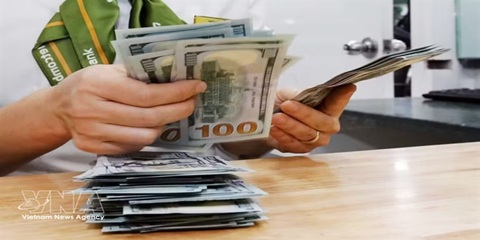
REMITTANCES TO HCM CITY RISE NEARLY 40% IN Q3
Remittances to HCM City reached more than US$2.83 billion in the third quarter of this year, up 39.5 per cent from the previous quarter and 3.6 per cent year-on-year. This was the first quarter showing positive annual growth this year, helping narrow the decline in remittance inflows over the first nine months. According to the State Bank of Vietnam (SBV)’s Regional Branch 2, remittances transferred to HCM City through credit institutions and economic organisations totalled $2.835 billion in Q3, an increase of more than $802 million from the previous quarter.
TECHNOLOGY
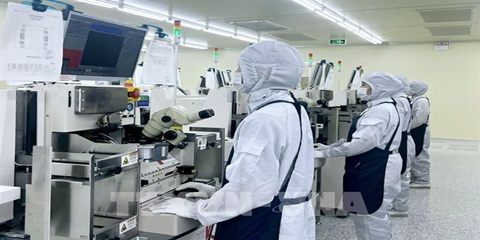
TECH SECTOR GROWTH OPENS UP OPPORTUNITIES FOR VIỆT NAM TO GO GLOBAL
The growth of the electronics, semiconductor and high-tech sectors worldwide is opening up a variety of opportunities for Vietnamese enterprises to integrate more deeply into the global supply chain. However, to become suppliers for these corporations, domestic enterprises must meet rigorous standards regarding quality, technology, productivity and order fulfilment capabilities.
VIETNAM ECONOMY INVESTMENT
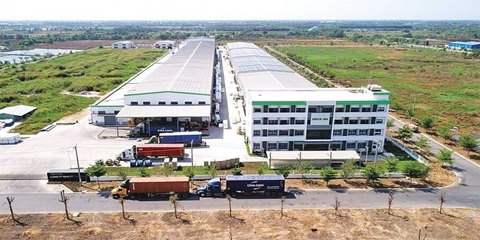
FOREIGN INVESTORS SEEKING A SYNCHRONISED MANUFACTURING ECOSYSTEM
Instead of focusing only on land costs and incentives as usual, foreign investors are seeking a synchronised manufacturing ecosystem, from stable power supply and logistics to shared infrastructure and the convenience of completing residence procedures for experts to serve their long-term investment in the country.
MEMBER CORNER / PROMOTIONS
SENTRYSAFE FHW40200 – PROTECT YOUR VALUABLES, ENJOY PEACE OF MIND!
Looking for a reliable solution to protect your important documents, cash, and valuables from fire and water damage? Genuine SENTRYSAFE - Reliable protection for your valuables and peace of mind! Contact Sen Wai Vietnam for more information and personalized product recommendations.
PROPERTY / INDUSTRIAL ZONE
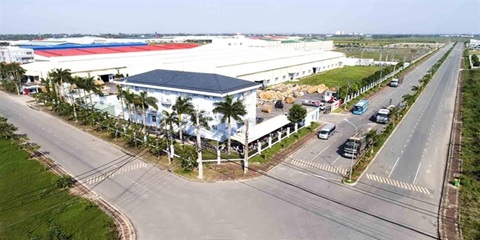
HCM CITY ATTRACTS US$5.7 BILLION INTO EXPORT PROCESSING AND INDUSTRIAL ZONES
HCM City attracted US$5.7 billion in domestic and foreign investment into its export processing and industrial zones during the first nine months of 2026. The figure exceeded the city's full-year target by 31 per cent, highlighting strong momentum in high-quality industrial investment under Resolution No.10-NQ/TW. Total investment reached 131 per cent of the 2026 target of $4.25 billion and represented a 29 per cent increase compared with the same period in 2025, according to the city's Export Processing and Industrial Zones Authority (HEPZA).
INFRASTRUCTURE / CONSTRUCTION / LOGISTIC / PORT
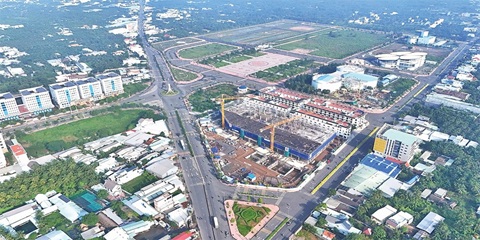
DONG THAP PROVINCE STEPS UP INDUSTRIAL EXPANSION AND INFRASTRUCTURE CONNECTIVITY
Accelerating public investment, strengthening inter-regional connectivity, and expanding industrial land are helping Dong Thap efficiently bolster competitiveness and drive economic growth. Following the 2025 merger of the former Dong Thap and Tien Giang provinces, the expanded Dong Thap province in the Mekong Delta faces mounting pressure to accelerate infrastructure development and strengthen connectivity among local economic zones, urban areas, industrial parks (IPs), and production centres.
Events Sponsors






















