Want to be in the loop?
subscribe to
our notification
Business News
VIETNAM CONTINUES GLOBAL VALUE CLIMB
Nearly 40 years since opening the doors to the wider world, Vietnam’s development has witnessed great strides, with foreign investment serving as one of the key drivers. However, further climbing global value chains becomes more complicated.
The World Bank assessed that Vietnam is a remarkable development success story. Economic reforms since the launch of economic reforms in the 1980s, coupled with beneficial global trends, have helped propel the country from being one of the world’s poorest nations to a middle-income economy in one generation.
Real GDP per capita soared from less than $700 in 1986 to $4,700 last year, an increase of 6.7-fold, and the share of the population living in poverty with less than $3.65 a day (in 2017 purchasing power parity) plummeted from 14 per cent in 2010 to around 3 per cent last year.
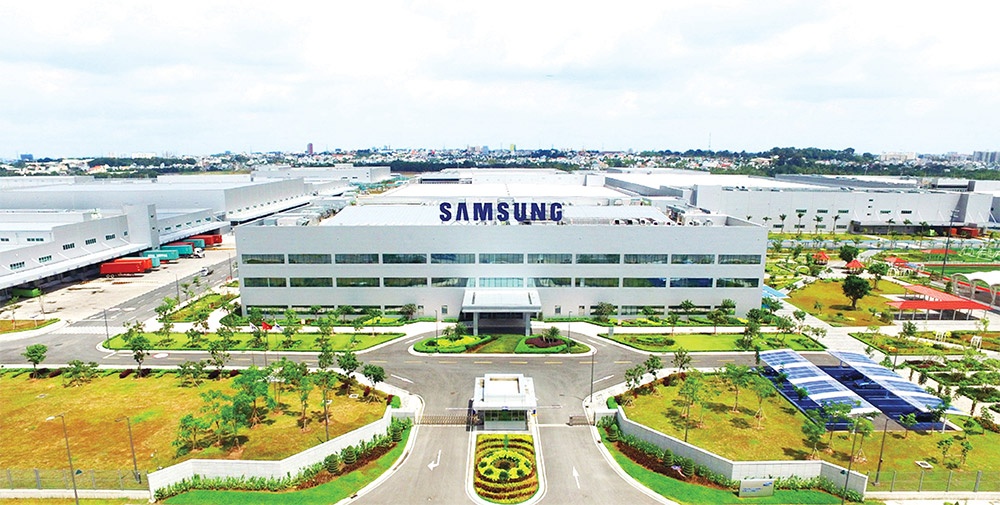
Samsung continues to lead the way as the biggest foreign investor in Vietnam, photo Le Toan
Economic growth grew nearly 7.1 per cent in 2024, with the government expecting the rate to be 8 per cent or more this year, before rising to double-digits from 2026, driven by increasing global demand, restored domestic consumer confidence, and foreign direct investment (FDI).
“For more than two decades, economic prospects in Vietnam have been closely tied to export growth. While in the early years, agriculture and light manufacturing led the way, the main drivers now are electronics, electrical machinery and metals,” said Jonathan Pincus, dean of the School of Public Policy and Management under Fulbright University Vietnam. “Inbound FDI, which has risen at an annual average rate of 12 per cent since 2006, has financed Vietnam’s closer integration within East Asian production systems.”
Figures from the Ministry of Finance’s Foreign Investment Agency showed that last year, total newly registered capital, additional capital adjustments, and foreign investors’ capital contributions and share purchases were estimated at nearly $38.23 billion, slightly down 3 per cent on-year. The total disbursed sum was $25.35 billion, up 9.4 per cent on-year, marking the highest disbursement level ever recorded. In Q1 this year, the respective figures were estimated to have come in at nearly $11 billion and $4.96 billion, up 34.7 and 7.2 per cent on-year, respectively.
FDI is now found in 19 economic sectors of Vietnam, with total registered capital of nearly $510.5 billion for 42,760 projects, led by the manufacturing and processing sector ($313.6 billion) followed by real estate business ($75.2 billion); production and distribution of electricity, gas, and air conditioning ($42 billion); and accommodation and catering ($13.9 billion).
Pivotal roles
At a policy dialogue on Vietnam’s semiconductor and AI development organised in Hanoi in March, Prime Minister Pham Minh Chinh stated that over the past years, FDI has proclaimed its role as a dynamic economic sector, making positive contributions to Vietnam’s achievements in growth, development, and integration into the world economy.
“FDI has also had a positive impact on reforming and innovating economic institutions, improving the business investment climate and the state management apparatus, and improving Vietnam’s prestige and status in the international arena,” he said.
A few months ago, PM Chinh made a trip to Europe, where he met with leaders from major corporations such as Visa, Amazon Web Services, and Trip.com, and especially tech giants like Google, Siemens, Qualcomm, and Ericsson. They shared their intentions to invest and expand activities in Vietnam, particularly in technology, semiconductors, and AI.
On April 16, Jilei Hou, Vice President of Engineering at US chipmaker Qualcomm Technologies, Inc., met with Vietnamese Deputy Prime Minister Nguyen Chi Dung in Hanoi, saying Qualcomm wishes to build a large AI research and development (R&D) centre in Vietnam. This will be the third-largest R&D centre for the group in the world, following those in India and Ireland.
DPM Dung said Vietnam boasts advantages for developing the AI and semiconductor industries, noting that the country already has a relatively strong ecosystem for the sector.
“Vietnam is trying to climb global value chains (GVCs) with more added values for its products. It is also making major investments in technology infrastructure and has ambitious plans for training human resources,” he added.
According to Jonathan Pincus, in recent years, China has emerged as an important investor in Vietnam, especially in the computer, electronic equipment, rubber and plastics and metal products industries.
“FDI flows from China to Vietnam have increased nine-fold since 2015, reaching a high of $4.59 billion in 2023. Although the headline number declined in 2024, an unknown share of the $6.3 billion from Singapore, and the $2.2 billion from Hong Kong, is also of Chinese origin,” Pincus said, while expecting that Vietnam will outperform its ASEAN peers in 2025.
Foreign-invested enterprises (FIEs) have been providing jobs for over 4.5 million direct local labourers and millions of indirect labourers. They hold 25 per cent of total national development investment capital, and create over half of industrial production value. They are also responsible for 20 per cent of the state budget and a similar ratio of GDP.
In the first quarter of this year, FIEs’ total export turnover, including crude oil exports, hit $73.82 billion, up 9 per cent and holding 71.8 per cent of Vietnam’s total export revenue. This is demonstrated by an on-year rise in exports largely created by FIEs, such as mobile phones and spare parts ($14 billion mainly by Samsung), machinery and equipment (12.37 per cent), and garments and textiles ($8.7 billion).
Samsung is the largest foreign investor in Vietnam, with total registered capital of $23.2 billion for its six factories, an R&D centre, and a sales entity in the localities of Bac Ninh, Thai Nguyen, Hanoi, and Ho Chi Minh City. Its revenue and export value in 2024 hit $62.5 billion and $54.4 billion, respectively.
“I will do my best to lead Samsung Vietnam to further development, maintaining its position as the largest FIE in Vietnam. Samsung will continue boosting its cooperation with the Vietnamese government towards the shared benefits of the two sides,” said Na Ki Hong, newly appointed president of Samsung Vietnam.
Climbing GVCs
Over the past months, the Vietnamese government has continuously worked with foreign big groups specialised in high technology, semiconductors, and microchips. Vietnam is now focusing on luring in high-tech FDI with big spillover effects in the sectors of AI, semiconductors, and blockchain, which will help the country climb GVCs.
To foster a more business-friendly environment, Vietnam has implemented reforms, including better land policies, fiscal restructuring, and industrial development strategies.
According to the ASEAN+3 Macroeconomic Research Office (AMRO), structural challenges are dampening Vietnam’s growth potential. “Insufficient physical infrastructure, the mismatch between workforce skills and industry needs and the underdevelopment of domestic micro, small, and medium-sized enterprises and supporting industries further hinders Vietnam’s progress in moving up the GVCs,” AMRO said.
According to the Asian Development Bank (ADB), emerging factors impacting GVC participation include geo-economic shifts, sustainable development trends like decarbonisation and the energy transition, along with the digital transformation.
“These factors present risks and opportunities, depending on how actively GVC actors in Vietnam adapt. Geo-economic shifts require continued investment and business reforms,” the ADB said.
The ADB pointed out that limited domestic linkages with lead FIEs and insufficient collaboration among local suppliers are major challenges in improving GVC participation. The lack of innovation and tech absorption capacity hinders firms’ ability to upgrade within GVCs. Currently, the country faces labour productivity issues and significant skill gaps, particularly in high-tech and digital fields.
According to the World Bank, without increased investments in the tertiary education system, the availability of skilled technical workers will likely become increasingly difficult for businesses, making Vietnam difficult in climbing global GVCs.
“Universities and training providers are not adequately preparing workers for positions in high-tech sectors. While 80 per cent of training institutions believe that their graduates are adequately prepared for entry-level positions, fewer than 40 per cent of employers think recent graduates are prepared, especially for higher skill positions,” the World Bank stated in a report on Vietnam’s startup performance released last year.
Companies interviewed by the World Bank team report that universities are good at producing raw engineering and programming talent, but many recent graduates from universities and colleges do not yet have sufficient experience to take on positions in emerging technology areas.
Source: VIR
Related News

BANKING / FINANCE / INSURANCE / TAX
REMITTANCES TO HCM CITY RISE NEARLY 40% IN Q3
Remittances to HCM City reached more than US$2.83 billion in the third quarter of this year, up 39.5 per cent from the previous quarter and 3.6 per cent year-on-year. This was the first quarter showing positive annual growth this year, helping narrow the decline in remittance inflows over the first nine months. According to the State Bank of Vietnam (SBV)’s Regional Branch 2, remittances transferred to HCM City through credit institutions and economic organisations totalled $2.835 billion in Q3, an increase of more than $802 million from the previous quarter.
TECHNOLOGY
TECH SECTOR GROWTH OPENS UP OPPORTUNITIES FOR VIỆT NAM TO GO GLOBAL
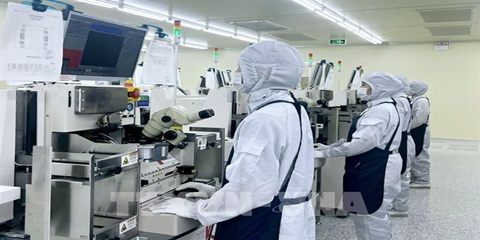
The growth of the electronics, semiconductor and high-tech sectors worldwide is opening up a variety of opportunities for Vietnamese enterprises to integrate more deeply into the global supply chain. However, to become suppliers for these corporations, domestic enterprises must meet rigorous standards regarding quality, technology, productivity and order fulfilment capabilities.
VIETNAM ECONOMY INVESTMENT
FOREIGN INVESTORS SEEKING A SYNCHRONISED MANUFACTURING ECOSYSTEM
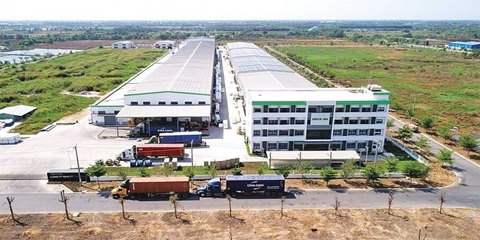
Instead of focusing only on land costs and incentives as usual, foreign investors are seeking a synchronised manufacturing ecosystem, from stable power supply and logistics to shared infrastructure and the convenience of completing residence procedures for experts to serve their long-term investment in the country.
MEMBER CORNER / PROMOTIONS
SENTRYSAFE FHW40200 – PROTECT YOUR VALUABLES, ENJOY PEACE OF MIND!
Looking for a reliable solution to protect your important documents, cash, and valuables from fire and water damage? Genuine SENTRYSAFE - Reliable protection for your valuables and peace of mind! Contact Sen Wai Vietnam for more information and personalized product recommendations.
PROPERTY / INDUSTRIAL ZONE
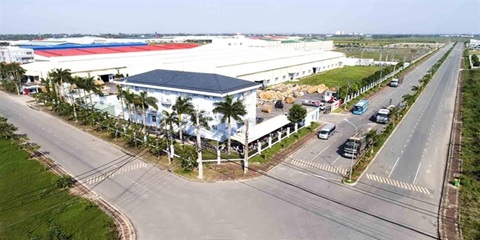
HCM CITY ATTRACTS US$5.7 BILLION INTO EXPORT PROCESSING AND INDUSTRIAL ZONES
HCM City attracted US$5.7 billion in domestic and foreign investment into its export processing and industrial zones during the first nine months of 2026. The figure exceeded the city's full-year target by 31 per cent, highlighting strong momentum in high-quality industrial investment under Resolution No.10-NQ/TW. Total investment reached 131 per cent of the 2026 target of $4.25 billion and represented a 29 per cent increase compared with the same period in 2025, according to the city's Export Processing and Industrial Zones Authority (HEPZA).
INFRASTRUCTURE / CONSTRUCTION / LOGISTIC / PORT
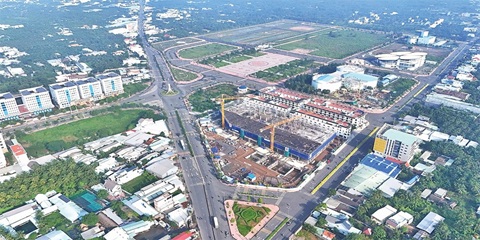
DONG THAP PROVINCE STEPS UP INDUSTRIAL EXPANSION AND INFRASTRUCTURE CONNECTIVITY
Accelerating public investment, strengthening inter-regional connectivity, and expanding industrial land are helping Dong Thap efficiently bolster competitiveness and drive economic growth. Following the 2025 merger of the former Dong Thap and Tien Giang provinces, the expanded Dong Thap province in the Mekong Delta faces mounting pressure to accelerate infrastructure development and strengthen connectivity among local economic zones, urban areas, industrial parks (IPs), and production centres.
Events Sponsors






















