Want to be in the loop?
subscribe to
our notification
Business News
VIETNAM – ATTRACTIVE DESTINATION FOR ESTATE INVESTORS
Vietnam will become an attractive destination for real estate investment and business because of the high demand for housing, industrial park infrastructure, shopping malls, and tourism property.
Minister of Construction Pham Hong Ha made the statement at the three-day International Real Estate Conference 2018 (IREC) under the theme “Viet Nam: A World of Opportunities” which opened in Ha Noi on Thursday.
More than 300 international guests and thousands of Vietnamese delegates took part in the event.
Ha said the recent growth of the property market has contributed to the fast and sustainable development of Viet Nam.
“It also contributes to the strong development of financial, securities, labour and service markets and many related industries, such as construction and building materials,” he added.
He noted the Vietnamese Government highly values the active role and efforts of domestic and foreign businesses in the country’s property market.
“Real estate is in the top of business sectors in terms of revenue in the country. Viet Nam’s real estate industry has been an attractive investment channel with the high profitability in Southeast Asian region,” he said.
Deputy Minister of Construction Nguyen Van Sinh said although the local real estate market is still young, it has recorded many positive developments, giving a facelift to cities and improving people’s living standards. In the housing sector, more than 70 million square metres of floor space have been developed each year since 1999. Right now, the country has about 2.1 billion sq.m of housing, raising the per capita floor area from 9.7 sq.m in 1999 to 23.7 square metres in 2018.
US Ambassador to Viet Nam, Dan Kritenbrink, said many American businesses have a range of opportunities in Viet Nam so there should be a level playing field between domestic and foreign investors to develop the country’s real estate.
“We also hope that based on this cooperation, we can focus on developing smart cities in Viet Nam and connecting with smart cities in Southeast Asia,” he added.
“We expect Viet Nam’s smart cities can ensure network security and online connectivity.”
Nguyen The Hung, deputy chairman of Ha Noi People’s Committee, told the conference the strong development and expansion of the city has been accompanied by overwhelming growth in the real estate market.
“The civilised and modern Ha Noi we see today comes from the contributions of investors and real estate development organisations locally and internationally,” he said.
High tourism growth rate
Experts said the country’s strong tourism growth was expected to be a key for Viet Nam’s resort property take off and appealing attention from both local and foreign investors.
Last year, the country took the 6th position among 10 countries with the highest tourism growth rate in the world with 30 per cent, making tourism become a key sector in its socio-economic structure.
The number of domestic tourists rose from 72 million arrivals in 2016 to 86 million in 2017, representing 19 per cent year-on-year rise. The foreign arrivals were also increased by 29 per cent.
It was expected the number of foreign tourists coming to Viet Nam would rise, creating good conditions for hi-end resort property.
But Viet Nam’s tourism industry still has room for further development, said Tran Dao Duc, deputy general director of CEO Group – Top 10 most prestigious property developers in Viet Nam.
“Viet Nam has been attractive to estate investors thanks to its political, economic and social stability as well as young population with high demand of owning a property,” he said.
Taking the trend, CEO Group has implemented four large-scale projects in Phu Quoc (Kien Giang Province), Van Don (Quang Ninh Province), Can Tho and Quang Binh. The projects are expected to bring high profitability for investors who pay attention to resort property in Viet Nam.
The group aims to build a resort chain throughout the country.
“We are seeking for co-operation with foreign partners at the conference to implement international level projects,” he said, adding the co-operation with the world’s leading brand names such as Accor, Best Western would be an important step for the country’s resort property.
Ready in Industry 4.0
The Fourth Industrial Revolution has opened opportunities for estate firms to apply technologies in their management and project development.
Le Nho, vice chairman of Sunshine Group said the development plan of smart and sustainable urban area in Viet Nam by 2025 would be an important guideline for the property market toward smart estate products.
“However, the local property companies will also face with challenges which need to have national strategies and co-operation among estate firms,” Nho said.
IREC 2018 is a chance to promote investment, share experiences, and boost partnerships between Vietnamese developers and foreign companies. It is also a good time to introduce the development potential of Viet Nam, and in particular its real estate sector, to others.
Its activities include a meeting of global real estate associations, forums on development trends of the world’s property market, investment promotion events, and the Vietbuild international exhibition.
Source: VIR
Related News

CHARITY / EXHIBITION / OTHER EVENTS
INVESTMENT OPPORTUNITIES IN CA MAU PROVINCE: 96 PROJECTS AND 20 STRATEGIC PROJECTS
We are pleased to share with you information on investment projects currently seeking investors in Ca Mau Province. Should your esteemed company or association be interested, we kindly invite you to review the project information and complete the registration form via the links provided. The Ho Chi Minh City Investment and Trade Promotion Centre (ITPC) will consolidate the expressions of interest and facilitate connections with the leadership of Ca Mau Province at a meeting tentatively scheduled for 13 November 2026 in Ho Chi Minh City.

MEMBER CORNER / PROMOTIONS
BẰNG KIỀU LIVESHOW - A SYMPHONY OF LOVE UNDER THE GOLDEN GLOW
A masterclass in live music that takes the audience on a soulful journey through immortal love songs, guided by the peerless artistry and emotive storytelling of renowned singer Bằng Kiều. The highlight of the night is his seamless musical chemistry with special guest Triệu Hồng Ngọc, promising passionate and deeply resonant duets inside the magnificent Grand Ballroom.
INFRASTRUCTURE / CONSTRUCTION / LOGISTIC / PORT
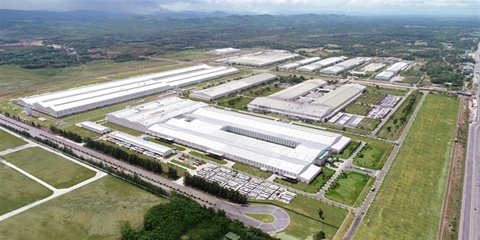
ĐÀ NẴNG GREEN-LIGHTS US$105 MILLION THAI DEVELOPMENT DEAL
The central city has approved an investment proposal by Thailand’s WHA Group to develop infrastructure for the 400ha WHA Đà Nẵng Industrial Park project on two communes of Thăng Bình and Đồng Dương, with an investment of more than VNĐ2.7 trillion (US$105 million). The city said it approved WHA Industrial Development International's status as an investor in the project, which is expected to take place between 2027 and 2034.
VIETNAM ECONOMY INVESTMENT
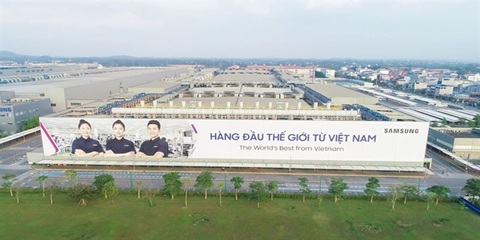
MOBILE PHONE EXPORTS RISE 20% TO $51.8 BILLION IN FIRST NINE MONTHS
Exports of mobile phones and components rose 20 per cent year-on-year to nearly US$51.8 billion in the first nine months of 2026, with China, the US and Republic of Korea accounting for more than half of the total. Shipments to the three markets reached a combined $26.18 billion, or 50.6 per cent of total exports of the product group during the period, according to data from the Vietnam Department of Customs under the Ministry of Finance.

INFRASTRUCTURE / CONSTRUCTION / LOGISTIC / PORT
VIỆT NAM-CAMBODIA TRADE GATHERS PACE TOWARDS $20 BILLION TARGET
Trade between Việt Nam and Cambodia continues to grow, remaining a bright spot and a key pillar of bilateral cooperation as the two countries aim to raise two-way trade to US$20 billion in the coming years. After setting a record of more than $11.3 billion last year, bilateral trade reached about $8.7 billion in the first eight months of this year, up 8.3 per cent year on year.
VIETNAM ECONOMY INVESTMENT
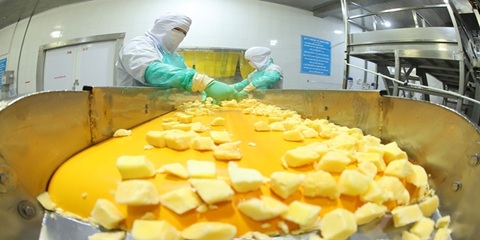
FRUIT AND VEGETABLE EXPORTS POISED TO HIT $10 BILLION IN 2026
Fruit and vegetable exports are on track to reach nearly US$10 billion in 2026, after rising 19.9 per cent year on year to nearly US$7.4 billion in the first nine months, driven by strong seasonal demand and abundant tropical fruit supplies. The Ministry of Agriculture and Environment said the growth reflected stronger international demand for fresh produce and processed agricultural products.
Events Sponsors






















