Want to be in the loop?
subscribe to
our notification
Business News
VIỆT NAM TARGETS $3.3 BILLION IN RUBBER EXPORTS THIS YEAR
To reach the export target, the rubber sector needs to focus on various measures tailored to each key market such as the European Union (EU), with an emphasis on high-quality products that comply with the EU Deforestation Regulation (EUDR), starting in 2026.
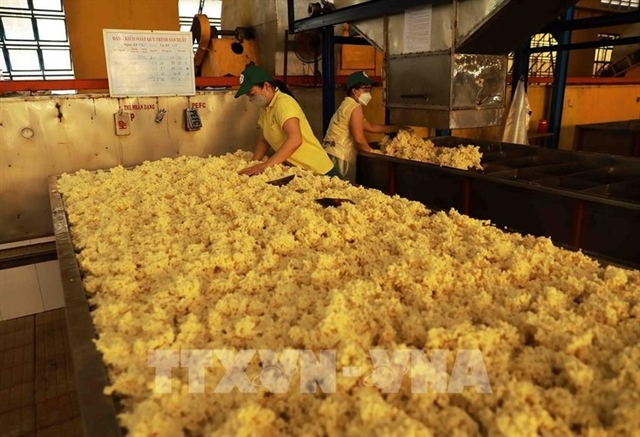
Workers process rubber for export at the Phú Riềng Company's factory. — VNA/VNS Photo
HÀ NỘI — To achieve its 2025 rubber export target of US$3.3 billion – down 4.6 per cent from 2024, Việt Nam needs to strive to earn $2.1 billion in the second half of this year, according to the Ministry of Agriculture and Environment (MAE).
The export revenue in the first six months is estimated at $1.2 billion, statistics show.
The MAE said the rubber sector needs to focus on various measures tailored to each key market such as the European Union (EU), with an emphasis on high-quality products that comply with the EU Deforestation Regulation (EUDR), starting in 2026.
The EU remains a strategic market, accounting for 7.4 per cent of Việt Nam’s total rubber export value. Notably, 95 per cent of the rubber exports to the EU are high-value-added products. However, maintaining and expanding the market share in the EU will require strict compliance with the EUDR, which mandates full traceability and assurance that production does not contribute to deforestation.
Việt Nam's rubber supply chain is still complex, with 63 per cent of raw materials sourced from smallholders and 37 per cent from large-scale plantations. Imported rubber, mainly from Cambodia and to a lesser extent from Laos, also contributes to the domestic processing supply.
According to Forest Trends expert Nguyễn Vinh Quang, ensuring EUDR compliance will require strict monitoring of imported raw materials, down to each cultivation plot.
Efforts are underway to develop EUDR-compliant production models. Large-scaled plantations under the Vietnam Rubber Group are leading in standardisation, while several private companies such as Mai Vĩnh, Việt Sing, and Thuận Lợi are working closely with smallholders and purchasing agents to establish traceable and legal supply chains.
These compliant rubber products are already being exported to the EU at premiums of $150–300 per tonne compared to conventional rubber.
"Demand is increasing. We’re planning to expand production to satisfy the market,” said Đặng Thị Hoa Mai, Director of the Mai Vĩnh Company.
Phan Trần Hồng Vân of the Vietnam Rubber Association (VRA) affirmed the association’s commitment to supporting stakeholders in meeting the EUDR and other global market requirements, adding international cooperation and shared experience will be key to building a sustainable and transparent rubber supply chain.
Experts also emphasised the need for technical and financial support for private companies and smallholders, as well as the development of a unified national traceability platform. Public-private partnerships should be expanded to strengthen connections between domestic producers and major markets such as China, the US, and the EU.
The MAE said it is also encouraging innovation in processing and quality improvement to help Vietnamese rubber products penetrate mid- and high-end segments in markets like Spain and Italy, especially in fashion and home goods.
It will also support businesses in building brands and achieving international certificates such as the Forest Stewardship Council (FSC) one for sustainable management, contributing to expanding market share and enhancing the position of the Vietnamese rubber industry in the international market. — VNS
Source: VNS
Related News

BANKING / FINANCE / INSURANCE / TAX
REMITTANCES TO HCM CITY RISE NEARLY 40% IN Q3
Remittances to HCM City reached more than US$2.83 billion in the third quarter of this year, up 39.5 per cent from the previous quarter and 3.6 per cent year-on-year. This was the first quarter showing positive annual growth this year, helping narrow the decline in remittance inflows over the first nine months. According to the State Bank of Vietnam (SBV)’s Regional Branch 2, remittances transferred to HCM City through credit institutions and economic organisations totalled $2.835 billion in Q3, an increase of more than $802 million from the previous quarter.

TECHNOLOGY
TECH SECTOR GROWTH OPENS UP OPPORTUNITIES FOR VIỆT NAM TO GO GLOBAL
The growth of the electronics, semiconductor and high-tech sectors worldwide is opening up a variety of opportunities for Vietnamese enterprises to integrate more deeply into the global supply chain. However, to become suppliers for these corporations, domestic enterprises must meet rigorous standards regarding quality, technology, productivity and order fulfilment capabilities.
VIETNAM ECONOMY INVESTMENT
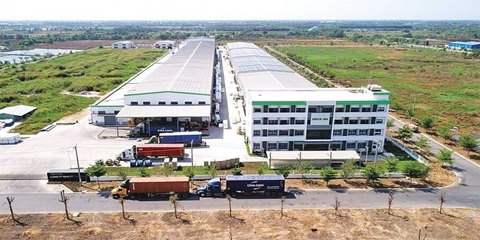
FOREIGN INVESTORS SEEKING A SYNCHRONISED MANUFACTURING ECOSYSTEM
Instead of focusing only on land costs and incentives as usual, foreign investors are seeking a synchronised manufacturing ecosystem, from stable power supply and logistics to shared infrastructure and the convenience of completing residence procedures for experts to serve their long-term investment in the country.
MEMBER CORNER / PROMOTIONS
SENTRYSAFE FHW40200 – PROTECT YOUR VALUABLES, ENJOY PEACE OF MIND!
Looking for a reliable solution to protect your important documents, cash, and valuables from fire and water damage? Genuine SENTRYSAFE - Reliable protection for your valuables and peace of mind! Contact Sen Wai Vietnam for more information and personalized product recommendations.
PROPERTY / INDUSTRIAL ZONE
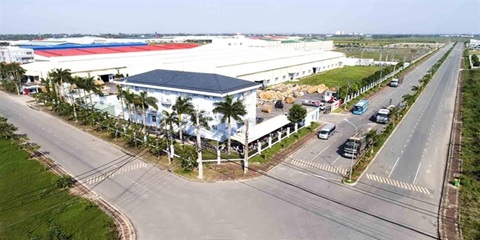
HCM CITY ATTRACTS US$5.7 BILLION INTO EXPORT PROCESSING AND INDUSTRIAL ZONES
HCM City attracted US$5.7 billion in domestic and foreign investment into its export processing and industrial zones during the first nine months of 2026. The figure exceeded the city's full-year target by 31 per cent, highlighting strong momentum in high-quality industrial investment under Resolution No.10-NQ/TW. Total investment reached 131 per cent of the 2026 target of $4.25 billion and represented a 29 per cent increase compared with the same period in 2025, according to the city's Export Processing and Industrial Zones Authority (HEPZA).
INFRASTRUCTURE / CONSTRUCTION / LOGISTIC / PORT
DONG THAP PROVINCE STEPS UP INDUSTRIAL EXPANSION AND INFRASTRUCTURE CONNECTIVITY
Accelerating public investment, strengthening inter-regional connectivity, and expanding industrial land are helping Dong Thap efficiently bolster competitiveness and drive economic growth. Following the 2025 merger of the former Dong Thap and Tien Giang provinces, the expanded Dong Thap province in the Mekong Delta faces mounting pressure to accelerate infrastructure development and strengthen connectivity among local economic zones, urban areas, industrial parks (IPs), and production centres.
Events Sponsors






















