Want to be in the loop?
subscribe to
our notification
Business News
VIỆT NAM TAPS HALAL MARKET TO BOOST AGRICULTURAL EXPORTS
Vietnamese seafood processing and export enterprises are completing required procedures and adopting necessary technologies to bring their products into the halal market.
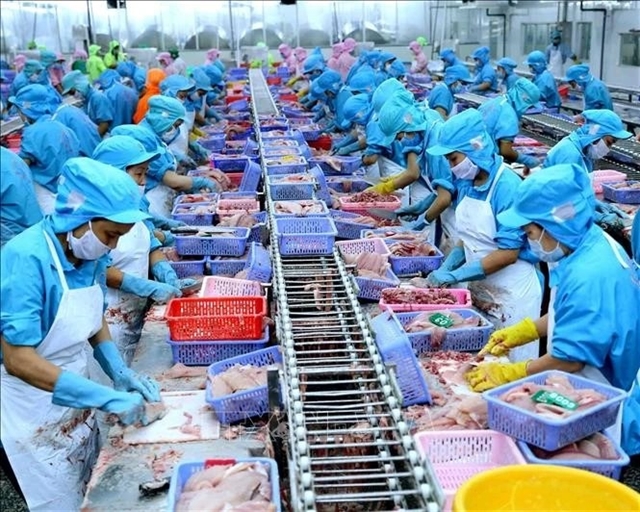
Processing tra fish for export. — VNA/VNS Photo
HCM CITY — The signing of multiple trade cooperation agreements between Việt Nam and Middle Eastern countries late last year has opened up new opportunities for Vietnamese goods to enter the halal market, creating strong momentum and prospects for Vietnamese businesses, particularly those operating in agriculture.
According to Deputy Minister of Agriculture and Environment Phùng Đức Tiến, products entering the halal market — which serves a quarter of the world’s population — must comply with Islamic laws, particularly for items such as food and cosmetics. The growing demand for imported food in Muslim countries presents significant opportunities for Việt Nam’s agricultural and aquatic products as well as its food processing industry.
Local seafood processing and export enterprises are completing required procedures and adopting necessary technologies to bring their products into the halal market.
According to Tô Thị Tường Lan, Deputy Secretary General of the Vietnam Association of Seafood Exporters and Producers (VASEP), Vietnamese seafood companies are actively pursuing strategies to expand into new markets to mitigate risks associated with overreliance on one or a few traditional markets.
Among these firms, Minh Phú Group has obtained halal certification and is boosting shrimp exports to the halal market. Other companies, such as Vĩnh Hoàn Corporation and Biển Đông Seafood Co., Ltd., are also expanding their presence in this market in addition to their traditional markets.
Lan said Việt Nam’s production standards, such as VietGAP, GlobalGAP and HACCP, are largely aligned with halal requirements, providing a solid foundation for the halal certification process.
Việt Nam has also strengthened partnerships with halal certification bodies in the member states of the Organisation of Islamic Cooperation (OIC), she noted, adding that recent agreements between halal management agencies in Việt Nam, Malaysia and Indonesia aim to promote mutual recognition of halal certificates and facilitate smoother market access.
In addition to agricultural producers, many other food companies in Việt Nam have also obtained halal certification and are exporting their products to the halal market. According to the Food and Foodstuff Association of HCM City, major food enterprises such as Vinamilk, Bibica and Cholimex Food JSC have been exporting to Muslim markets for several years. Notably, Vinamilk has successfully won over consumers in the Middle East with high-quality halal-certified products that fully meet the region's stringent standards and requirements.
According to Lê Châu Hải Vũ, a consultant and improvement specialist at the Ministry of Industry and Trade (MoIT), halal certification is a mandatory “entry pass” that food processing and export businesses must obtain in order to access markets in Muslim countries. He said that once certified, halal products gain key advantages such as meeting the regulatory requirements for export to Muslim countries and earning the trust of Muslim consumers.
Given the potential of the halal market, many Vietnamese agricultural exporters see it as both a driving force and a challenge in their strategy to penetrate new markets and boost the country’s export revenue.
General Director of Vietnam Agriculture Joint Stock Company Nguyễn Văn Hà said that the halal market is indeed a highly promising one for the future. To successfully tap into it, businesses must work together to establish a closed value chain model, ranging from product procurement and quality standardisation to the application of traceability technology, exports and market development.
According to Hà, investing in international standard systems such as halal, GlobalGAP or ISO is an essential path for enhancing the competitiveness of Vietnamese agricultural products. — VNS
Source: VNS
Related News

BANKING / FINANCE / INSURANCE / TAX
REMITTANCES TO HCM CITY RISE NEARLY 40% IN Q3
Remittances to HCM City reached more than US$2.83 billion in the third quarter of this year, up 39.5 per cent from the previous quarter and 3.6 per cent year-on-year. This was the first quarter showing positive annual growth this year, helping narrow the decline in remittance inflows over the first nine months. According to the State Bank of Vietnam (SBV)’s Regional Branch 2, remittances transferred to HCM City through credit institutions and economic organisations totalled $2.835 billion in Q3, an increase of more than $802 million from the previous quarter.
TECHNOLOGY
TECH SECTOR GROWTH OPENS UP OPPORTUNITIES FOR VIỆT NAM TO GO GLOBAL
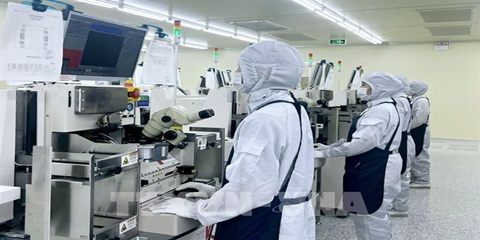
The growth of the electronics, semiconductor and high-tech sectors worldwide is opening up a variety of opportunities for Vietnamese enterprises to integrate more deeply into the global supply chain. However, to become suppliers for these corporations, domestic enterprises must meet rigorous standards regarding quality, technology, productivity and order fulfilment capabilities.
VIETNAM ECONOMY INVESTMENT
FOREIGN INVESTORS SEEKING A SYNCHRONISED MANUFACTURING ECOSYSTEM
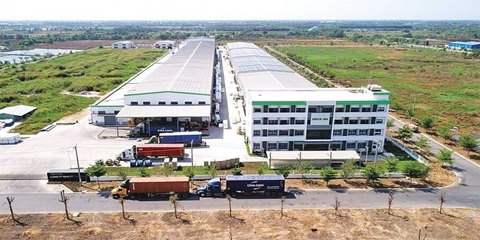
Instead of focusing only on land costs and incentives as usual, foreign investors are seeking a synchronised manufacturing ecosystem, from stable power supply and logistics to shared infrastructure and the convenience of completing residence procedures for experts to serve their long-term investment in the country.
MEMBER CORNER / PROMOTIONS
SENTRYSAFE FHW40200 – PROTECT YOUR VALUABLES, ENJOY PEACE OF MIND!
Looking for a reliable solution to protect your important documents, cash, and valuables from fire and water damage? Genuine SENTRYSAFE - Reliable protection for your valuables and peace of mind! Contact Sen Wai Vietnam for more information and personalized product recommendations.
PROPERTY / INDUSTRIAL ZONE
HCM CITY ATTRACTS US$5.7 BILLION INTO EXPORT PROCESSING AND INDUSTRIAL ZONES
HCM City attracted US$5.7 billion in domestic and foreign investment into its export processing and industrial zones during the first nine months of 2026. The figure exceeded the city's full-year target by 31 per cent, highlighting strong momentum in high-quality industrial investment under Resolution No.10-NQ/TW. Total investment reached 131 per cent of the 2026 target of $4.25 billion and represented a 29 per cent increase compared with the same period in 2025, according to the city's Export Processing and Industrial Zones Authority (HEPZA).
INFRASTRUCTURE / CONSTRUCTION / LOGISTIC / PORT
DONG THAP PROVINCE STEPS UP INDUSTRIAL EXPANSION AND INFRASTRUCTURE CONNECTIVITY
Accelerating public investment, strengthening inter-regional connectivity, and expanding industrial land are helping Dong Thap efficiently bolster competitiveness and drive economic growth. Following the 2025 merger of the former Dong Thap and Tien Giang provinces, the expanded Dong Thap province in the Mekong Delta faces mounting pressure to accelerate infrastructure development and strengthen connectivity among local economic zones, urban areas, industrial parks (IPs), and production centres.
Events Sponsors






















