Want to be in the loop?
subscribe to
our notification
Business News
VIỆT NAM TAPS ASEAN HALAL MARKET FOR AGRICULTURAL EXPORTS
The ASEAN region's growing demand, combined with geographic proximity that reduces transportation costs, creates a substantial competitive edge for Vietnamese enterprises.
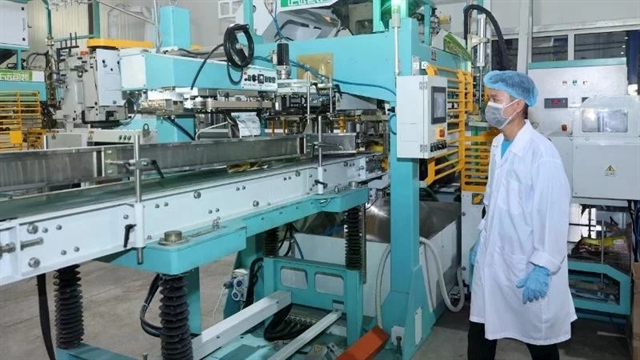
Việt Nam Rice Compay Limited in Đồng Tháp province has invested in a modern rice packaging line for export. — Photo nhandan.vn
HÀ NỘI — With a population of over 240 million Muslims, ASEAN has become a fertile ground for Vietnamese businesses looking to tap into the potential of halal product exports, particularly farm produce and processed foods.
The region is seen as a gateway for made-in-Việt Nam products to better integrate into the international halal supply chain.
Currently, Indonesia, Malaysia, the Philippines and Singapore represent the largest importers of halal agricultural products and foods in ASEAN, with key commodities including rice, vegetables, fruits, cashews, coffee, cocoa and seafood.
Opportunities from consumers’ needs
Within the halal ecosystem, agricultural products and processed foods form the foundation, accounting for a significant proportion of the global halal market value. The ASEAN region's growing demand, combined with geographic proximity that reduces transportation costs, creates a substantial competitive edge for Vietnamese enterprises.
Vietnamese Trade Counsellor in Indonesia Phạm Thế Cường said Indonesia, with 87 per cent of its population being Muslims, is the largest halal consumer in ASEAN. Indonesia's market is projected to reach US$282 billion by 2025, or 11.34 per cent of global halal consumer spending.
Vietnamese goods have already made headway in Indonesia, with rising export turnover over the recent past, creating a significant advantage for businesses seeking deeper inroads into the halal product segment. Direct flight connections between Việt Nam and Indonesia also facilitate smoother trade of perishable agricultural goods, helping preserve product quality.
In Malaysia, the Vietnamese Trade Office said Vietnamese exports like rice, fruits and vegetables, and coffee experienced impressive growth in 2024. While halal certification is not mandatory for imports, many Malaysian importers favour certified goods to cater to local consumer expectations. Over the past years, the country has been very active in developing its halal industry, with the renowned JAKIM certification system.
Meanwhile, Singapore represents a niche but high-potential market for halal agricultural products, driven by quality consumption demands and its position as a regional transshipment hub. The demand for halal food not only comes from Muslims but extends to the consumer group interested in quality, food safety and ethical consumption. Singapore also serves as a gateway for Vietnamese halal products to enter regional and global Halal distribution systems.
In the Philippines, the third-largest Muslim population in Southeast Asia, Vietnamese Trade Counsellor Phùng Văn Thành said the archipelago nation imported over $100 million worth of halal standard products annually during 2020-2024 from such major suppliers as the US, New Zealand and India. Notably, only 2 per cent of the imports came from ASEAN member states, signaling a significant untapped opportunity for Vietnamese firms.
Expanding halal presence in retail systems
Việt Nam's Trade Office in Indonesia suggested exporters partner with local distributors to access both traditional stores and supermarkets like Hypermart, Carrefour Transmart, Giant, Lotte Mart, Superindo, Food Mart, Hero and Food Hall to enter deeper into this market. Better engagement in e-commerce is also key as Indonesia is among the ASEAN leaders in online retail, with major platforms including Shopee, Tokopedia, Lazada and TikTok Shop.
In the Malaysian market, Trade Counsellor Lê Phú Cường advised Vietnamese enterprises to set up trade connections with halal-certified food importers and large retail chains such as NSK Trade City, Mydin and Ecoshop. Besides, regular participation in annual trade fairs presents prime opportunities for business matchmaking and market exposure.
Sharing this perspective, Vietnamese Trade Counsellor in Singapore Cao Xuân Thắng laid stress on the importance of participating in trade fairs to boost halal trade with partners in ASEAN. — VNS
Source: VNS
Related News

BANKING / FINANCE / INSURANCE / TAX
REMITTANCES TO HCM CITY RISE NEARLY 40% IN Q3
Remittances to HCM City reached more than US$2.83 billion in the third quarter of this year, up 39.5 per cent from the previous quarter and 3.6 per cent year-on-year. This was the first quarter showing positive annual growth this year, helping narrow the decline in remittance inflows over the first nine months. According to the State Bank of Vietnam (SBV)’s Regional Branch 2, remittances transferred to HCM City through credit institutions and economic organisations totalled $2.835 billion in Q3, an increase of more than $802 million from the previous quarter.

TECHNOLOGY
TECH SECTOR GROWTH OPENS UP OPPORTUNITIES FOR VIỆT NAM TO GO GLOBAL
The growth of the electronics, semiconductor and high-tech sectors worldwide is opening up a variety of opportunities for Vietnamese enterprises to integrate more deeply into the global supply chain. However, to become suppliers for these corporations, domestic enterprises must meet rigorous standards regarding quality, technology, productivity and order fulfilment capabilities.

VIETNAM ECONOMY INVESTMENT
FOREIGN INVESTORS SEEKING A SYNCHRONISED MANUFACTURING ECOSYSTEM
Instead of focusing only on land costs and incentives as usual, foreign investors are seeking a synchronised manufacturing ecosystem, from stable power supply and logistics to shared infrastructure and the convenience of completing residence procedures for experts to serve their long-term investment in the country.
MEMBER CORNER / PROMOTIONS
SENTRYSAFE FHW40200 – PROTECT YOUR VALUABLES, ENJOY PEACE OF MIND!
Looking for a reliable solution to protect your important documents, cash, and valuables from fire and water damage? Genuine SENTRYSAFE - Reliable protection for your valuables and peace of mind! Contact Sen Wai Vietnam for more information and personalized product recommendations.

PROPERTY / INDUSTRIAL ZONE
HCM CITY ATTRACTS US$5.7 BILLION INTO EXPORT PROCESSING AND INDUSTRIAL ZONES
HCM City attracted US$5.7 billion in domestic and foreign investment into its export processing and industrial zones during the first nine months of 2026. The figure exceeded the city's full-year target by 31 per cent, highlighting strong momentum in high-quality industrial investment under Resolution No.10-NQ/TW. Total investment reached 131 per cent of the 2026 target of $4.25 billion and represented a 29 per cent increase compared with the same period in 2025, according to the city's Export Processing and Industrial Zones Authority (HEPZA).

INFRASTRUCTURE / CONSTRUCTION / LOGISTIC / PORT
DONG THAP PROVINCE STEPS UP INDUSTRIAL EXPANSION AND INFRASTRUCTURE CONNECTIVITY
Accelerating public investment, strengthening inter-regional connectivity, and expanding industrial land are helping Dong Thap efficiently bolster competitiveness and drive economic growth. Following the 2025 merger of the former Dong Thap and Tien Giang provinces, the expanded Dong Thap province in the Mekong Delta faces mounting pressure to accelerate infrastructure development and strengthen connectivity among local economic zones, urban areas, industrial parks (IPs), and production centres.
Events Sponsors






















