Want to be in the loop?
subscribe to
our notification
Business News
VIỆT NAM SEEKS TO DRAW MORE FDI INFLOWS INTO SEMICONDUCTORS, AI
Global tech giant Qualcomm has just launched an Artificial Intelligence (AI) Research & Development (R&D) centre in Việt Nam, which is expected to help position Việt Nam as a leading AI R&D hub in the region and the world.
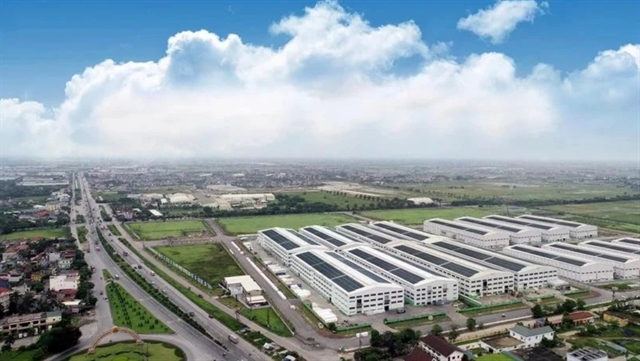
An Phát Complex Industrial Zone in Hải Dương Province. Despite global investment challenges, foreign investment in Việt Nam remains on an upward trend. — VNA/VNS Photo Tuấn Anh
HÀ NỘI — Global tech giant Qualcomm has just launched an Artificial Intelligence (AI) Research & Development (R&D) centre in Việt Nam, which is expected to help position Việt Nam as a leading AI R&D hub in the region and the world.
Deputy Minister of Finance Lê Tấn Cận called this event a “significant milestone” that marks a new phase of cooperation between Qualcomm and Việt Nam in the field of AI. He urged Qualcomm to continue advancing groundbreaking AI research in Việt Nam and strengthen cooperation with the Việt Nam National Innovation Centre (NIC) to help develop the country’s AI workforce.
Qualcomm’s R&D centre project was also highlighted by Minister of Finance Nguyễn Văn Thắng as a bright spot in foreign investment attraction in the first five months of the year. In a report to the National Assembly ahead of the Q&A session related finance at the 15th legislature’s 9th session, Thắng noted that Việt Nam attracted over US$18.4 billion in registered FDI during this period, up 66.2 per cent year-on-year.
More importantly, foreign investment is increasingly being steered toward key sectors such as processing, manufacturing, digital transformation, and artificial intelligence, he said.
Many major companies from the US and the European Union (EU) are pouring more investment and building supply chains in Việt Nam, he stressed, noting that this reflects Việt Nam’s growing importance in global supply chains.
Beyond the R&D centre project, Qualcomm has other plans in Việt Nam. At a meeting with Party General Secretary Tô Lâm, Alex Rogers, head of Global Affairs at Qualcomm, affirmed that the company will continue to invest in Việt Nam, particularly by nurturing Vietnamese talents to contribute to global AI development, thereby supporting Việt Nam’s development and strengthening Việt Nam–US relations.
AI and semiconductors are key sectors Việt Nam is prioritising to attract investment, aiming to foster new growth drivers and pursue double-digit economic growth in the coming period.
Attracting FDI for development
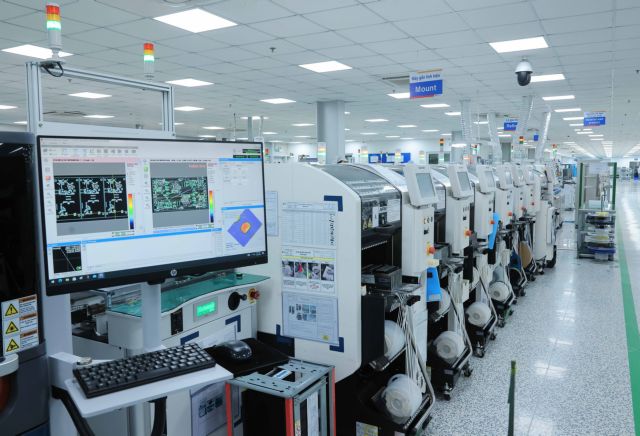
Chip embedding system at Korean - invested Bumjim Electronics Vina in Quảng Ninh Province. AI and semiconductors are key sectors Việt Nam is prioritising to attract investment. — VNA/VNS Photo Hoàng Hiếu
Despite global investment challenges, foreign investment in Việt Nam remains on an upward trend, with large-scale projects are also making a comeback.
In its report on foreign investment attraction during the January–May period, the Foreign Investment Agency under the Ministry of Finance highlighted several large-scale projects that have newly registered, and existing ones expanded their investments in Việt Nam.
The past five months marked the return of many large-scale real estate projects, totaling $4.99 billion — double the amount recorded in the same period last year. This surge shows the strong appeal of the Vietnamese market. These developments also align with a recent assessment by Savills Vietnam, which pointed to growing opportunities to attract investment from the global ultra-wealthy.
Việt Nam boasts opportunities to attract the global ultra-wealthy, thanks to its strategic location in Southeast Asia, rapid economic growth, stunning natural landscapes, and a significantly improving living environment, and ample room for real estate investment growth, according to Matthew Powell, director of Savills Hanoi.
Insiders said that attracting FDI into real estate is a positive driver for both the market and the broader economy. However, for Việt Nam’s economy to accelerate more robustly in the coming period, the key lies in processing and manufacturing projects, especially those in cutting-edge industries such as semiconductors and AI.
In a report to the National Assembly, Thắng underscored the importance of mobilising foreign investment resources for development, while outlining both traditional and emerging growth drivers to support the goal of achieving over 8 per cent economic growth this year.
He said that it is essential to promptly identify and address bottlenecks and recommendations related to major FDI projects; leverage task forces to provide close support and expedite investment procedures for these projects in order to speed up their implementation.
Thắng also underlined the need to develop effective mechanisms for selectively attracting FDI and tapping into indirect investment flows and international investment funds, including providing direct financial support or infrastructure for high-potential sectors to create breakthroughs and new motivations for growth. He stressed the importance to create the best possible conditions and encourage enterprises to conduct R&D activities or engage in technology transfer in Việt Nam.
To attract FDI and foster new growth drivers, a draft resolution on developing an international financial centre has recently been submitted to the NA. Once completed, the centre is expected to not only strengthen Việt Nam’s integration into the global financial market but also attract foreign financial institutions and capitalise on shifting flows of international investment capital. — VNS
Source: VNS
Related News
CHARITY / EXHIBITION / OTHER EVENTS
INVESTMENT OPPORTUNITIES IN CA MAU PROVINCE: 96 PROJECTS AND 20 STRATEGIC PROJECTS
We are pleased to share with you information on investment projects currently seeking investors in Ca Mau Province. Should your esteemed company or association be interested, we kindly invite you to review the project information and complete the registration form via the links provided. The Ho Chi Minh City Investment and Trade Promotion Centre (ITPC) will consolidate the expressions of interest and facilitate connections with the leadership of Ca Mau Province at a meeting tentatively scheduled for 13 November 2026 in Ho Chi Minh City.
MEMBER CORNER / PROMOTIONS
BẰNG KIỀU LIVESHOW - A SYMPHONY OF LOVE UNDER THE GOLDEN GLOW
A masterclass in live music that takes the audience on a soulful journey through immortal love songs, guided by the peerless artistry and emotive storytelling of renowned singer Bằng Kiều. The highlight of the night is his seamless musical chemistry with special guest Triệu Hồng Ngọc, promising passionate and deeply resonant duets inside the magnificent Grand Ballroom.
INFRASTRUCTURE / CONSTRUCTION / LOGISTIC / PORT
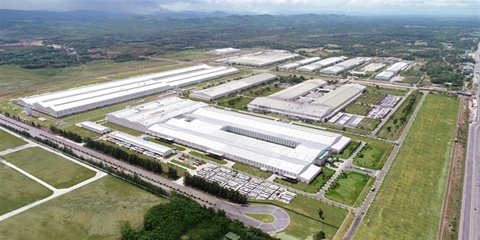
ĐÀ NẴNG GREEN-LIGHTS US$105 MILLION THAI DEVELOPMENT DEAL
The central city has approved an investment proposal by Thailand’s WHA Group to develop infrastructure for the 400ha WHA Đà Nẵng Industrial Park project on two communes of Thăng Bình and Đồng Dương, with an investment of more than VNĐ2.7 trillion (US$105 million). The city said it approved WHA Industrial Development International's status as an investor in the project, which is expected to take place between 2027 and 2034.
VIETNAM ECONOMY INVESTMENT
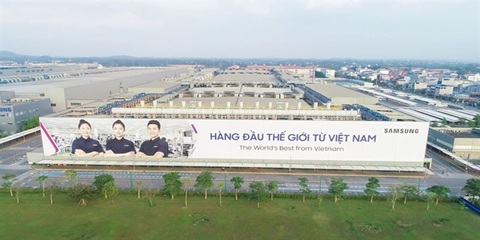
MOBILE PHONE EXPORTS RISE 20% TO $51.8 BILLION IN FIRST NINE MONTHS
Exports of mobile phones and components rose 20 per cent year-on-year to nearly US$51.8 billion in the first nine months of 2026, with China, the US and Republic of Korea accounting for more than half of the total. Shipments to the three markets reached a combined $26.18 billion, or 50.6 per cent of total exports of the product group during the period, according to data from the Vietnam Department of Customs under the Ministry of Finance.
INFRASTRUCTURE / CONSTRUCTION / LOGISTIC / PORT
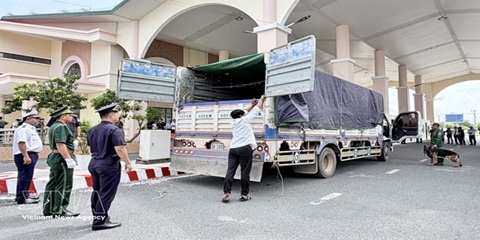
VIỆT NAM-CAMBODIA TRADE GATHERS PACE TOWARDS $20 BILLION TARGET
Trade between Việt Nam and Cambodia continues to grow, remaining a bright spot and a key pillar of bilateral cooperation as the two countries aim to raise two-way trade to US$20 billion in the coming years. After setting a record of more than $11.3 billion last year, bilateral trade reached about $8.7 billion in the first eight months of this year, up 8.3 per cent year on year.
VIETNAM ECONOMY INVESTMENT
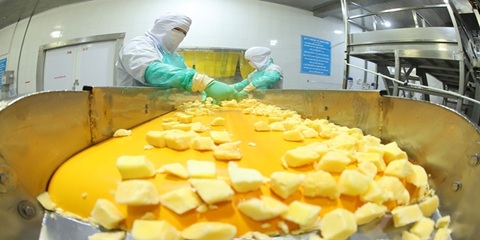
FRUIT AND VEGETABLE EXPORTS POISED TO HIT $10 BILLION IN 2026
Fruit and vegetable exports are on track to reach nearly US$10 billion in 2026, after rising 19.9 per cent year on year to nearly US$7.4 billion in the first nine months, driven by strong seasonal demand and abundant tropical fruit supplies. The Ministry of Agriculture and Environment said the growth reflected stronger international demand for fresh produce and processed agricultural products.
Events Sponsors






















