Want to be in the loop?
subscribe to
our notification
Business News
VIỆT NAM'S TRADE SHINES AS A PILLAR OF ECONOMIC GROWTH
Việt Nam's robust performance, representing an additional US$12 billion by March 15 compared to the same period last year, underscores trade's resilience amid global economic uncertainties.
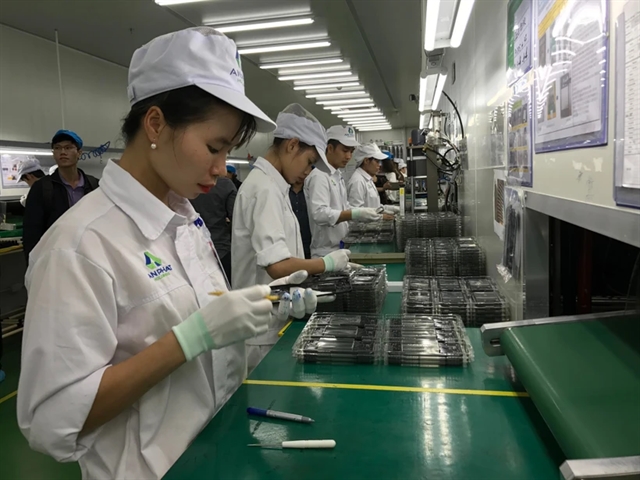
Enterprises invest in high technologies to boost export value. — VNA/VNS Photo
Việt Nam's trade sector remains a key driver of economic growth, with total import-export turnover reaching an impressive US$163 billion as of March 15, up 12 per cent year-on-year.
This robust performance, representing an increase of $12 billion compared to the same period last year, underscores the sector’s resilience amid ongoing global economic uncertainty.
Enterprises push forward
Since the start of 2025, Việt Nam’s export turnover has climbed to $82.3 billion, a rise of 9.1 per cent, while imports reached $80.49 billion, up 15.2 per cent. This resulted in a trade surplus of $1.81 billion.
To maintain momentum, enterprises are stepping up efforts to boost market share and export value. Thirteen product categories have surpassed $1 billion in export revenue, together accounting for $65 billion, or 79 per cent of total exports.
Leading the way are computers and electronic components, which generated $16.5 billion, a 29.1 per cent year-on-year rise. Mobile phones and accessories followed with $15.7 billion in exports.
Other standout sectors include electronic equipment and components, up 29.2 per cent to $3.75 billion, while coffee exports surged 42 per cent to $675 million. Seafood exports rose 9.4 per cent to $603 million, underscoring Việt Nam’s diversified export strength.
However, global trade growth is slowing, with the International Monetary Fund, World Bank, and Organisation for Economic Co-operation and Development projecting modest growth of 3.2–3.3 per cent in 2025.
Geopolitical tensions, energy instability, and ongoing supply chain disruptions pose risks to Việt Nam’s export-driven economy. Stricter sustainability and environmental standards in key markets such as the US and EU add further complexity.
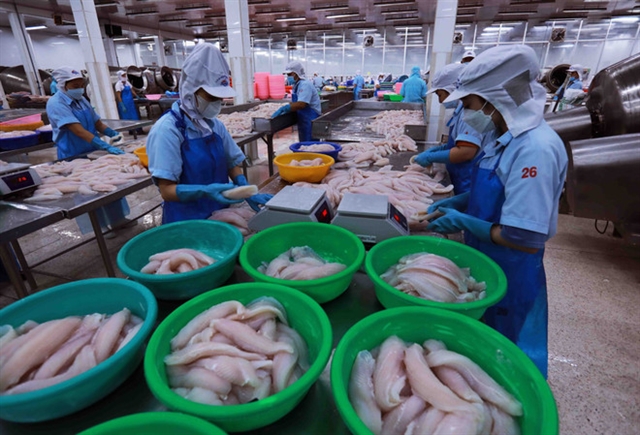
Processed seafood for export. VNA/VNS Photo
Policy shifts for growth
While exports continue to support economic growth, new US trade policies are emerging as a growing concern, given their potential impact on supply chains and global economic stability.
From April 2, the US introduced new trade and tax measures that could affect international trade flows. Businesses are being urged to monitor developments closely and adapt accordingly.
At a recent seminar on US trade policies and Việt Nam’s response, Nguyễn Nam Trân, CEO of SGS Việt Nam, said a lack of deep understanding of new US regulations remained a significant challenge for local exporters. These changes could impact export volumes and raise compliance costs, putting pressure on manufacturers.
To stay competitive, Vietnamese enterprises must keep pace with evolving global policies and strengthen their export strategies.
Since Donald Trump came to power again, businesses have closely tracked US trade shifts, recognising both risks and opportunities. While challenges persist, core export industries—electronics, textiles, footwear, wood, and seafood—are expected to maintain growth into 2025.
Electronics exports, already contributing $28 billion (over 30 per cent of total exports), are forecast to climb further, potentially reaching $140 billion by year’s end.
The textile and footwear sectors, despite facing tougher EU and US sustainability rules, continue to show resilience. By the end of Q1, textile exports are projected to rise 9 per cent, wooden products nearly 9 per cent, and footwear 10 per cent.
According to UK-based consulting firm Kelmer Group, Việt Nam is benefiting from free trade agreements and increased investment interest, especially in electronics, garment-textiles, and renewable energy. Diversifying supply chains and attracting multinational firms is solidifying its role as a global manufacturing hub.
SGS Việt Nam recommends shifting from low-value processing to high-value production. Strengthening domestic manufacturing, improving product quality, and aligning with international standards will be essential for maintaining Việt Nam’s competitiveness. VNS
Confidence Index
The latest EuroCham Vietnam Business Confidence Index (BCI) for Q1 2025, conducted just before major global trade changes, showed a mix of guarded optimism and growing caution among European firms. The index stood at 64.6, reflecting overall stability, but respondents cited external uncertainty—particularly from the US—as a rising concern.
Many highlighted a “wait-and-see” approach, with uncertainty over new US trade policies shaping sentiment. The survey, conducted from March 10 to 27, preceded announcements of US tariffs and broader policy shifts.
At the time, Việt Nam’s ongoing reforms helped maintain a relatively positive outlook. While many firms remained neutral to positive about the business climate, caution was evident as potential shocks loomed.
EuroCham Chairman Bruno Jaspaert said: “Most European firms didn’t anticipate such drastic tariff moves and were confident in Việt Nam’s diplomatic ability to navigate tensions. Two-thirds of respondents reported a neutral stance—not overly optimistic, but not pessimistic either.”
The index also reflected cautious views on supply chains and financing, with 39 per cent citing pricing strategies, including tariff impacts, as a major challenge. Another 36 per cent expected difficulties related to market demand and revenue.
“Despite this, most businesses hadn’t adjusted investment or hiring plans yet, reflecting a sense of uncertainty,” Jaspaert said. Thue Quist Thomasen, CEO of Decision Lab, noted: “This quarter’s BCI captures a revealing moment—just before global trade dynamics shifted. Sentiment was steady but alert, confident yet watchful.”
Although 37 per cent of firms expressed confidence in Việt Nam’s economic growth, 52 per cent saw global slowdowns and shifting trade rules as their top concern. Another 36 per cent pointed to regulatory uncertainty as a dampening factor.While 68 per cent would still recommend Việt Nam as an investment destination, this marks a drop from 75 per cent in Q4 2024. Infrastructure (37 per cent) and administrative reform (29 per cent) were key areas for improvement.
Ongoing issues such as inconsistent law enforcement, complex visa rules, and VAT refund delays remain challenges. While infrastructure and workforce quality have improved, 70 per cent of businesses reported little to no progress in regulatory efficiency.Government restructuring has inspired some optimism, with hopes for faster procedures, decentralisation, and digital submissions. However, most firms remain unsure how upcoming legislative changes—such as July’s new Data Law—will affect operations.“Việt Nam’s resilience lies not just in growth figures, but in its adaptability,” Jaspaert said. “Despite global turbulence, the outlook remains one of engagement and long-term opportunity.” VNS
Source: VNS
Related News

BANKING / FINANCE / INSURANCE / TAX
REMITTANCES TO HCM CITY RISE NEARLY 40% IN Q3
Remittances to HCM City reached more than US$2.83 billion in the third quarter of this year, up 39.5 per cent from the previous quarter and 3.6 per cent year-on-year. This was the first quarter showing positive annual growth this year, helping narrow the decline in remittance inflows over the first nine months. According to the State Bank of Vietnam (SBV)’s Regional Branch 2, remittances transferred to HCM City through credit institutions and economic organisations totalled $2.835 billion in Q3, an increase of more than $802 million from the previous quarter.
TECHNOLOGY
TECH SECTOR GROWTH OPENS UP OPPORTUNITIES FOR VIỆT NAM TO GO GLOBAL
The growth of the electronics, semiconductor and high-tech sectors worldwide is opening up a variety of opportunities for Vietnamese enterprises to integrate more deeply into the global supply chain. However, to become suppliers for these corporations, domestic enterprises must meet rigorous standards regarding quality, technology, productivity and order fulfilment capabilities.
VIETNAM ECONOMY INVESTMENT
FOREIGN INVESTORS SEEKING A SYNCHRONISED MANUFACTURING ECOSYSTEM
Instead of focusing only on land costs and incentives as usual, foreign investors are seeking a synchronised manufacturing ecosystem, from stable power supply and logistics to shared infrastructure and the convenience of completing residence procedures for experts to serve their long-term investment in the country.
MEMBER CORNER / PROMOTIONS
SENTRYSAFE FHW40200 – PROTECT YOUR VALUABLES, ENJOY PEACE OF MIND!
Looking for a reliable solution to protect your important documents, cash, and valuables from fire and water damage? Genuine SENTRYSAFE - Reliable protection for your valuables and peace of mind! Contact Sen Wai Vietnam for more information and personalized product recommendations.
PROPERTY / INDUSTRIAL ZONE
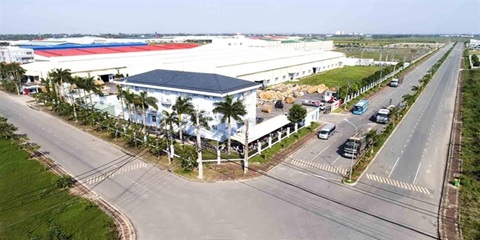
HCM CITY ATTRACTS US$5.7 BILLION INTO EXPORT PROCESSING AND INDUSTRIAL ZONES
HCM City attracted US$5.7 billion in domestic and foreign investment into its export processing and industrial zones during the first nine months of 2026. The figure exceeded the city's full-year target by 31 per cent, highlighting strong momentum in high-quality industrial investment under Resolution No.10-NQ/TW. Total investment reached 131 per cent of the 2026 target of $4.25 billion and represented a 29 per cent increase compared with the same period in 2025, according to the city's Export Processing and Industrial Zones Authority (HEPZA).
INFRASTRUCTURE / CONSTRUCTION / LOGISTIC / PORT
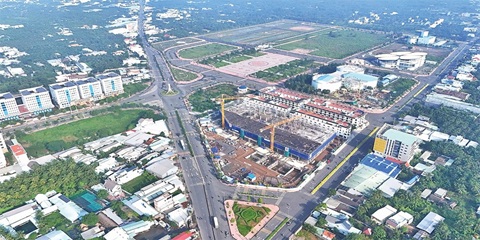
DONG THAP PROVINCE STEPS UP INDUSTRIAL EXPANSION AND INFRASTRUCTURE CONNECTIVITY
Accelerating public investment, strengthening inter-regional connectivity, and expanding industrial land are helping Dong Thap efficiently bolster competitiveness and drive economic growth. Following the 2025 merger of the former Dong Thap and Tien Giang provinces, the expanded Dong Thap province in the Mekong Delta faces mounting pressure to accelerate infrastructure development and strengthen connectivity among local economic zones, urban areas, industrial parks (IPs), and production centres.
Events Sponsors






















