Want to be in the loop?
subscribe to
our notification
Business News
VIỆT NAM’S CURRENT ACCOUNT SURPLUS FORECAST AT 6.2% OF GDP IN 2021
Việt Nam’s current account surplus is forecast at 6.2 per cent of GDP in 2021 and will narrow over the coming decade as part of a general long-term narrowing trend.
According to a recent report from international financial data provider Fitch Solutions, the surplus is slightly narrower against its 6.6 per cent estimate recorded last year.
“Improved market access from the EU-Việt Nam free trade agreement (FTA), UK-Việt Nam FTA, Comprehensive and Progressive Agreement for Trans-Pacific Partnership, and Regional Comprehensive Economic Partnership will support a widening of Việt Nam’s goods trade surplus. However, an urgent need for transport and logistical infrastructure development in Việt Nam, which tend to heavily involve foreign consultants and other services, will see the services deficit widen. Moreover, with foreign-invested enterprises being the key driver of export growth, rising corporate profit remitted overseas will widen the primary income deficit over time,” the report stated.
“From a structural perspective, an increase in investment opportunities domestically as the external facing sector develops and the middle class grows in Việt Nam will also see the excess of savings over investments narrow, and reduce the current account surplus accordingly over the long run.”
According to Fitch, Việt Nam’s continued current account surplus will be spearheaded by its goods trade surplus and supported by a gradually growing secondary income surplus which will expand in line with the global economy on the back of rising remittances from Vietnamese migrant workers overseas.
Việt Nam’s goods trade surplus will continue to widen as an open-door trade policy, foreign direct investment (FDI) friendly policies, favourable population demographics, and a generally good business environment position it well to attract capital from businesses seeking to diversify their supply chains in the region.
“This component will be the main driver of Việt Nam’s current account surplus, with the goods trade surplus growing from 11.2 per cent of GDP in 2020 to 12.1 per cent in 2030. With the Vietnamese government also actively seeking to improve its international market access and diversify its export markets through free trade agreements, we expect the goods trade surplus to continue widening over the coming decade,” Fitch noted.
As part of Fitch’s outlook, it expects the country’s manufacturing exports to remain mostly in low-middle value-added goods over the coming decade; such goods account for 85 per cent of Việt Nam’s goods exports.
Although the government aims to push the country’s manufacturing operations up the value chain, it is faced with several challenges and the transition will be slow, according to Fitch.
In Fitch’s view, Việt Nam’s economic development closely resembles that of China two three decades ago, with the country’s manufacturing engaged in low-value-added activities in Special Economic Zones (SEZ) set up by the government. Such zones typically grant businesses operating within the tax and tariff concessions and other benefits to attract foreign investment. However, a reliance on SEZs for growth implies a reliance on FDI and export processing, which given the high import content of Vietnamese exports, suggests little scope for knowledge transfer to domestic businesses and manufacturers.
Moreover, raising the level of human capital in the country will also be crucial to take on more complex manufacturing. Many foreign manufacturers continue to flag a shortage of skilled labour in the country, and while the government is aware and trying to address the shortage through education and labour reform, this will not be a problem easily solved within the next five years, with ten years also being a stretch.
According to Fitch, another challenge that the Government will have to address is the infrastructure deficit in the country, which will come under increasing pressure amid an influx of FDI in the manufacturing sector.
The inability to bring in foreign experts will also be a challenge in project development amid the pandemic in 2020 and 2021. This suggests that an urgent push by the government to develop essential transport and logistical infrastructure over the coming decade will increase services imports.
Meanwhile, a burgeoning middle class in Việt Nam along with relatively rapid economic growth will also see an increase in outbound leisure travel post-pandemic and this will also see services imports rise.
Both of these will widen the services trade deficit, counteracting the expansion of the goods trade surplus and slow rise in the secondary income surplus on the current account balance. A widening primary income deficit will also act to narrow the current account surplus, according to Fitch.
Source: VNS
Related News

BANKING / FINANCE / INSURANCE / TAX
REMITTANCES TO HCM CITY RISE NEARLY 40% IN Q3
Remittances to HCM City reached more than US$2.83 billion in the third quarter of this year, up 39.5 per cent from the previous quarter and 3.6 per cent year-on-year. This was the first quarter showing positive annual growth this year, helping narrow the decline in remittance inflows over the first nine months. According to the State Bank of Vietnam (SBV)’s Regional Branch 2, remittances transferred to HCM City through credit institutions and economic organisations totalled $2.835 billion in Q3, an increase of more than $802 million from the previous quarter.
TECHNOLOGY
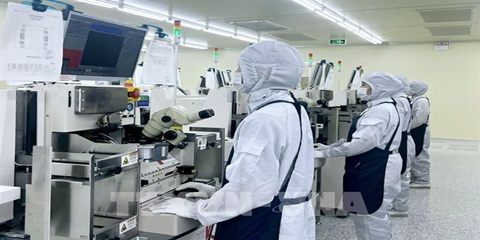
TECH SECTOR GROWTH OPENS UP OPPORTUNITIES FOR VIỆT NAM TO GO GLOBAL
The growth of the electronics, semiconductor and high-tech sectors worldwide is opening up a variety of opportunities for Vietnamese enterprises to integrate more deeply into the global supply chain. However, to become suppliers for these corporations, domestic enterprises must meet rigorous standards regarding quality, technology, productivity and order fulfilment capabilities.
VIETNAM ECONOMY INVESTMENT
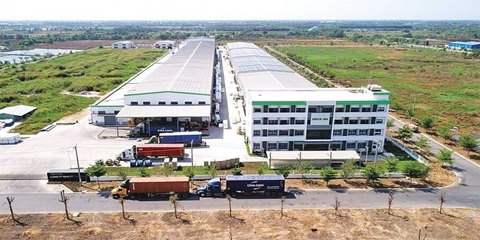
FOREIGN INVESTORS SEEKING A SYNCHRONISED MANUFACTURING ECOSYSTEM
Instead of focusing only on land costs and incentives as usual, foreign investors are seeking a synchronised manufacturing ecosystem, from stable power supply and logistics to shared infrastructure and the convenience of completing residence procedures for experts to serve their long-term investment in the country.
MEMBER CORNER / PROMOTIONS
SENTRYSAFE FHW40200 – PROTECT YOUR VALUABLES, ENJOY PEACE OF MIND!
Looking for a reliable solution to protect your important documents, cash, and valuables from fire and water damage? Genuine SENTRYSAFE - Reliable protection for your valuables and peace of mind! Contact Sen Wai Vietnam for more information and personalized product recommendations.
PROPERTY / INDUSTRIAL ZONE
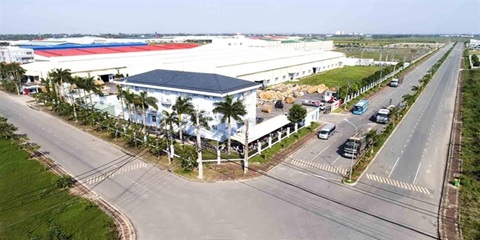
HCM CITY ATTRACTS US$5.7 BILLION INTO EXPORT PROCESSING AND INDUSTRIAL ZONES
HCM City attracted US$5.7 billion in domestic and foreign investment into its export processing and industrial zones during the first nine months of 2026. The figure exceeded the city's full-year target by 31 per cent, highlighting strong momentum in high-quality industrial investment under Resolution No.10-NQ/TW. Total investment reached 131 per cent of the 2026 target of $4.25 billion and represented a 29 per cent increase compared with the same period in 2025, according to the city's Export Processing and Industrial Zones Authority (HEPZA).
INFRASTRUCTURE / CONSTRUCTION / LOGISTIC / PORT
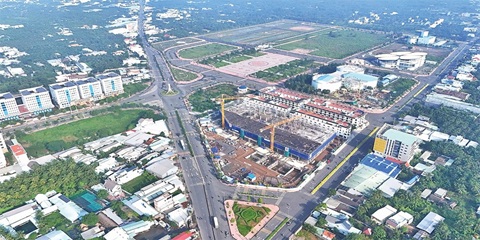
DONG THAP PROVINCE STEPS UP INDUSTRIAL EXPANSION AND INFRASTRUCTURE CONNECTIVITY
Accelerating public investment, strengthening inter-regional connectivity, and expanding industrial land are helping Dong Thap efficiently bolster competitiveness and drive economic growth. Following the 2025 merger of the former Dong Thap and Tien Giang provinces, the expanded Dong Thap province in the Mekong Delta faces mounting pressure to accelerate infrastructure development and strengthen connectivity among local economic zones, urban areas, industrial parks (IPs), and production centres.
Events Sponsors






















