Want to be in the loop?
subscribe to
our notification
Business News
VIỆT NAM BOOSTS RICE TRADE THROUGH 2030 WITH NEW MEASURES
Authorities are set to expand negotiations and trade deals with international partners while dismantling the logistical and regulatory snarls that have plagued the sector.
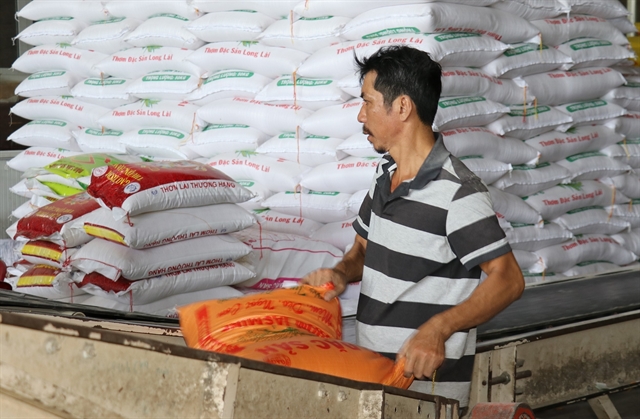
Packaging rice at a milling facility in Tiền Giang Province. — VNA/VNS Photo Hữu Chí
TIỀN GIANG — To enhance rice exports through 2030, the Ministry of Industry and Trade (MoIT) has rolled out a series of new measures focused on stricter oversight, faster implementation of the national export strategy, and stronger trade promotion efforts.
These solutions were introduced by the MoIT’s Export-Import Department during a conference held in the Mekong Delta province of Tiền Giang on Tuesday.
Authorities are set to expand negotiations and trade deals with international partners while dismantling the logistical and regulatory snarls that have plagued the sector. Local authorities were advised to restructure production and develop value chain linkages among organisations, cooperatives, and rice exporters.
Enterprises and traders were encouraged to upgrade deep processing facilities and equipment to churn out rice up to the exacting standards of discerning markets. The goal is to diversify export markets, reducing dependence on traditional buyers to mitigate associated risks.
Lưu Văn Phi, director of the provincial Department of Industry and Trade, highlighted Tiền Giang’s strategic strengths in rice production, citing its strategic location and robust transport infrastructure, including extensive road and waterway networks.
The province boasts around 200 major rice milling and processing facilities capable of grinding out three million tonnes of rice annually and generating an estimated US$100 million in export revenue.
To ensure the sector’s long-term growth, Phi stressed the need for exporters and traders to develop raw material zones, invest in factory upgrades, modernise production lines, enhance processing capabilities, and strengthen financial capacity. Building brand identity and gaining consumer trust in both domestic and foreign markets is seen as a critical step forward.
Current rice export regulations, he added, need to be revised to better keep pace with the industry’s evolving needs.
High volume, low value
According to the department, Việt Nam exported over 3.43 million tonnes of rice in the first four months of this year, raking in nearly $1.8 billion, a 8.1 per cent jump in volume but a 13.3 per cent dip in value from the same period last year.
The Philippines, as ever, remains Việt Nam’s largest rice buyer, making up 43.3 per cent of the export volume and 45.5 per cent of the value.
The average export price stood at $515 per tonne, down 19.8 per cent year-on-year. While this significant decline might seem concerning, it had been anticipated by industry experts and businesses, especially amid growing global supply.
Many Vietnamese exporters attributed the sharp decline in rice prices to the global market adjustment that began in late 2024. The lifting of India’s export ban significantly increased supply and exerted downward pressure on prices.
As India steps up exports to reduce record-high stockpiles, the global rice market is expected to remain in a low-price cycle in the near term – a development that poses challenges for Vietnamese exporters in terms of maintaining both profit margins and market share.
In its latest outlook, the United States Department of Agriculture (USDA) forecast global rice production in the 2025–26 crop year to reach a record 538.7 million tonnes, up one million tonnes from the previous season. Despite the rise in output, supply shortages may re-emerge due to an estimated increase of 6.1 million tonnes in global consumption.
Global rice trade is also projected to grow, with volumes expected to hit 60.5 million tonnes in 2025 and 61.3 million tonnes in 2026.
India is forecast to retain its dominant role, which may limit export growth opportunities for other major suppliers such as Việt Nam, Pakistan and Myanmar.
At the same conference, MoIT also sought feedback on the draft decree amending and supplementing certain provisions of Decree No 107/2018/NĐ-CP and Decree No 01/2025/NĐ-CP on rice export operations, signalling ongoing efforts to adapt Việt Nam’s regulatory framework to the shifting global landscape. — VNS
Source: VNS
Related News

BANKING / FINANCE / INSURANCE / TAX
REMITTANCES TO HCM CITY RISE NEARLY 40% IN Q3
Remittances to HCM City reached more than US$2.83 billion in the third quarter of this year, up 39.5 per cent from the previous quarter and 3.6 per cent year-on-year. This was the first quarter showing positive annual growth this year, helping narrow the decline in remittance inflows over the first nine months. According to the State Bank of Vietnam (SBV)’s Regional Branch 2, remittances transferred to HCM City through credit institutions and economic organisations totalled $2.835 billion in Q3, an increase of more than $802 million from the previous quarter.

TECHNOLOGY
TECH SECTOR GROWTH OPENS UP OPPORTUNITIES FOR VIỆT NAM TO GO GLOBAL
The growth of the electronics, semiconductor and high-tech sectors worldwide is opening up a variety of opportunities for Vietnamese enterprises to integrate more deeply into the global supply chain. However, to become suppliers for these corporations, domestic enterprises must meet rigorous standards regarding quality, technology, productivity and order fulfilment capabilities.
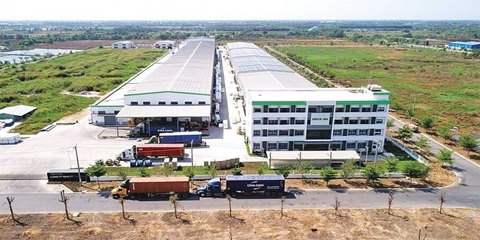
VIETNAM ECONOMY INVESTMENT
FOREIGN INVESTORS SEEKING A SYNCHRONISED MANUFACTURING ECOSYSTEM
Instead of focusing only on land costs and incentives as usual, foreign investors are seeking a synchronised manufacturing ecosystem, from stable power supply and logistics to shared infrastructure and the convenience of completing residence procedures for experts to serve their long-term investment in the country.
MEMBER CORNER / PROMOTIONS
SENTRYSAFE FHW40200 – PROTECT YOUR VALUABLES, ENJOY PEACE OF MIND!
Looking for a reliable solution to protect your important documents, cash, and valuables from fire and water damage? Genuine SENTRYSAFE - Reliable protection for your valuables and peace of mind! Contact Sen Wai Vietnam for more information and personalized product recommendations.
PROPERTY / INDUSTRIAL ZONE
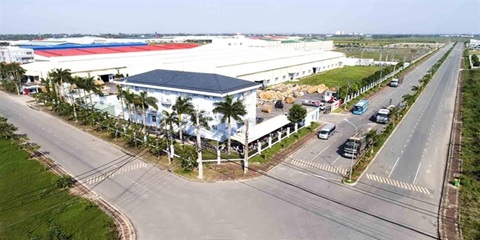
HCM CITY ATTRACTS US$5.7 BILLION INTO EXPORT PROCESSING AND INDUSTRIAL ZONES
HCM City attracted US$5.7 billion in domestic and foreign investment into its export processing and industrial zones during the first nine months of 2026. The figure exceeded the city's full-year target by 31 per cent, highlighting strong momentum in high-quality industrial investment under Resolution No.10-NQ/TW. Total investment reached 131 per cent of the 2026 target of $4.25 billion and represented a 29 per cent increase compared with the same period in 2025, according to the city's Export Processing and Industrial Zones Authority (HEPZA).
INFRASTRUCTURE / CONSTRUCTION / LOGISTIC / PORT
DONG THAP PROVINCE STEPS UP INDUSTRIAL EXPANSION AND INFRASTRUCTURE CONNECTIVITY
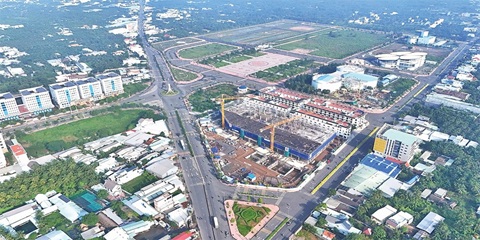
Accelerating public investment, strengthening inter-regional connectivity, and expanding industrial land are helping Dong Thap efficiently bolster competitiveness and drive economic growth. Following the 2025 merger of the former Dong Thap and Tien Giang provinces, the expanded Dong Thap province in the Mekong Delta faces mounting pressure to accelerate infrastructure development and strengthen connectivity among local economic zones, urban areas, industrial parks (IPs), and production centres.
Events Sponsors






















