Want to be in the loop?
subscribe to
our notification
Business News
VCCI PROPOSES END TO MINIMUM WAGE HIKES FROM NEXT YEAR
The Vietnam Chamber of Commerce and Industry (VCCI), representing employers in the nation, has suggested keeping region-based minimum wages unchanged from next year as annual minimum wage hikes place a heavy burden on enterprises.
At the first meeting on the minimum wages in 2019, held by the National Wage Council in Hanoi on July 9, VCCI Vice Chairman Hoang Quang Phong said the VCCI had consulted domestic and foreign enterprises about the minimum wage spike next year, and most of them had agreed on the proposal.
The reason behind the proposal is that employers want to improve their payment capability and boost the training of workers to help them meet working requirements and raise labor productivity. Minimum wage hikes can be adopted later.
In addition, minimum wage spikes will put pressure on enterprises, particularly in terms of sharp increases in their expenditures for employees’ salaries and social and health insurance premiums, as well as for trade unions’ operations.
Enterprises’ payroll funds are used to pay the monthly salaries and allowances for employees covered by social insurance. The monthly salary, which is used as the basis for calculating social, health, unemployment, occupational accident and disease insurance premiums, must not be lower than the region-based minimum wage.
Mai Duc Chinh, vice chairman of the Vietnam General Confederation of Labor (VGCL), operating on behalf of employees, noted that Vietnam’s gross domestic product in the first half of the year had expanded 7.08% year-on-year, the highest first-half growth rate since 2011. Employees are entitled to enjoy this economic development achievement, Chinh added.
According to the Party Central Committee’s Resolution 27, the minimum wage must ensure the minimum living needs of workers and their families are met by 2020. To meet this goal, the VGCL proposed increasing the region-based minimum wage by 8% next year.
Doan Mau Diep, Deputy Minister of Labor, Invalids and Social Affairs and Chairman of the National Wage Council, said that Vietnam will continue revising the region-based minimum wage until 2020 to ensure the interests of employees, especially those on a low income.
According to Resolution 27, the government will not interfere in enterprises’ salary payment policies to encourage negotiations between employers and employees, Diep noted.
Prior to the meeting, Le Dinh Quang, deputy head of the Labor Relations Department under the Vietnam General Confederation of Labor, said the confederation had earlier proposed increasing region-based minimum wages next year by 7.5-8%, or VND190,000-300,000 per month, Thanh Nien newspaper reported.
The proposal was made based on a survey of laborers after Decree 141/2017/ND-CP on this year’s minimum wage came into force. Accordingly, the minimum wage, which accounts for 85% of the total income of laborers, can cover their basic daily needs but are not enough for savings.
Vu Quang Tho, head of the Institute for Workers and Trade Unions and a member of the National Wage Council, pointed out that the institute had initially proposed raising the minimum wage by 10% but had later revised down the rate to 8%. The institute noted that the 8% hike was reasonable to satisfy workers’ minimum living needs, offset price hikes and increase labor productivity.
Meanwhile, Pham Minh Huan, former Deputy Minister of Labor, Invalids and Social Affairs and ex-chairman of the National Wage Council, forecast a 5-6% increase in the minimum wage.
Nguyen Thi Lan Huong, former head of the Institute of Labor Science and Social Affairs, and Bui Sy Loi, deputy head of the Committee for Social Affairs of the National Assembly, shared the same view that a 6% hike was reasonable to balance the benefits to both enterprises and workers.
Last year, the National Wage Council decided to increase this year’s minimum wage by 6.5%. Accordingly, the minimum wage for enterprises operating in region one is up by VND230,000; in region two, it is up by VND210,000; region three, VND190,000; and region four, VND180,000.
Source: The Saigon Times
Related News

CHARITY / EXHIBITION / OTHER EVENTS
INVESTMENT OPPORTUNITIES IN CA MAU PROVINCE: 96 PROJECTS AND 20 STRATEGIC PROJECTS
We are pleased to share with you information on investment projects currently seeking investors in Ca Mau Province. Should your esteemed company or association be interested, we kindly invite you to review the project information and complete the registration form via the links provided. The Ho Chi Minh City Investment and Trade Promotion Centre (ITPC) will consolidate the expressions of interest and facilitate connections with the leadership of Ca Mau Province at a meeting tentatively scheduled for 13 November 2026 in Ho Chi Minh City.

MEMBER CORNER / PROMOTIONS
BẰNG KIỀU LIVESHOW - A SYMPHONY OF LOVE UNDER THE GOLDEN GLOW
A masterclass in live music that takes the audience on a soulful journey through immortal love songs, guided by the peerless artistry and emotive storytelling of renowned singer Bằng Kiều. The highlight of the night is his seamless musical chemistry with special guest Triệu Hồng Ngọc, promising passionate and deeply resonant duets inside the magnificent Grand Ballroom.
INFRASTRUCTURE / CONSTRUCTION / LOGISTIC / PORT
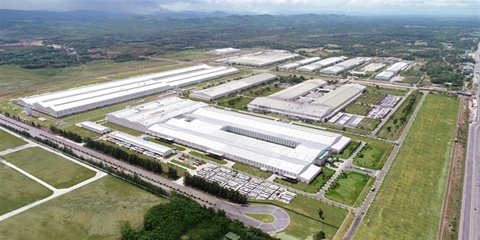
ĐÀ NẴNG GREEN-LIGHTS US$105 MILLION THAI DEVELOPMENT DEAL
The central city has approved an investment proposal by Thailand’s WHA Group to develop infrastructure for the 400ha WHA Đà Nẵng Industrial Park project on two communes of Thăng Bình and Đồng Dương, with an investment of more than VNĐ2.7 trillion (US$105 million). The city said it approved WHA Industrial Development International's status as an investor in the project, which is expected to take place between 2027 and 2034.
VIETNAM ECONOMY INVESTMENT
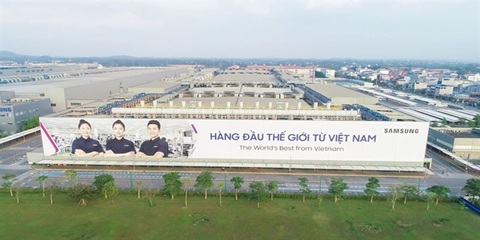
MOBILE PHONE EXPORTS RISE 20% TO $51.8 BILLION IN FIRST NINE MONTHS
Exports of mobile phones and components rose 20 per cent year-on-year to nearly US$51.8 billion in the first nine months of 2026, with China, the US and Republic of Korea accounting for more than half of the total. Shipments to the three markets reached a combined $26.18 billion, or 50.6 per cent of total exports of the product group during the period, according to data from the Vietnam Department of Customs under the Ministry of Finance.

INFRASTRUCTURE / CONSTRUCTION / LOGISTIC / PORT
VIỆT NAM-CAMBODIA TRADE GATHERS PACE TOWARDS $20 BILLION TARGET
Trade between Việt Nam and Cambodia continues to grow, remaining a bright spot and a key pillar of bilateral cooperation as the two countries aim to raise two-way trade to US$20 billion in the coming years. After setting a record of more than $11.3 billion last year, bilateral trade reached about $8.7 billion in the first eight months of this year, up 8.3 per cent year on year.
VIETNAM ECONOMY INVESTMENT
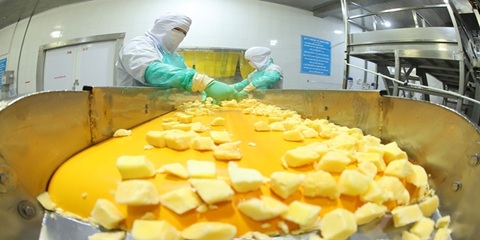
FRUIT AND VEGETABLE EXPORTS POISED TO HIT $10 BILLION IN 2026
Fruit and vegetable exports are on track to reach nearly US$10 billion in 2026, after rising 19.9 per cent year on year to nearly US$7.4 billion in the first nine months, driven by strong seasonal demand and abundant tropical fruit supplies. The Ministry of Agriculture and Environment said the growth reflected stronger international demand for fresh produce and processed agricultural products.
Events Sponsors






















