Want to be in the loop?
subscribe to
our notification
Business News
US AND VIETNAM ALIGNING ON MONETARY PHILOSOPHY
The United States and Vietnam are making joint efforts to ensure market fairness and macroeconomic stability, therefore enhancing bilateral economic links with monetary and exchange-rate perspectives.
American diplomat Melissa Brown, the current chargé d’affaires at the US Mission to ASEAN in Jakarta, believed that the positive outcomes in the trade balance between the US and Vietnam are illustrated in the figures of recent years.
“A vibrant dialogue is going on between the US and Vietnam, and that includes all of our agencies. The Treasury and the US Trade Representative’s office have frequent discussions with Vietnamese officials about how to seize opportunities and overcome challenges, and they have had some good news recently overcoming some of these issues, and those conversations continue,” Brown said.
Brown noted the recent emphasis on the trade balance, but believed there is more to it than that. “Of course, COVID-19 has impacted trade and supply chains and so we’re just really grateful to see the vibrant communication continue between our two countries on all of these important issues,” she added.
Vietnamese experts also believed the country is a potentially important partner to the US in achieving its regional geopolitical objectives. In the first seven months of 2021, Vietnam’s exports to the US reached $53.7 billion, up 37.7 per cent over the same period in 2020 and accounting for about 28 per cent of the country’s export turnover.
In mid-August, the State Bank of Vietnam (SBV) lowered the reference exchange rate and changed the method of purchasing foreign currencies from forwarding contracts to spot transactions.
“This move will add a significant amount of liquidity to the banking system,” said Tran Minh Hoang, head of Research at Vietcombank Securities. “This is good news as a more abundant liquidity buffer is vital to ensure the stable operation of the banking system as well as financial markets. Along with that, ample liquidity and lower interbank rates are two criteria that commercial banks appreciate during their conducting package to lower the lending rates.”
The US Treasury Department and the SBV reached an agreement in July to address the former’s concerns about Vietnam’s currency practices.
“It can be seen that this joint statement has allayed concerns surrounding the possibility of the US imposing tariffs on Vietnamese exports. This also confirms the effectiveness of the bilateral negotiation process of state management agencies,” Hoang stated.
He also forecasts that the VND shall appreciate against the greenback this year. “The fluctuation band shall be less than 2 per cent,” he told VIR.
According to Michael Kokalari, who is chief economist of VinaCapital, the fact that tariffs are off the table will encourage foreign direct investment inflows, but this agreement will also benefit Vietnam tremendously over the long term through encouraging inflows from foreign financial investors because they prioritise countries with stable or appreciating currencies.
“When a country artificially depresses its currency to support its exports, the quality of life of its citizens suffers and the crutch of an undervalued currency spawns inefficiencies and warped incentives that ultimately disadvantage most local companies,” Kokalari noted. “In contrast, Vietnam’s appreciating currency will help the country escape the middle-income trap by encouraging innovation because local companies will not be able to rely on a cheap foreign exchange rate to compete. That said, Vietnam’s factory wages are two-thirds below those in China, so Vietnam will still retain its competitive advantage for years to come.”
Kokalari noted that this engagement strategy was promoted in a recent report on the US-China strategy published by the influential Atlantic Council think tank. “The Biden administration’s chief Asia strategist Kurt Campbell reiterated the strategy a few weeks ago when he said the US needs to step up its game in Southeast Asia,” he explained.
This will open a huge opportunity for Vietnam to benefit from US economic assistance that takes the form of a receptive market for Vietnam’s exports, according to Kokalari, which was the same strategy that the US used to support Japan and South Korea during the Cold War.
Source: VIR
Related News
BANKING / FINANCE / INSURANCE / TAX
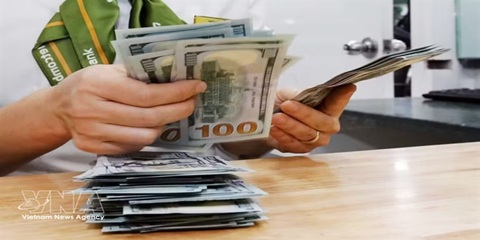
REMITTANCES TO HCM CITY RISE NEARLY 40% IN Q3
Remittances to HCM City reached more than US$2.83 billion in the third quarter of this year, up 39.5 per cent from the previous quarter and 3.6 per cent year-on-year. This was the first quarter showing positive annual growth this year, helping narrow the decline in remittance inflows over the first nine months. According to the State Bank of Vietnam (SBV)’s Regional Branch 2, remittances transferred to HCM City through credit institutions and economic organisations totalled $2.835 billion in Q3, an increase of more than $802 million from the previous quarter.
TECHNOLOGY
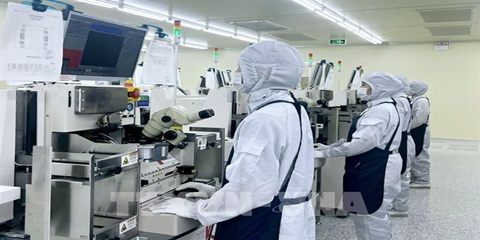
TECH SECTOR GROWTH OPENS UP OPPORTUNITIES FOR VIỆT NAM TO GO GLOBAL
The growth of the electronics, semiconductor and high-tech sectors worldwide is opening up a variety of opportunities for Vietnamese enterprises to integrate more deeply into the global supply chain. However, to become suppliers for these corporations, domestic enterprises must meet rigorous standards regarding quality, technology, productivity and order fulfilment capabilities.
VIETNAM ECONOMY INVESTMENT
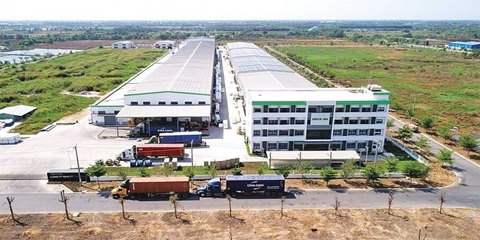
FOREIGN INVESTORS SEEKING A SYNCHRONISED MANUFACTURING ECOSYSTEM
Instead of focusing only on land costs and incentives as usual, foreign investors are seeking a synchronised manufacturing ecosystem, from stable power supply and logistics to shared infrastructure and the convenience of completing residence procedures for experts to serve their long-term investment in the country.
MEMBER CORNER / PROMOTIONS
SENTRYSAFE FHW40200 – PROTECT YOUR VALUABLES, ENJOY PEACE OF MIND!
Looking for a reliable solution to protect your important documents, cash, and valuables from fire and water damage? Genuine SENTRYSAFE - Reliable protection for your valuables and peace of mind! Contact Sen Wai Vietnam for more information and personalized product recommendations.
PROPERTY / INDUSTRIAL ZONE
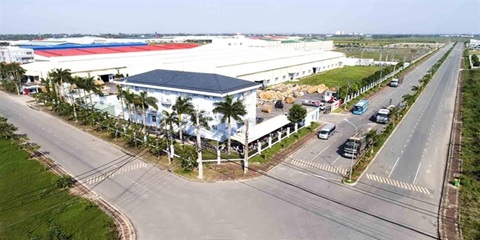
HCM CITY ATTRACTS US$5.7 BILLION INTO EXPORT PROCESSING AND INDUSTRIAL ZONES
HCM City attracted US$5.7 billion in domestic and foreign investment into its export processing and industrial zones during the first nine months of 2026. The figure exceeded the city's full-year target by 31 per cent, highlighting strong momentum in high-quality industrial investment under Resolution No.10-NQ/TW. Total investment reached 131 per cent of the 2026 target of $4.25 billion and represented a 29 per cent increase compared with the same period in 2025, according to the city's Export Processing and Industrial Zones Authority (HEPZA).
INFRASTRUCTURE / CONSTRUCTION / LOGISTIC / PORT
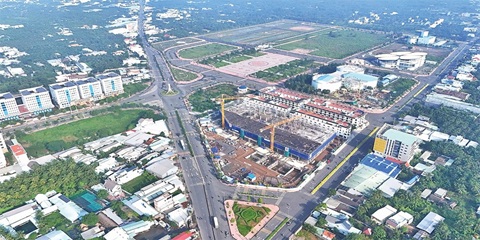
DONG THAP PROVINCE STEPS UP INDUSTRIAL EXPANSION AND INFRASTRUCTURE CONNECTIVITY
Accelerating public investment, strengthening inter-regional connectivity, and expanding industrial land are helping Dong Thap efficiently bolster competitiveness and drive economic growth. Following the 2025 merger of the former Dong Thap and Tien Giang provinces, the expanded Dong Thap province in the Mekong Delta faces mounting pressure to accelerate infrastructure development and strengthen connectivity among local economic zones, urban areas, industrial parks (IPs), and production centres.
Events Sponsors






















