Want to be in the loop?
subscribe to
our notification
Business News
TRA FISH EXPORTS ON TRACK REACH CLOSE TO $2 BILLION IN 2025
The growth outlook is driven by the global economic recovery post-pandemic and increasing international demand for affordable protein sources like tra fish, VASEP said.
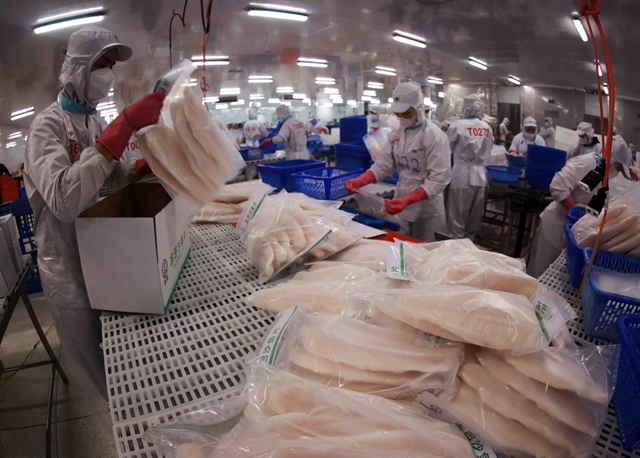
Packing tra fish fillets for export at a Sao Mai Group's factory. VNA/VNS Photo Vũ Sinh - VNA
HÀ NỘI — Việt Nam's tra fish exports are expected to sustain strong momentum into 2025, with projected revenues reaching approximately US$2 billion, on par with 2024 figures, the Vietnam Association of Seafood Exporters and Producers (VASEP) has forecast.
The growth outlook is driven by the global economic recovery post-pandemic and increasing international demand for affordable protein sources like tra fish, VASEP said.
It added that trade agreements such as the Comprehensive and Progressive Agreement for Trans-Pacific Partnership (CPTPP) and the ASEAN Free Trade Agreement (ATIGA) are facilitating access to key markets, including Thailand, Mexico and Brazil.
China continues to be a standout market.
Despite a slight drop in export prices, demand surged in late 2024, with exports hitting $163 million in the fourth quarter, a 17 per cent increase year-on-year. For the full year, exports to China totalled $581 million, marking a modest 1 per cent rise from 2023.
According to VASEP, Chinese consumers heavily favour frozen tra fish fillets, which account for 60 per cent of exports to the market. Demand is expected to remain robust in 2025, supported by China’s economic stimulus policies and real estate market recovery.
However, challenges remain, the association said.
In the US, uncertainty over trade tariffs could dampen demand for raw materials by April 2025, prompting exporters to adjust their strategies. Rising production costs, including fuel and feed prices, and stiff competition from other whitefish species add further pressure. Additionally, a shift toward lower-value whole tra fish products could impact profit margins.
To stay competitive, VASEP advises businesses to align production with market demand and leverage advantages from existing trade agreements. Negotiations to upgrade the ASEAN-China Free Trade Agreement (ACFTA) to version 3.0 are underway, aimed at unlocking further export potential to China.
Meanwhile, a potential tariff agreement with the US could prove pivotal in strengthening Việt Nam’s foothold in that market, it said, emphasising the importance of investing in value-added products, such as processed pangasius, to meet evolving consumer preferences and sustain export growth.
Impressive Q1 growth
Exports continued its strong recovery in March, reaching $182 million, up 21 per cent month-on-month and 16 per cent year-on-year, according to VASEP.
This robust growth was primarily fueled by rising consumption demand from key markets, particularly China (including Hong Kong) and the US, reaffirming the strategic role of Vietnamese tra fish in the global seafood trade.
In March, total tra fish export volume hit nearly 79,000 tonnes, representing a 23 per cent increase year-on-year. The average export price climbed by 2 per cent to $2.28 per kilo. The recovery extended across all major markets such as the UK (120 per cent), mainland China and Hong Kong, up 61 per cent, the EU (73 per cent), Brazil (44 per cent), the US (28 per cent), Mexico (15 per cent) and ASEAN (11 per cent).
China remained the largest importer, purchasing over 21,000 tonnes of Vietnamese tra fish in March. Export value to China totalled $38 million, up 6 per cent year-on-year, despite a 4.2 per cent drop in average export price to $2.04/kg, following six consecutive months of price increases. — VNS
Source: VNS
Related News

BANKING / FINANCE / INSURANCE / TAX
REMITTANCES TO HCM CITY RISE NEARLY 40% IN Q3
Remittances to HCM City reached more than US$2.83 billion in the third quarter of this year, up 39.5 per cent from the previous quarter and 3.6 per cent year-on-year. This was the first quarter showing positive annual growth this year, helping narrow the decline in remittance inflows over the first nine months. According to the State Bank of Vietnam (SBV)’s Regional Branch 2, remittances transferred to HCM City through credit institutions and economic organisations totalled $2.835 billion in Q3, an increase of more than $802 million from the previous quarter.

TECHNOLOGY
TECH SECTOR GROWTH OPENS UP OPPORTUNITIES FOR VIỆT NAM TO GO GLOBAL
The growth of the electronics, semiconductor and high-tech sectors worldwide is opening up a variety of opportunities for Vietnamese enterprises to integrate more deeply into the global supply chain. However, to become suppliers for these corporations, domestic enterprises must meet rigorous standards regarding quality, technology, productivity and order fulfilment capabilities.
VIETNAM ECONOMY INVESTMENT
FOREIGN INVESTORS SEEKING A SYNCHRONISED MANUFACTURING ECOSYSTEM
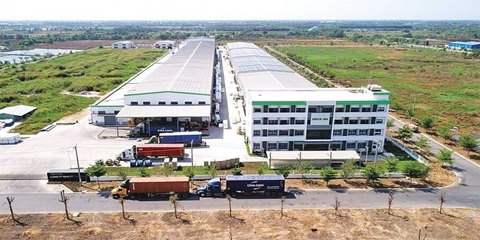
Instead of focusing only on land costs and incentives as usual, foreign investors are seeking a synchronised manufacturing ecosystem, from stable power supply and logistics to shared infrastructure and the convenience of completing residence procedures for experts to serve their long-term investment in the country.

MEMBER CORNER / PROMOTIONS
SENTRYSAFE FHW40200 – PROTECT YOUR VALUABLES, ENJOY PEACE OF MIND!
Looking for a reliable solution to protect your important documents, cash, and valuables from fire and water damage? Genuine SENTRYSAFE - Reliable protection for your valuables and peace of mind! Contact Sen Wai Vietnam for more information and personalized product recommendations.
PROPERTY / INDUSTRIAL ZONE
HCM CITY ATTRACTS US$5.7 BILLION INTO EXPORT PROCESSING AND INDUSTRIAL ZONES
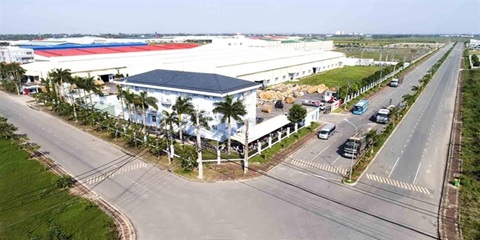
HCM City attracted US$5.7 billion in domestic and foreign investment into its export processing and industrial zones during the first nine months of 2026. The figure exceeded the city's full-year target by 31 per cent, highlighting strong momentum in high-quality industrial investment under Resolution No.10-NQ/TW. Total investment reached 131 per cent of the 2026 target of $4.25 billion and represented a 29 per cent increase compared with the same period in 2025, according to the city's Export Processing and Industrial Zones Authority (HEPZA).
INFRASTRUCTURE / CONSTRUCTION / LOGISTIC / PORT
DONG THAP PROVINCE STEPS UP INDUSTRIAL EXPANSION AND INFRASTRUCTURE CONNECTIVITY
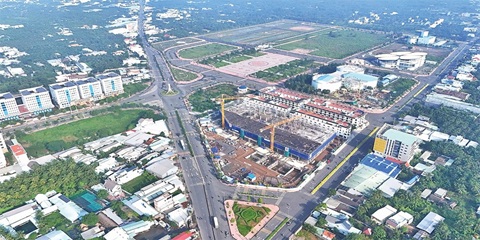
Accelerating public investment, strengthening inter-regional connectivity, and expanding industrial land are helping Dong Thap efficiently bolster competitiveness and drive economic growth. Following the 2025 merger of the former Dong Thap and Tien Giang provinces, the expanded Dong Thap province in the Mekong Delta faces mounting pressure to accelerate infrastructure development and strengthen connectivity among local economic zones, urban areas, industrial parks (IPs), and production centres.
Events Sponsors






















