Want to be in the loop?
subscribe to
our notification
Business News
TECHNOLOGY LEADING TO NEW ECO-INDUSTRIAL CONCEPTS
Over the last few years, Vietnam has shown it is taking industrial sustainability seriously by implementation of eco-industrial park initiatives. While many challenges remain, innovative technology could be the answer to shaping up a smart and green manufacturing ecosystem.
Industrial zones are viewed as a special community where businesses cluster to take advantage of general infrastructure, and economise on share-used facilities invested by the developer. In this context, industrial zone developers play a critical role in creating a hi-tech and eco-friendly manufacturing environment that bolsters the development of technology.
Companies based in such industrial complexes will be able to improve their productivity through top-notch technologies while mitigating their burden on environment. On the other hand, ecological features will make the park far more appealing to investors than traditional ones. By improving tenants’ competitiveness and helping them achieve their sustainable goals, this industrial park model can become an effective tool in attracting foreign direct investment and promoting sustainable growth.
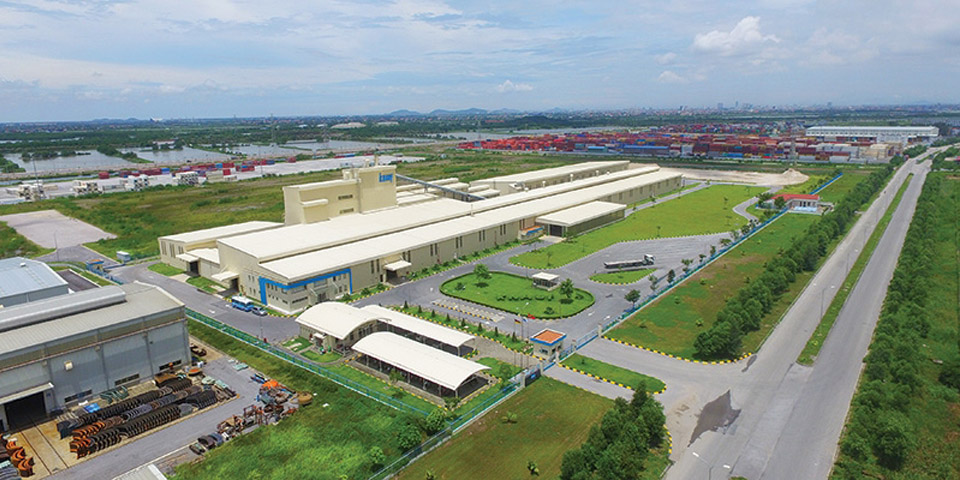
Discussing the valuable contribution of industrial zones to the smart and sustainable development of the industrial sector, Hans Kerstens, head of sales and marketing at DEEP C Industrial Zones said, “Industrial zones can be considered micro cities. They provide a closed ecosystem to test the latest technology – large enough to evaluate efficiency but at the same time small enough to make immediate adjustments in case things do not go as planned.”
In this sense, industrial zones are an ideal instrument for technology testing before officially going live on a larger scale, especially in an era where new technological advances are introduced every day.
Last year, DEEP C Industrial Zones signed a memorandum with Japanese leading IT specialist KDDI Vietnam Corporation on deploying an Internet of Things-based smart metering system in the industrial cluster. A verification test with electric power was successful, introducing for the first time a system of this kind in an industrial zone in Vietnam. Next, the partners will get this project off the ground with meters across 73 factories based in DEEP C Haiphong I.
Connecting power meters to specific data transfer devices using LPWA (LoRa) system makes it possible to transmit data wirelessly over long distances. Combined with cloud computing, the system allows real-time insights collection and a comprehensive understanding of power distribution all over the industrial cluster. This does not only eliminate the need for site visits to check the operational status of meters, but also enables DEEP C to address issues and improve their power services remotely.
The partners will further implement digital tools to offer more holistic solutions for key aspects of developing a smart eco-industrial park such as generation of renewable energy, and quality of treated wastewater. For efficient energy management, each power source generated from solar panels, windmills, waste-to-energy facilities, or simply the national grid is able to communicate with each other through an internal network so all or only a few can operate at a time depending on real time power demand at the zones.
DEEP C is one among the few industrial zone developers in Vietnam willing to be an early adopter of new environmental technology. Its cross-industry partnership with US-backed Dow Chemicals to build the first road from recycled plastic is clearly one of them. “We’re mapping out our plan to become not only an eco-industrial park but also a technology-driven one” said Bruno Jaspaert, general director of DEEP C Industrial Zones. Such innovative sustainability measures should be optimised in various platforms and on a larger scale to create even greater effects and make a significant contribution to the circularity of waste.
It is expected that the full-fledged effort of industrial zone developers like DEEP C will give rise to the engagement of industrial manufacturers, local government, and researchers in environment technology. Executing the large-scale transformation will take strong commitment, adequate funding, and also require a shift of mindset to find a balancing point between economic profit and industrial sustainable development.
Founded in 1997, DEEP C Industrial Zones has established itself as one of the biggest industrial zone developers in Vietnam with five sub-projects and over 3,000 hectares of land. DEEP C is leading the way to become an eco-industrial park through its proactive application of technological advances.
At the Vietnam Real Estate Symposium 2019 on September 12, Hans Kerstens will join other experts from Logos Property, Kuehne & Nagel, and C&W Vietnam in a discussion to share insights on how global mega-trends are transforming the industrial and logistics real estate landscape in Vietnam.
Source: VIR
Related News

CHARITY / EXHIBITION / OTHER EVENTS
INVESTMENT OPPORTUNITIES IN CA MAU PROVINCE: 96 PROJECTS AND 20 STRATEGIC PROJECTS
We are pleased to share with you information on investment projects currently seeking investors in Ca Mau Province. Should your esteemed company or association be interested, we kindly invite you to review the project information and complete the registration form via the links provided. The Ho Chi Minh City Investment and Trade Promotion Centre (ITPC) will consolidate the expressions of interest and facilitate connections with the leadership of Ca Mau Province at a meeting tentatively scheduled for 13 November 2026 in Ho Chi Minh City.

MEMBER CORNER / PROMOTIONS
BẰNG KIỀU LIVESHOW - A SYMPHONY OF LOVE UNDER THE GOLDEN GLOW
A masterclass in live music that takes the audience on a soulful journey through immortal love songs, guided by the peerless artistry and emotive storytelling of renowned singer Bằng Kiều. The highlight of the night is his seamless musical chemistry with special guest Triệu Hồng Ngọc, promising passionate and deeply resonant duets inside the magnificent Grand Ballroom.
INFRASTRUCTURE / CONSTRUCTION / LOGISTIC / PORT
ĐÀ NẴNG GREEN-LIGHTS US$105 MILLION THAI DEVELOPMENT DEAL
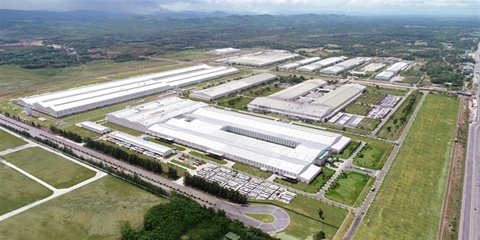
The central city has approved an investment proposal by Thailand’s WHA Group to develop infrastructure for the 400ha WHA Đà Nẵng Industrial Park project on two communes of Thăng Bình and Đồng Dương, with an investment of more than VNĐ2.7 trillion (US$105 million). The city said it approved WHA Industrial Development International's status as an investor in the project, which is expected to take place between 2027 and 2034.
VIETNAM ECONOMY INVESTMENT
MOBILE PHONE EXPORTS RISE 20% TO $51.8 BILLION IN FIRST NINE MONTHS
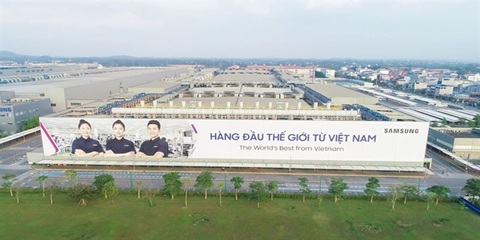
Exports of mobile phones and components rose 20 per cent year-on-year to nearly US$51.8 billion in the first nine months of 2026, with China, the US and Republic of Korea accounting for more than half of the total. Shipments to the three markets reached a combined $26.18 billion, or 50.6 per cent of total exports of the product group during the period, according to data from the Vietnam Department of Customs under the Ministry of Finance.
INFRASTRUCTURE / CONSTRUCTION / LOGISTIC / PORT
VIỆT NAM-CAMBODIA TRADE GATHERS PACE TOWARDS $20 BILLION TARGET
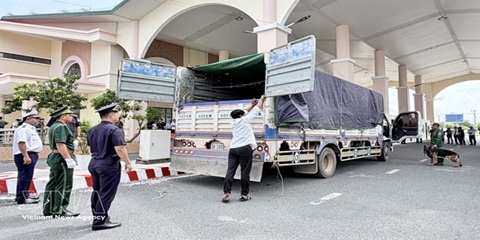
Trade between Việt Nam and Cambodia continues to grow, remaining a bright spot and a key pillar of bilateral cooperation as the two countries aim to raise two-way trade to US$20 billion in the coming years. After setting a record of more than $11.3 billion last year, bilateral trade reached about $8.7 billion in the first eight months of this year, up 8.3 per cent year on year.
VIETNAM ECONOMY INVESTMENT
FRUIT AND VEGETABLE EXPORTS POISED TO HIT $10 BILLION IN 2026
Fruit and vegetable exports are on track to reach nearly US$10 billion in 2026, after rising 19.9 per cent year on year to nearly US$7.4 billion in the first nine months, driven by strong seasonal demand and abundant tropical fruit supplies. The Ministry of Agriculture and Environment said the growth reflected stronger international demand for fresh produce and processed agricultural products.
Events Sponsors






















