Want to be in the loop?
subscribe to
our notification
Business News
FIRST-QUARTER GROWTH HITS RECORD HIGH DESPITE GLOBAL VOLATILITY
Vietnam’s economy delivered a standout performance in the first quarter of 2026, with GDP expanding 7.8 per cent on-year – the strongest first-quarter growth on record.
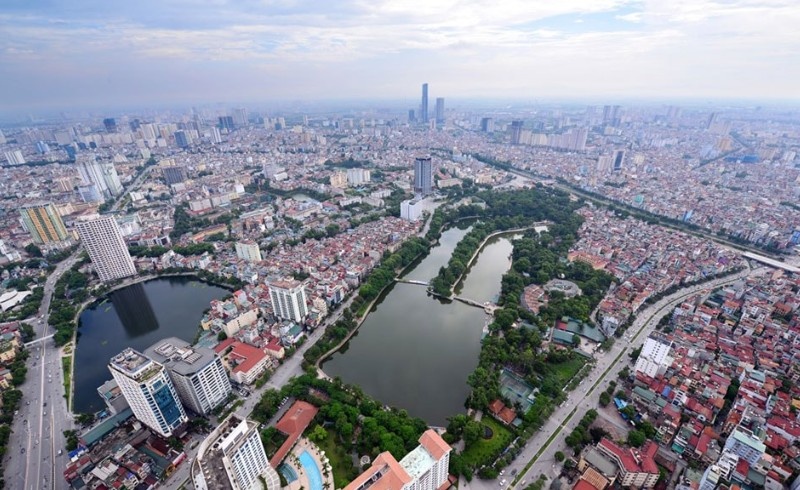
According to Dragon Capital, Vietnam’s growth momentum strengthened in March following Lunar New Year normalisation, reinforcing confidence that the expansion remained firmly intact through the first quarter of 2026. GDP grew 7.8 per cent on-year in the first quarter, with industry and construction rising 8.9 per cent and services 8.2 per cent, highlighting that growth is not solely reliant on exports and manufacturing, but is increasingly supported by services and domestic demand.
The confirmation of Vietnam’s leadership structure reinforces political stability and policy continuity, providing investors with clearer economic visibility over the next five-year government cycle. Nonetheless, global markets turned more volatile following the escalating Iran conflict in early March, shaping near-term sentiment despite Vietnam’s stable macro fundamentals, placing downward pressure on the VN-Index.
Industrial activity remained a key pillar. The Index of Industrial Production (IIP) increased 9 per cent on-year in the first quarter, with manufacturing expanding 9.7 per cent and driving the majority of growth. March recorded a strong rebound, with IIP rising 18.8 per cent from a month ago and 6.9 per cent on-year.
Business conditions remained expansionary, with Purchasing Managers' Index moderating to 51.2 from 54.3 in February, reflecting normalisation from a high base rather than weaker demand. Expansion remained broad-based across sectors, including metals (up 22.9 per cent), non-metallic minerals (up 19.7 per cent), chemicals (up 18.2 per cent).
Domestic demand remained firm. Retail sales and services revenue rose 12.1 per cent on-year in March and 10.9 per cent in the first quarter, reaching approximately $72.3 billion. Accommodation and food services increased 13.3 per cent on-year, while tourism-related services grew 12.5 per cent, supported by seasonal demand and continued recovery in travel activity.
This trend supports earnings visibility for consumer-facing sectors, which have become an increasingly important driver of market performance in recent years, and reinforces consumption as a stable and increasingly important support to economic expansion.
Dragon Capital noted that investment and external activity continued to underpin expansion. Goods exports rose 19.1 per cent on-year in the first quarter, while imports increased 27 per cent, reflecting strong trade demand. Business formation remained active, with over 57,000 new enterprises (up 57.8 per cent on-year) and registered capital of approximately $20.5 billion. Including firms restarting operations, total active additions reached around 96,000 (up 31.7 per cent), highlighting continued private-sector dynamism.
The consumer price index rose 4.6 per cent on-year in March, the highest March reading in five years, bringing the first quarter average inflation to 3.5 per cent on-year, driven mainly by higher fuel prices amid US-Iran tensions. However, both remain within the government’s 4.5–5.0 per cent target, preserving policy flexibility to absorb external shocks.
In addition, equity markets turned more volatile in March, entering a corrective phase after the strong rally earlier in the year. The VN-Index declined 11.9 per cent on-month in total return USD terms as global markets priced in geopolitical tensions. The correction was sector-agnostic, suggesting a broad derisking rather than specific weakness.
Average daily trading value remained resilient at around $1.3 billion, supported by domestic participation, while foreign flows remained intermittent. By month-end, the VN-Index stabilised from its lows, suggesting the adjustment was driven primarily by external factors rather than any change in domestic fundamentals.
Source: VIR
Related News

BANKING / FINANCE / INSURANCE / TAX
REMITTANCES TO HCM CITY RISE NEARLY 40% IN Q3
Remittances to HCM City reached more than US$2.83 billion in the third quarter of this year, up 39.5 per cent from the previous quarter and 3.6 per cent year-on-year. This was the first quarter showing positive annual growth this year, helping narrow the decline in remittance inflows over the first nine months. According to the State Bank of Vietnam (SBV)’s Regional Branch 2, remittances transferred to HCM City through credit institutions and economic organisations totalled $2.835 billion in Q3, an increase of more than $802 million from the previous quarter.

TECHNOLOGY
TECH SECTOR GROWTH OPENS UP OPPORTUNITIES FOR VIỆT NAM TO GO GLOBAL
The growth of the electronics, semiconductor and high-tech sectors worldwide is opening up a variety of opportunities for Vietnamese enterprises to integrate more deeply into the global supply chain. However, to become suppliers for these corporations, domestic enterprises must meet rigorous standards regarding quality, technology, productivity and order fulfilment capabilities.

VIETNAM ECONOMY INVESTMENT
FOREIGN INVESTORS SEEKING A SYNCHRONISED MANUFACTURING ECOSYSTEM
Instead of focusing only on land costs and incentives as usual, foreign investors are seeking a synchronised manufacturing ecosystem, from stable power supply and logistics to shared infrastructure and the convenience of completing residence procedures for experts to serve their long-term investment in the country.
MEMBER CORNER / PROMOTIONS
SENTRYSAFE FHW40200 – PROTECT YOUR VALUABLES, ENJOY PEACE OF MIND!
Looking for a reliable solution to protect your important documents, cash, and valuables from fire and water damage? Genuine SENTRYSAFE - Reliable protection for your valuables and peace of mind! Contact Sen Wai Vietnam for more information and personalized product recommendations.

PROPERTY / INDUSTRIAL ZONE
HCM CITY ATTRACTS US$5.7 BILLION INTO EXPORT PROCESSING AND INDUSTRIAL ZONES
HCM City attracted US$5.7 billion in domestic and foreign investment into its export processing and industrial zones during the first nine months of 2026. The figure exceeded the city's full-year target by 31 per cent, highlighting strong momentum in high-quality industrial investment under Resolution No.10-NQ/TW. Total investment reached 131 per cent of the 2026 target of $4.25 billion and represented a 29 per cent increase compared with the same period in 2025, according to the city's Export Processing and Industrial Zones Authority (HEPZA).

INFRASTRUCTURE / CONSTRUCTION / LOGISTIC / PORT
DONG THAP PROVINCE STEPS UP INDUSTRIAL EXPANSION AND INFRASTRUCTURE CONNECTIVITY
Accelerating public investment, strengthening inter-regional connectivity, and expanding industrial land are helping Dong Thap efficiently bolster competitiveness and drive economic growth. Following the 2025 merger of the former Dong Thap and Tien Giang provinces, the expanded Dong Thap province in the Mekong Delta faces mounting pressure to accelerate infrastructure development and strengthen connectivity among local economic zones, urban areas, industrial parks (IPs), and production centres.
Events Sponsors






















