Want to be in the loop?
subscribe to
our notification
Business News
TAX DEFERRAL TO EASE BUSINESS OPERATIONS
The Ministry of Finance (MoF) has proposed that the government approves a decree on extending the payment of taxes and land fees in 2021 with particular measures for every tax, beneficiary, and business sector.
The MoF suggested delaying VAT payments for five months, reducing the total state budget by VND68.8 trillion ($3 billion) during the period. For corporate income tax (CIT), the MoF proposed deferring for three months – consequently, around VND40.5 trillion ($1.76 billion) will be paid to the state budget later, while VAT made by household and individual businesses to be delayed is estimated at VND1.3 trillion ($56.5 million).
Additionally, the MoF asked to put off land rentals for the first term of 2021 for corporations, organisations, and household and individual businesses, estimated at a total of around VND4.4 trillion ($191.3 million). Accordingly, total payments to be extended would be estimated at VND115 trillion ($5 billion).
An MoF representative said that deferring taxes and land rental payments will be considered as non-interest loans the government provides for companies, household businesses, and individuals to overcome challenges caused by the global health crisis, and which will not affect the annual state budget. “Around 96 per cent of businesses in the country will be eligible for such assistance if it is approved,” said the representative.
Vang Vien Thong, general director of Ho Chi Minh City-based Nam Anh Co., Ltd., a supplier of Japanese clothing giants, explained that the policy will greatly help businesses, especially ones enjoying huge incomes. “It is favourable for us if the VAT payment is delayed for five months. For a firm generating millions of US dollars in revenue annually like Nam Anh, this policy will be a good resource for us to maintain and develop the business,” said Thong.
In another case, Tay Bac Construction and Trade Co., Ltd. in Hanoi had taxes and land rental payments delayed last year at more than VND400 million ($17,400). Director Nguyen Trung Hieu was happy with the policy, which helped keep the company afloat during the pandemic. “If these payments remain deferred this year, this will be a key driver for businesses to operate and contribute to the state budget moving forward.”.
However, some experts and enterprises said that in addition to the deferral, ministries and agencies should ask the government to reduce CIT, depending on scale and industry. One example is that the rate could be 15 per cent for micro-sized enterprises and 17 per cent for small enterprises, instead of 20 per cent at present.
Nguyen Van Duoc, director general of Trong Tin Tax Consulting and Accounting Co., Ltd., said that according to the Law on Support for Small- and Medium-sized Enterprises enacted in 2018, relevant small- and micro-sized enterprises were to have 15-17 per cent applied in CIT – however, this has yet to be applied. So, Duoc said, the government and agencies should work on reducing the tax for them in line with the timeline of the law.
“In some special sectors, we should consider reducing 50 per cent of VAT in addition to extending the tax payment for five months. Especially, we should reduce 30 per cent of the total CIT payable in 2020 to apply in 2021,” said Duoc.
The policy should be adopted quickly in order for business operations and the economy to recover quicker. “If the process takes too long, fewer will recover, at the expense of the state budget,” added Duoc.
Businesses said the proposal of reducing 30-50 per cent of land rent should be submitted to the government and the National Assembly soon, along with the proposal of decreasing CIT and VAT at the National Assembly meeting in March.
This is the third time the MoF suggests such a delay to support businesses during the pandemic. Last April, the government issued a five-month deferral on tax and land rent, then in September extended the deadline for special consumption tax payment applying for domestically-manufactured or assembled cars.
Source: VIR
Related News

BANKING / FINANCE / INSURANCE / TAX
REMITTANCES TO HCM CITY RISE NEARLY 40% IN Q3
Remittances to HCM City reached more than US$2.83 billion in the third quarter of this year, up 39.5 per cent from the previous quarter and 3.6 per cent year-on-year. This was the first quarter showing positive annual growth this year, helping narrow the decline in remittance inflows over the first nine months. According to the State Bank of Vietnam (SBV)’s Regional Branch 2, remittances transferred to HCM City through credit institutions and economic organisations totalled $2.835 billion in Q3, an increase of more than $802 million from the previous quarter.
TECHNOLOGY
TECH SECTOR GROWTH OPENS UP OPPORTUNITIES FOR VIỆT NAM TO GO GLOBAL
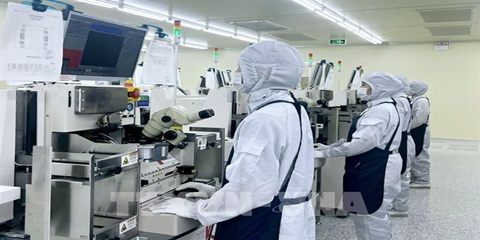
The growth of the electronics, semiconductor and high-tech sectors worldwide is opening up a variety of opportunities for Vietnamese enterprises to integrate more deeply into the global supply chain. However, to become suppliers for these corporations, domestic enterprises must meet rigorous standards regarding quality, technology, productivity and order fulfilment capabilities.
VIETNAM ECONOMY INVESTMENT
FOREIGN INVESTORS SEEKING A SYNCHRONISED MANUFACTURING ECOSYSTEM
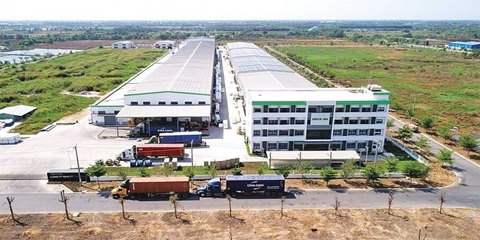
Instead of focusing only on land costs and incentives as usual, foreign investors are seeking a synchronised manufacturing ecosystem, from stable power supply and logistics to shared infrastructure and the convenience of completing residence procedures for experts to serve their long-term investment in the country.

MEMBER CORNER / PROMOTIONS
SENTRYSAFE FHW40200 – PROTECT YOUR VALUABLES, ENJOY PEACE OF MIND!
Looking for a reliable solution to protect your important documents, cash, and valuables from fire and water damage? Genuine SENTRYSAFE - Reliable protection for your valuables and peace of mind! Contact Sen Wai Vietnam for more information and personalized product recommendations.
PROPERTY / INDUSTRIAL ZONE
HCM CITY ATTRACTS US$5.7 BILLION INTO EXPORT PROCESSING AND INDUSTRIAL ZONES
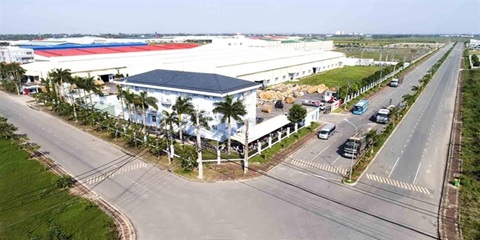
HCM City attracted US$5.7 billion in domestic and foreign investment into its export processing and industrial zones during the first nine months of 2026. The figure exceeded the city's full-year target by 31 per cent, highlighting strong momentum in high-quality industrial investment under Resolution No.10-NQ/TW. Total investment reached 131 per cent of the 2026 target of $4.25 billion and represented a 29 per cent increase compared with the same period in 2025, according to the city's Export Processing and Industrial Zones Authority (HEPZA).
INFRASTRUCTURE / CONSTRUCTION / LOGISTIC / PORT
DONG THAP PROVINCE STEPS UP INDUSTRIAL EXPANSION AND INFRASTRUCTURE CONNECTIVITY
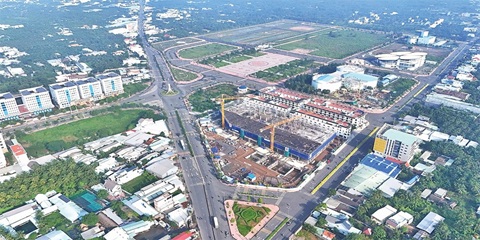
Accelerating public investment, strengthening inter-regional connectivity, and expanding industrial land are helping Dong Thap efficiently bolster competitiveness and drive economic growth. Following the 2025 merger of the former Dong Thap and Tien Giang provinces, the expanded Dong Thap province in the Mekong Delta faces mounting pressure to accelerate infrastructure development and strengthen connectivity among local economic zones, urban areas, industrial parks (IPs), and production centres.
Events Sponsors






















