Want to be in the loop?
subscribe to
our notification
Business News
TARGETING GDP PER CAPITA OF US$8,500 BY 2030
The first Congress of the Party Committee of the Ministry of Finance set the target that the average gross domestic product (GDP) growth rate for the 2026-2030 period will reach 10% per year or higher, and GDP per capita will reach US$8,500 by 2030.
Many important achievements
The first Congress of the Party Committee of the Ministry of Finance for the 2025-2030 term recently opened in Hanoi. In his opening speech, Secretary of the Party Committee and Minister of Finance Nguyen Van Thang said that the first Congress of the Party Committee of the Ministry of Finance took place in a special context and held extremely important significance.
Looking back at the past term, despite many challenges, the Party Committee of the Ministry of Finance promoted a spirit of solidarity to obtain many achievements. Fiscal policies were proactively and flexibly implemented, contributing to macroeconomic stability, promoting economic recovery, and ensuring social security and sustainable development.
Total state budget revenue for the 2021-2025 period is estimated at VND9.4 million billion, far exceeding the set target. The Party Committee proactively proposed exemptions, reductions, and deferrals of taxes, fees, and land rents totaling about VND1.1 million billion, creating conditions for production and business recovery and earning high appreciation from the business community and the public.
Total state budget expenditure for the 2021-2025 period is estimated at VND10.4 million billion, meeting the planned target. Development investment expenditure reached VND3.4 million billion, exceeding the plan, of which VND176.4 trillion was allocated to implementing the socio-economic recovery program. The average state budget deficit for the period is about 3.4% of GDP, meeting the planned target and remaining below the ceiling of 3.7% of GDP. Public debt has been tightly controlled, decreasing from 62.7% of GDP at the end of 2021 to about 36-37% of GDP at the end of 2025, all remaining within safe limits.
Notable targets by 2030
In the next five-year period, the Ministry of Finance has established key targets for implementing political tasks. Specifically, regarding economic development, the average gross domestic product (GDP) growth rate for the 2026-2030 period is expected to reach 10% per year or higher, and GDP per capita is projected to reach US$8,500 by 2030.
The contribution of total factor productivity (TFP) to growth is expected to be about 55%. The average growth rate of social labor productivity will reach approximately 8.5% per year. Total asset accumulation will account for about 35-36% of GDP, while the proportion of final consumption will be around 62-63% of GDP.
Regarding macroeconomic stability and inflation, the average state budget deficit for the 2026-2030 period is expected to be about 5% of GDP. The average public debt-to-GDP ratio will exceed 45%, and average inflation during this period is projected at about 4.0-4.5% per year.
In terms of mobilization and allocation of financial resources, the average total social investment capital over five years is expected to be about 40% of GDP, with the public investment ratio accounting for 20-22% of total social investment capital. By 2030, the capitalization of the stock market is projected to reach 120% of GDP.
Outstanding debt in the bond market is expected to reach at least 58% of GDP, of which outstanding corporate bonds will account for at least 25% of GDP. The derivatives market is projected to grow at an average rate of about 25-30% per year during the 2026-2030 period.
The goal is to have 2 million enterprises by 2030, equivalent to 20 enterprises per thousand people. At least 20 large enterprises are expected to participate in the global value chain. The average growth rate of the private economy is projected at about 10-12% per year, by 2030 there will be at least 50 enterprises in the Top 500 Southeast Asian enterprises and at least one enterprise in the Top 500 global enterprises.
Six strategic breakthroughs
The Ministry of Finance set six strategic breakthroughs for the coming period as follows: creating strong breakthroughs in institutions, financial policies, decentralization of authority, unblocking resources to generate momentum for development; improving the efficiency of mobilizing and allocating financial resources and enhancing the effectiveness of public investment; developing the private economy as the most important driving force for national economic growth; promoting breakthroughs in science and technology, innovation, and digital transformation; strengthening the effectiveness of strategy formulation, planning, and statistical systems to support rapid and sustainable development; and focusing on developing high-quality human resources.
Source: VCCI
Related News
BANKING / FINANCE / INSURANCE / TAX
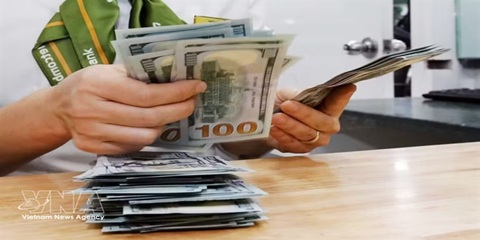
REMITTANCES TO HCM CITY RISE NEARLY 40% IN Q3
Remittances to HCM City reached more than US$2.83 billion in the third quarter of this year, up 39.5 per cent from the previous quarter and 3.6 per cent year-on-year. This was the first quarter showing positive annual growth this year, helping narrow the decline in remittance inflows over the first nine months. According to the State Bank of Vietnam (SBV)’s Regional Branch 2, remittances transferred to HCM City through credit institutions and economic organisations totalled $2.835 billion in Q3, an increase of more than $802 million from the previous quarter.
TECHNOLOGY
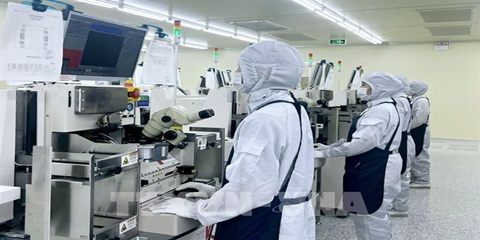
TECH SECTOR GROWTH OPENS UP OPPORTUNITIES FOR VIỆT NAM TO GO GLOBAL
The growth of the electronics, semiconductor and high-tech sectors worldwide is opening up a variety of opportunities for Vietnamese enterprises to integrate more deeply into the global supply chain. However, to become suppliers for these corporations, domestic enterprises must meet rigorous standards regarding quality, technology, productivity and order fulfilment capabilities.
VIETNAM ECONOMY INVESTMENT
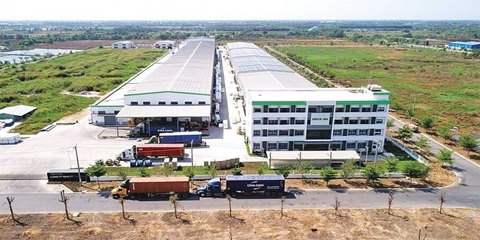
FOREIGN INVESTORS SEEKING A SYNCHRONISED MANUFACTURING ECOSYSTEM
Instead of focusing only on land costs and incentives as usual, foreign investors are seeking a synchronised manufacturing ecosystem, from stable power supply and logistics to shared infrastructure and the convenience of completing residence procedures for experts to serve their long-term investment in the country.

MEMBER CORNER / PROMOTIONS
SENTRYSAFE FHW40200 – PROTECT YOUR VALUABLES, ENJOY PEACE OF MIND!
Looking for a reliable solution to protect your important documents, cash, and valuables from fire and water damage? Genuine SENTRYSAFE - Reliable protection for your valuables and peace of mind! Contact Sen Wai Vietnam for more information and personalized product recommendations.
PROPERTY / INDUSTRIAL ZONE
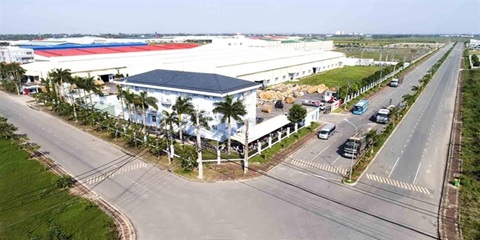
HCM CITY ATTRACTS US$5.7 BILLION INTO EXPORT PROCESSING AND INDUSTRIAL ZONES
HCM City attracted US$5.7 billion in domestic and foreign investment into its export processing and industrial zones during the first nine months of 2026. The figure exceeded the city's full-year target by 31 per cent, highlighting strong momentum in high-quality industrial investment under Resolution No.10-NQ/TW. Total investment reached 131 per cent of the 2026 target of $4.25 billion and represented a 29 per cent increase compared with the same period in 2025, according to the city's Export Processing and Industrial Zones Authority (HEPZA).
INFRASTRUCTURE / CONSTRUCTION / LOGISTIC / PORT
DONG THAP PROVINCE STEPS UP INDUSTRIAL EXPANSION AND INFRASTRUCTURE CONNECTIVITY
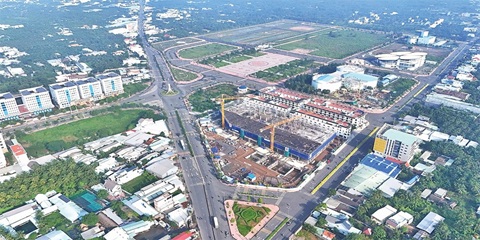
Accelerating public investment, strengthening inter-regional connectivity, and expanding industrial land are helping Dong Thap efficiently bolster competitiveness and drive economic growth. Following the 2025 merger of the former Dong Thap and Tien Giang provinces, the expanded Dong Thap province in the Mekong Delta faces mounting pressure to accelerate infrastructure development and strengthen connectivity among local economic zones, urban areas, industrial parks (IPs), and production centres.
Events Sponsors






















