Want to be in the loop?
subscribe to
our notification
Business News
SUPPORTING POLICIES KEY FOR REVITALISED TRANSPORT SECTOR
The transport sector in Vietnam could face years of headaches due to capital increases and sluggishness, unless a bold forumla is created and lessons are learned from overseas when it comes to sector management.
On January 11, the National Assembly Standing Committee approved the transformation of the investment model of public-private partnerships (PPP) into the public investment model for the National Highway No.45-Nghi Son, and the Nghi Son-Dien Chau sections of the North-South Expressway’s eastern cluster.
The first engineering contract packages of the two sub-projects are set to kick off in May. The PPP-to-public investment move is expected to fast-track their development, enabling the key national transport project to be put into operation in the near future, thus creating a driving force for the socioeconomic development of 23 cities and provinces. The North-South Expressway project developments were one of the encouraging results in the transport sector last year, with the three sections of Mai Son-National Highway No.45, Vinh Hao-Phan Thiet, and Phan Thiet-Dau Giay beginning construction.
Despite facing a number of difficulties including site clearance, the sector has made all necessary resources available for the development. Previous to that, three other state-funded sections of the 11-section venture also kicked off and are being fast-tracked to meet construction schedules.
Le Do Muoi, director of the Ministry of Transport’s (MoT) Transport Development and Strategy Institute, told VIR, “Since 2016 infrastructure transport development has gained important achievements. Many key and advanced projects have been developed, contributing to creating a new face for the country, and intensifying connections among regions and with other countries.”
In particular, over 1,000km of expressway has been developed since 2011, increasing the total to 1,163km, while the network of national highways increased to nearly 24,600km. Around 65 per cent of road surfaces have been covered with asphaltic concrete.
In 2020 alone, the MoT put into operation 21 projects and completed procedures for development of 19 others. During the year, the MoT also completed a plan for 35 automated non-stop toll plazas, increasing the country’s total number to 100 plazas, while the 17 others are being completed.
The ministry was also making preparations for a number of key national transport projects to enable them to kick-start Long Thanh International Airport, expand Noi Bai International Airport, and more besides. Disbursement was the other highlight in the sector. Transport was among the sectors reporting the highest rate of public investment disbursement in 2020, when it disbursed about VND39.82 trillion ($1.73 billion), fulfilling the entire annual target.
Costly lessons
Despite the positive results, sluggishness and unexpected capital adjustments continue to be issues facing the transport sector. In the road segment dozens of projects still face problems, with Ben Luc-Long Thanh Expressway and the second phase of the Ho Chi Minh Highway project among them.
In urban railways, sluggishness has remained in five projects, three funded by Hanoi and Ho Chi Minh City, and two by the MoT. These are the Nhon-Hanoi Railway Station line, the Ben Thanh-Suoi Tien line, Ben Thanh to Tham Luong line, Cat Linh to Hadong, and Yen Vien to Ngoc Hoi.
Worse still, the country’s first-ever Cat Linh-Hadong railway line may be the costliest lesson for the sector, after having total investment capital increased to approximately $886 million after several adjustments. It continues to miss operation schedule despite nearly 10 years of construction.
The transport sector has blamed the problems on the facts that key and large-scale projects simply require more complicated management processes and technology. Some, including urban railways, are also the first of their type carried out in Vietnam. Meanwhile, capacity of investors, project management boards, and contractors remains limited and less professional then elsewhere.
Minister of Transport Nguyen Van The admitted urban railway projects are an effective solution to traffic jams in big cities. However, many problems have emerged due to stagnating initiatives.
“We learn two lessons from this. First is the planning for development. Second is that investment preparation and selection of investors should be carefully made in order to select good technology and contractors,” he noted.
In the railway segment, there are other unhappy stories. Leaders of Vietnam Railways (VNR) positively changed their mindset towards market demand and the PPP model by merging Haraco and Saratrans – the two largest train operators in Vietnam under VNR – into one joint-stock company. This will then be separated into two, with one part specialising in passengers, and in which VNR would hold a controlling stake; and another part focusing on cargo transport, with VNR possibly divesting a stake.
However, this plan once again missed deadlines, forcing VNR to update 2021-2025 plans. VNR also wants to call on private investment in station squares, warehouses, and inland container depots, but again has to wait for approval of a legal framework.
Privatisation in the railway industry is a model that has been favoured in many markets including Japan, Hong Kong, the United Arab Emirates, the United Kingdom, and others, pinning high hopes for them to approach huge financial resources and advanced technologies from private groups to serve future development.
Global archetypes
Japan and Canada are two typically successful stories regarding privatisation in the railway industry. Canadian National Railway (CN Rail), which is the longest railway system in North America, controls more than 31,000km of tracks in both Canada and the United States. It is the only transcontinental rail network in North America, connecting the Atlantic Ocean, Pacific Ocean, and the Gulf of Mexico.
Following privatisation in 1995, CN Rail shed much of its track and staff and increased its profitability.
Before this success, CN Rail experienced crisis in the mid-1980s due to a lack of capital for investment and upgrading, and many problems in operations due to cumbersome state management apparatus and operational inefficiency.
Unlike with the railway privatisation way in Canada, Tokyo mostly succeeded with PPP in railways. It separated the industry into six units and opened to private groups to invest in. Operation took the form of 30-year terms, while the state still controls management aspects such as ticket prices.
One common point in the two countries’ privatisation of the railway industry was opening investment in non-transport fields such as real estate, trade centres, and others. They then take the profit from these activities to cover low profits from some railway routes.
Besides the successful stories, some countries including the UK have not succeeded in rail privatisation, with costly lessons for VNR to learn about if it plans to make any similar moves.
Elsewhere, the attraction of domestic and international private investment in other transport segments has proven a hard task for the transport sector over the years despite having more favourable policies.
Industry insiders said that transport infrastructure projects often require huge investment capital and long term of investment return, but pose high risks. Also, legal barriers hindered private investors to join. To encourage them, more supporting policies from the state should be available, including a risk-sharing mechanism.
The Law on Public-Private Partnership Investment, which already includes guarantee policies on minimum revenue and foreign currency exchange, took effect from January 1, together with new laws on Investment and Enterprises with more favourable conditions. All expect to help unblock domestic and international private credits in future project developments – however, their efficiency is just only assessed during performance.
Moreover, free trade agreements are expected to create huge opportunities for the sector’s development on the back of growing demands for transportation and freight across different means to serve increasing trade and investment ties between Vietnam and other member nations.
With Vietnam implementing a national socioeconomic development plan until 2025 and a broader strategy for the 2021-2030 period, the country will continue to carry out transport connections with economic zones, industrial parks, airports, and seaports, thus expanding more opportunities for potential investors ahead.
Source: VIR
Related News

BANKING / FINANCE / INSURANCE / TAX
REMITTANCES TO HCM CITY RISE NEARLY 40% IN Q3
Remittances to HCM City reached more than US$2.83 billion in the third quarter of this year, up 39.5 per cent from the previous quarter and 3.6 per cent year-on-year. This was the first quarter showing positive annual growth this year, helping narrow the decline in remittance inflows over the first nine months. According to the State Bank of Vietnam (SBV)’s Regional Branch 2, remittances transferred to HCM City through credit institutions and economic organisations totalled $2.835 billion in Q3, an increase of more than $802 million from the previous quarter.

TECHNOLOGY
TECH SECTOR GROWTH OPENS UP OPPORTUNITIES FOR VIỆT NAM TO GO GLOBAL
The growth of the electronics, semiconductor and high-tech sectors worldwide is opening up a variety of opportunities for Vietnamese enterprises to integrate more deeply into the global supply chain. However, to become suppliers for these corporations, domestic enterprises must meet rigorous standards regarding quality, technology, productivity and order fulfilment capabilities.
VIETNAM ECONOMY INVESTMENT
FOREIGN INVESTORS SEEKING A SYNCHRONISED MANUFACTURING ECOSYSTEM
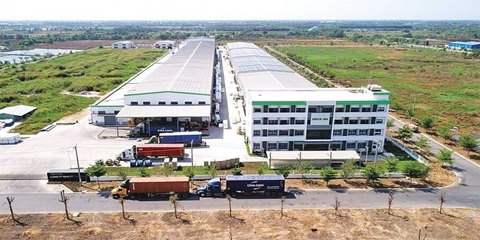
Instead of focusing only on land costs and incentives as usual, foreign investors are seeking a synchronised manufacturing ecosystem, from stable power supply and logistics to shared infrastructure and the convenience of completing residence procedures for experts to serve their long-term investment in the country.
MEMBER CORNER / PROMOTIONS
SENTRYSAFE FHW40200 – PROTECT YOUR VALUABLES, ENJOY PEACE OF MIND!
Looking for a reliable solution to protect your important documents, cash, and valuables from fire and water damage? Genuine SENTRYSAFE - Reliable protection for your valuables and peace of mind! Contact Sen Wai Vietnam for more information and personalized product recommendations.
PROPERTY / INDUSTRIAL ZONE
HCM CITY ATTRACTS US$5.7 BILLION INTO EXPORT PROCESSING AND INDUSTRIAL ZONES
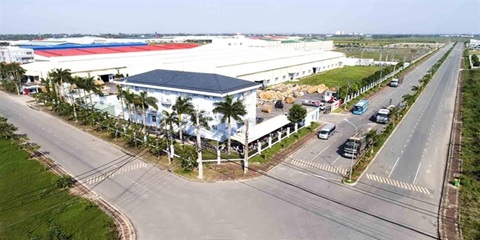
HCM City attracted US$5.7 billion in domestic and foreign investment into its export processing and industrial zones during the first nine months of 2026. The figure exceeded the city's full-year target by 31 per cent, highlighting strong momentum in high-quality industrial investment under Resolution No.10-NQ/TW. Total investment reached 131 per cent of the 2026 target of $4.25 billion and represented a 29 per cent increase compared with the same period in 2025, according to the city's Export Processing and Industrial Zones Authority (HEPZA).
INFRASTRUCTURE / CONSTRUCTION / LOGISTIC / PORT
DONG THAP PROVINCE STEPS UP INDUSTRIAL EXPANSION AND INFRASTRUCTURE CONNECTIVITY
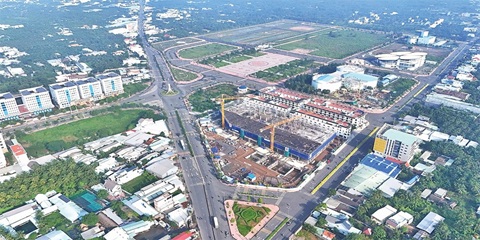
Accelerating public investment, strengthening inter-regional connectivity, and expanding industrial land are helping Dong Thap efficiently bolster competitiveness and drive economic growth. Following the 2025 merger of the former Dong Thap and Tien Giang provinces, the expanded Dong Thap province in the Mekong Delta faces mounting pressure to accelerate infrastructure development and strengthen connectivity among local economic zones, urban areas, industrial parks (IPs), and production centres.
Events Sponsors






















