Want to be in the loop?
subscribe to
our notification
Business News
SUPPORT NEEDS TO GO TO RIGHT BUSINESSES
Vietnamese businesses will weaken over time if the COVID-19 pandemic persists. Therefore, it is necessary to have an immediate solution to support businesses to restore production and business.
According to surveys, business performance in Vietnam was still very worrying in the first months of 2021. Many companies had to suspend or stop operations. The number of companies that withdrew from the market increased from 22,000 in the first four months of 2019 to 41,000 and 51,500 in the corresponding periods of 2020 and 2021. In addition, the number of temporarily suspended enterprises jumped to 28,000 from just 16,000 in the four-month period of 2019.
Experts at the recent Workshop on "Businesses Well Overcome COVID-19 Troubles", attributed this reality to COVID-19 pandemic outbreak. Even the fourth wave of COVID-19 contagion is still very dangerous with its impact on two economic bases - medical facilities and industrial parks - that the Government has tried to maintain over the past time.
More efforts needed
Businesses will weaken over time if the COVID-19 pandemic continues. Therefore, it is necessary to have an immediate solution to support enterprises to restore business operations.
Mr. Than Duc Viet, General Director of Garment 10 Corporation, expressed his concern that the corporation has a total of 12,000 employees working at 18 factories in many provinces and cities. This is a difficult issue when it has to fulfil the dual goal of preventing the pandemic and bolstering business operations.
The fourth outbreak of the plague is likely to cause enormous impacts on the corporation’s business performance and its employee health. What is happening in 2021 is very different from 2020. In 2020, when affected by COVID-19, Garment 10 Company had its supply and demand disrupted because 90% of its products were exported to the U.S., Europe and Japan.
On the contrary, this year, Garment 10 has a lot of orders and cannot receive all. Regulations on pandemic prevention are very harsh, but the corporation does not know how to maintain manufacturing and prevent the pandemic at the same time.
“Currently, we have 200 employees categorized as F2 and F3 contacts and they have to stay at home. But if it takes a long time, it will be very difficult for us to maintain production," he said with concern. Mr. Viet thus expected to have more specific regulations on physical distancing.
Sharing the same view, Mr. Nguyen Xuan Phu, President of Sunhouse Group Joint Stock Company, said that when the pandemic broke out, Sunhouse leadership had to figure out specific action scenarios for narrow lockdowns, city lockdowns and regional lockdowns.
He emphasized, “If lockdowns are partial, we will divide our warehouses to avoid supply disruptions. Factories are also split to cover each other in case one is locked for disease disinfection. Having different channels and markets will help the company work well. In addition, we pay attention to balancing loans and hedge funds. In particular, savings are only allowed to be used during extremely difficult or risky periods. With these strategies, at the end of the financial year, Sunhouse still made revenue and profit growth of 15% after covering all risks.”
He confidently said that “The pandemic broke out all over the world and we thus need to be ready to take risks wisely. Pandemic prevention does not mean we can avoid it, but we must learn how to live with it wisely.”
Financial support
To support businesses to overcome the COVID-19 crisis, Mr. Viet said that the most important support package is the VND60 trillion package initiated in 2020. However, Garment 10 has not been able to access this package to date because its access conditions include a 30% drop in revenue and a 50% reduction in staff. Indeed, if these criteria were met, the company would have already gone bankrupt.
Therefore, he hoped that this financial policy would be divided into support packages and beneficiaries. In addition, support packages should focus on resilient businesses that need worthy support for recovery which will in turn bolster economic growth. For companies already closed for a long time, different support packages are taken into account.
“Countries support enterprises based on tax contributions and insured employees. This encourages them to do business transparently and pay enough taxes. Meanwhile, Vietnam currently only focuses on assisting troubled ones. This incites them to deliberately fall into difficulty or give wrong evidence to seek support, while good taxpayers have to close their business. Many small and medium-sized businesses are very depressed because they only work in one field and have one business location. So, when the pandemic breaks out, they close their operations immediately," Mr. Phu said.
For this reason, he proposed to divide the support fund into two groups. First, companies in locked-down areas need immediate assistance according to their contribution to the State budget. Second, the support goes to companies in difficulty. We should group businesses to build support packages. Large enterprises, which account for 80% of state budget revenue, need other types of support like opening the market and assisting companies to receive foreign experts amid pandemic outbreaks.
"If the Top 500 businesses in the country receive effective support policies, they will create a spillover effect for satellite companies. Medium enterprises, most of which are satellite vendors for large enterprises, need other policies. The last group includes micro and small companies that need immediate assistance, based on their contributions, in case of lockdowns. Meanwhile, unlucky companies need to call for social help,” Phu proposed.
Source: VCCI
Related News
BANKING / FINANCE / INSURANCE / TAX
REMITTANCES TO HCM CITY RISE NEARLY 40% IN Q3
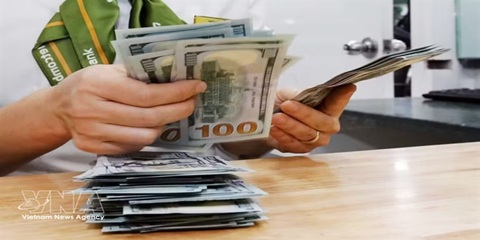
Remittances to HCM City reached more than US$2.83 billion in the third quarter of this year, up 39.5 per cent from the previous quarter and 3.6 per cent year-on-year. This was the first quarter showing positive annual growth this year, helping narrow the decline in remittance inflows over the first nine months. According to the State Bank of Vietnam (SBV)’s Regional Branch 2, remittances transferred to HCM City through credit institutions and economic organisations totalled $2.835 billion in Q3, an increase of more than $802 million from the previous quarter.
TECHNOLOGY
TECH SECTOR GROWTH OPENS UP OPPORTUNITIES FOR VIỆT NAM TO GO GLOBAL
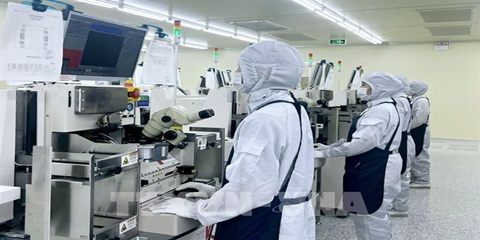
The growth of the electronics, semiconductor and high-tech sectors worldwide is opening up a variety of opportunities for Vietnamese enterprises to integrate more deeply into the global supply chain. However, to become suppliers for these corporations, domestic enterprises must meet rigorous standards regarding quality, technology, productivity and order fulfilment capabilities.
VIETNAM ECONOMY INVESTMENT
FOREIGN INVESTORS SEEKING A SYNCHRONISED MANUFACTURING ECOSYSTEM
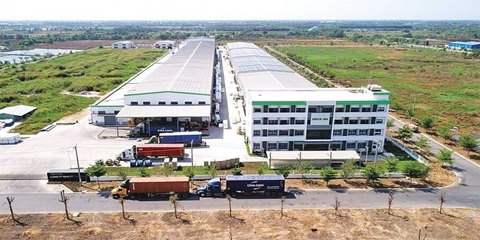
Instead of focusing only on land costs and incentives as usual, foreign investors are seeking a synchronised manufacturing ecosystem, from stable power supply and logistics to shared infrastructure and the convenience of completing residence procedures for experts to serve their long-term investment in the country.
MEMBER CORNER / PROMOTIONS
SENTRYSAFE FHW40200 – PROTECT YOUR VALUABLES, ENJOY PEACE OF MIND!
Looking for a reliable solution to protect your important documents, cash, and valuables from fire and water damage? Genuine SENTRYSAFE - Reliable protection for your valuables and peace of mind! Contact Sen Wai Vietnam for more information and personalized product recommendations.
PROPERTY / INDUSTRIAL ZONE
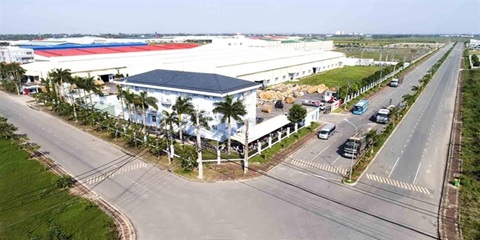
HCM CITY ATTRACTS US$5.7 BILLION INTO EXPORT PROCESSING AND INDUSTRIAL ZONES
HCM City attracted US$5.7 billion in domestic and foreign investment into its export processing and industrial zones during the first nine months of 2026. The figure exceeded the city's full-year target by 31 per cent, highlighting strong momentum in high-quality industrial investment under Resolution No.10-NQ/TW. Total investment reached 131 per cent of the 2026 target of $4.25 billion and represented a 29 per cent increase compared with the same period in 2025, according to the city's Export Processing and Industrial Zones Authority (HEPZA).
INFRASTRUCTURE / CONSTRUCTION / LOGISTIC / PORT
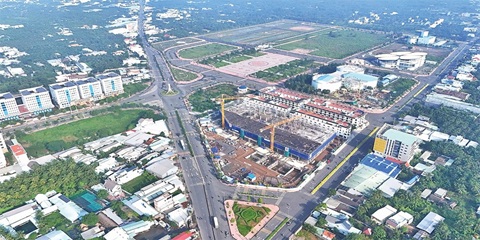
DONG THAP PROVINCE STEPS UP INDUSTRIAL EXPANSION AND INFRASTRUCTURE CONNECTIVITY
Accelerating public investment, strengthening inter-regional connectivity, and expanding industrial land are helping Dong Thap efficiently bolster competitiveness and drive economic growth. Following the 2025 merger of the former Dong Thap and Tien Giang provinces, the expanded Dong Thap province in the Mekong Delta faces mounting pressure to accelerate infrastructure development and strengthen connectivity among local economic zones, urban areas, industrial parks (IPs), and production centres.
Events Sponsors






















