Want to be in the loop?
subscribe to
our notification
Business News
STRONG SCOPE FOR ADDED AGRO-EXPORTS
Strong growth in the first half of 2025, along with efforts to expand export markets, is expected to help Vietnam reach an export turnover of $65 billion in agro-forestry-fishery products for the year.

Vietnam has priorities to further open up markets for products and encouraging agricultural cooperation, Le Toan
During a business trip to Brazil in early July to attend the expanded BRICS Summit and conduct bilateral engagements, Prime Minister Pham Minh Chinh met with Brazilian Minister of Agriculture Carlos Favaro to discuss measures to boost agricultural trade between the two countries.
PM Chinh proposed that the two countries’ agriculture ministries establish a joint working group to implement high-level commitments effectively.
“Key priorities include opening up markets further for each other’s major agricultural products, encouraging on-site agricultural cooperation, developing a joint Vietnam-Brazil coffee brand to deepen collaboration in production and consumption, and establishing a food security partnership, with Vietnam supplying rice to help meet Brazil’s needs,” said PM Chinh.
Minister Favaro expressed his willingness to exchange lists of priority agricultural products and work with Vietnam to develop a roadmap for mutual market access.
Separately, during a working visit to Beijing in May, leaders of the Ministry of Agriculture and Environment (MoAE) held talks with Sun Mai Jun, director general of the China’s General Administration of Customs.
The meeting focused on removing barriers to the export of Vietnamese agro-forestry-fishery goods to China. A Chinese inspection delegation is expected to visit Vietnam shortly to assess pomelo and lemon cultivation sites – a prerequisite for signing an export protocol.
Protocols for harvested and live fishery products are also being finalised. Several expired protocols are under review for renewal to better reflect current trade realities. Notably, both sides agreed to establish a “green channel” for agricultural goods, prioritising expedited customs clearance at border gates for fresh fruits during peak harvest periods. Border gate working hours will be extended, including weekends and outside regular hours, to accommodate rising clearance demand.
Vietnam and China are also exploring the establishment of an annual ministerial-level meeting mechanism on a rotating basis, aimed at strengthening cooperation and addressing trade challenges in agro-forestry-fishery products in a timely manner.
These developments, along with the current export growth momentum, are expected to form a solid foundation for reaching this year’s export target.
In the first six months of 2025, the export value of agro-forestry-fishery products reached $33.84 billion, up 15.5 per cent on-year. The trade surplus rose to $9.83 billion, a 16.5 per cent increase, reflecting the growing competitiveness of Vietnamese agricultural goods on the global market.
Within the export structure, agricultural products accounted for $18.3 billion, up 16.8 per cent; fishery products reached $5 billion, up 14.5 per cent; forestry products earned $8.7 billion, an increase of 8.8 per cent; and livestock products hit $264 million, up 10.1 per cent.
Importantly, nine out of 11 key product groups maintained growth, including coffee, rubber, pepper, and wood products.
The MoAE has issued a plan to promote exports of agro-forestry-fishery goods, targeting an annual turnover of $65 billion by the end of this year.
To reach this goal, the ministry has proposed a series of measures, including market expansion, product diversification, and leveraging the advantages of bilateral and multilateral free trade agreements. It also called on relevant agencies to work closely with local authorities in northern border provinces to monitor, update, and forecast goods flow, ensuring efficient vehicle management, minimising congestion, and safeguarding year-end export progress.
At the same time, urgent action is required to maintain momentum in traditional markets while also diversifying export lines and developing products suitable for emerging markets. The ministry’s projections suggest export turnover in the second half of the year will reach $31.6 billion – down 4.8 per cent year-on-year, or approximately $1.6 billion – if current reciprocal tariff rates remain unchanged. In the first half, the country’s export value was estimated at $33.5 billion, with imports at $23.5 billion, up 14.3 per cent and 23.5 per cent respectively over the same period last year.
The MoAE has outlined a roadmap under which the second quarter is expected to exceed $17 billion in exports, the third quarter is forecast to reach between $14–15 billion, and the fourth quarter is projected to surpass $16 billion.
To support these objectives, the ministry has identified three key solution groups. “Firstly, the ministry will continue to stabilise supply chains and strongly develop industries with competitive advantages and growth potential. Secondly, it should take full advantage of tax relief measures and rebalance trade with the United States,” the MoAE noted. “The third group of solutions focuses on accelerating exports from Q3 to drive growth through the remainder of the year.”
Source: VIR
Related News
BANKING / FINANCE / INSURANCE / TAX
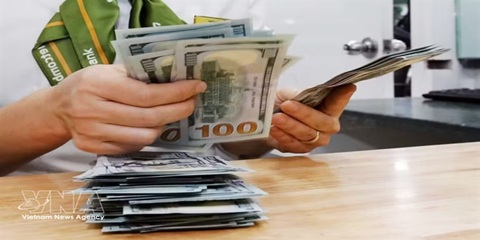
REMITTANCES TO HCM CITY RISE NEARLY 40% IN Q3
Remittances to HCM City reached more than US$2.83 billion in the third quarter of this year, up 39.5 per cent from the previous quarter and 3.6 per cent year-on-year. This was the first quarter showing positive annual growth this year, helping narrow the decline in remittance inflows over the first nine months. According to the State Bank of Vietnam (SBV)’s Regional Branch 2, remittances transferred to HCM City through credit institutions and economic organisations totalled $2.835 billion in Q3, an increase of more than $802 million from the previous quarter.

TECHNOLOGY
TECH SECTOR GROWTH OPENS UP OPPORTUNITIES FOR VIỆT NAM TO GO GLOBAL
The growth of the electronics, semiconductor and high-tech sectors worldwide is opening up a variety of opportunities for Vietnamese enterprises to integrate more deeply into the global supply chain. However, to become suppliers for these corporations, domestic enterprises must meet rigorous standards regarding quality, technology, productivity and order fulfilment capabilities.
VIETNAM ECONOMY INVESTMENT
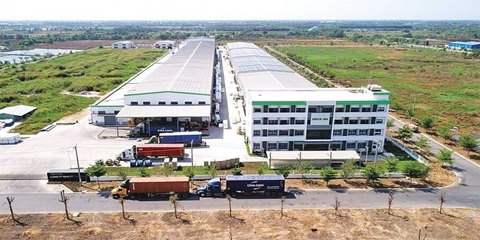
FOREIGN INVESTORS SEEKING A SYNCHRONISED MANUFACTURING ECOSYSTEM
Instead of focusing only on land costs and incentives as usual, foreign investors are seeking a synchronised manufacturing ecosystem, from stable power supply and logistics to shared infrastructure and the convenience of completing residence procedures for experts to serve their long-term investment in the country.
MEMBER CORNER / PROMOTIONS
SENTRYSAFE FHW40200 – PROTECT YOUR VALUABLES, ENJOY PEACE OF MIND!
Looking for a reliable solution to protect your important documents, cash, and valuables from fire and water damage? Genuine SENTRYSAFE - Reliable protection for your valuables and peace of mind! Contact Sen Wai Vietnam for more information and personalized product recommendations.
PROPERTY / INDUSTRIAL ZONE
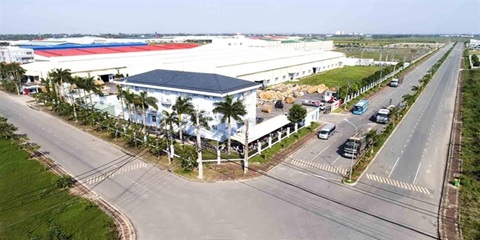
HCM CITY ATTRACTS US$5.7 BILLION INTO EXPORT PROCESSING AND INDUSTRIAL ZONES
HCM City attracted US$5.7 billion in domestic and foreign investment into its export processing and industrial zones during the first nine months of 2026. The figure exceeded the city's full-year target by 31 per cent, highlighting strong momentum in high-quality industrial investment under Resolution No.10-NQ/TW. Total investment reached 131 per cent of the 2026 target of $4.25 billion and represented a 29 per cent increase compared with the same period in 2025, according to the city's Export Processing and Industrial Zones Authority (HEPZA).
INFRASTRUCTURE / CONSTRUCTION / LOGISTIC / PORT
DONG THAP PROVINCE STEPS UP INDUSTRIAL EXPANSION AND INFRASTRUCTURE CONNECTIVITY
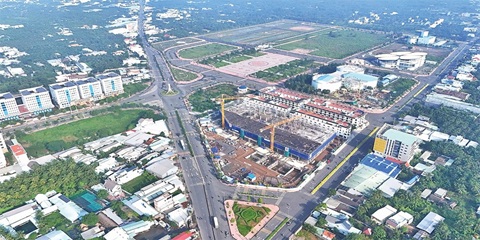
Accelerating public investment, strengthening inter-regional connectivity, and expanding industrial land are helping Dong Thap efficiently bolster competitiveness and drive economic growth. Following the 2025 merger of the former Dong Thap and Tien Giang provinces, the expanded Dong Thap province in the Mekong Delta faces mounting pressure to accelerate infrastructure development and strengthen connectivity among local economic zones, urban areas, industrial parks (IPs), and production centres.
Events Sponsors






















