Want to be in the loop?
subscribe to
our notification
Business News
STANDING COMMITTEE DISCUSS AMENDED LAW ON COOPERATIVES
The National Assembly (NA) Standing Committee on Tuesday discussed the amended Law on Cooperatives while continuing its legal symposium.
The symposium was conducted under the direction of NA Deputy Chairman Nguyễn Đức Hải.
In his presentation at the conference, Minister of Planning and Investment Nguyễn Chí Dũng said that amending and supplementing the Law on Cooperatives aimed to create a favourable legal system for cooperative economic development.
The draft amended law consists of 12 chapters and 117 articles compared to the 2012 Law on Cooperatives which had nine chapters and 64 articles.
The draft law closely follows five groups of policies in the proposal to develop the amended Law on Cooperatives approved by the NA.
It expands the groups of people participating in cooperatives, including individuals aged 15 years and over, associate members contribute capital and associate members do not contribute capital.
The age lowering is aimed at increasing member participation in cooperatives and cooperative groups.
The draft law adds one chapter on auditing and stipulates the frequency and scope of independent audits and internal audits.
It cuts down on some administrative procedures such as removing requirements for business and production plans and granting seals.
It allows using personal identification numbers when registering business certificates and adds methods of registration via postal services and electronic information networks.
The draft law adds one chapter on development policy for cooperatives.
Keeping the law’s name
The Government asked the NA about the name of the amended law with two options, the Law on Cooperative Economic Organisations or the amended Law on Cooperatives.
Chairman of the NA's Committee for Economic Affairs Vũ Hồng Thanh replied that the committee proposed to keep the name 'Law on Cooperatives' as mentioned in the law and ordinance development programme this year.
The option identifies the core role of cooperatives and avoids changing the name leading to more costs and other consequences related to law education.
The Committee for Economic Affairs suggested continuing to review, study and fully propose differences between this law and other related laws, serving as a basis for the NA to consider and decide specific content for cooperatives specified in the draft law.
It also serves the amendments and supplements to relevant laws to ensure the synchronism of the legal system.
The committee found that regulations on cooperation groups were still quite vague and not enough content for the NA to consider and decide.
It proposed to supplement and clarify conditions for converting a cooperative group into a cooperative, such as conditions on the number of members, financial resources, assets and operation scale.
It suggested adding conditions for joining and withdrawing from cooperation contracts between members of the cooperative groups, and group registration to serve statistical work and management for cooperative groups.
Regarding the Cooperative Development Assistance Fund, the committee emphasised the need to clarify the source of funding, operation and which agency will be responsible for managing the fund at the central level and at the provincial level.
The work aims to ensure the fund’s effectiveness in supporting cooperatives to access capital, especially capital for scientific and technological development.
In addition, it is necessary to clarify the roles and functions of the fund to avoid overlapping with the roles and functions of the Cooperative Bank and the People's Credit Fund.
The committee also suggested continuing to review regulations on conditions for becoming an official member of a cooperative, a member of a cooperative group to make it suitable with the Labour Code and other concerned laws and international commitments to foreign individuals.
Source: VNS
Related News

BANKING / FINANCE / INSURANCE / TAX
REMITTANCES TO HCM CITY RISE NEARLY 40% IN Q3
Remittances to HCM City reached more than US$2.83 billion in the third quarter of this year, up 39.5 per cent from the previous quarter and 3.6 per cent year-on-year. This was the first quarter showing positive annual growth this year, helping narrow the decline in remittance inflows over the first nine months. According to the State Bank of Vietnam (SBV)’s Regional Branch 2, remittances transferred to HCM City through credit institutions and economic organisations totalled $2.835 billion in Q3, an increase of more than $802 million from the previous quarter.

TECHNOLOGY
TECH SECTOR GROWTH OPENS UP OPPORTUNITIES FOR VIỆT NAM TO GO GLOBAL
The growth of the electronics, semiconductor and high-tech sectors worldwide is opening up a variety of opportunities for Vietnamese enterprises to integrate more deeply into the global supply chain. However, to become suppliers for these corporations, domestic enterprises must meet rigorous standards regarding quality, technology, productivity and order fulfilment capabilities.
VIETNAM ECONOMY INVESTMENT
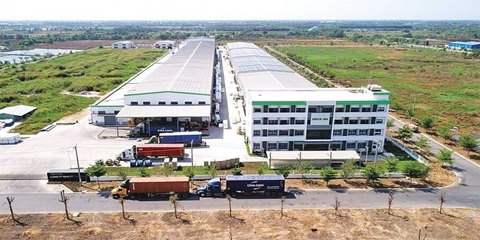
FOREIGN INVESTORS SEEKING A SYNCHRONISED MANUFACTURING ECOSYSTEM
Instead of focusing only on land costs and incentives as usual, foreign investors are seeking a synchronised manufacturing ecosystem, from stable power supply and logistics to shared infrastructure and the convenience of completing residence procedures for experts to serve their long-term investment in the country.

MEMBER CORNER / PROMOTIONS
SENTRYSAFE FHW40200 – PROTECT YOUR VALUABLES, ENJOY PEACE OF MIND!
Looking for a reliable solution to protect your important documents, cash, and valuables from fire and water damage? Genuine SENTRYSAFE - Reliable protection for your valuables and peace of mind! Contact Sen Wai Vietnam for more information and personalized product recommendations.
PROPERTY / INDUSTRIAL ZONE
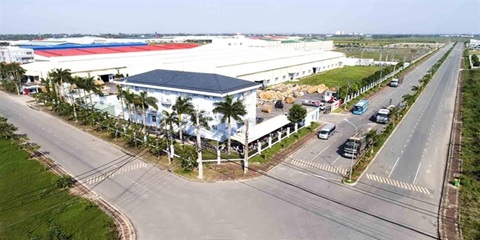
HCM CITY ATTRACTS US$5.7 BILLION INTO EXPORT PROCESSING AND INDUSTRIAL ZONES
HCM City attracted US$5.7 billion in domestic and foreign investment into its export processing and industrial zones during the first nine months of 2026. The figure exceeded the city's full-year target by 31 per cent, highlighting strong momentum in high-quality industrial investment under Resolution No.10-NQ/TW. Total investment reached 131 per cent of the 2026 target of $4.25 billion and represented a 29 per cent increase compared with the same period in 2025, according to the city's Export Processing and Industrial Zones Authority (HEPZA).

INFRASTRUCTURE / CONSTRUCTION / LOGISTIC / PORT
DONG THAP PROVINCE STEPS UP INDUSTRIAL EXPANSION AND INFRASTRUCTURE CONNECTIVITY
Accelerating public investment, strengthening inter-regional connectivity, and expanding industrial land are helping Dong Thap efficiently bolster competitiveness and drive economic growth. Following the 2025 merger of the former Dong Thap and Tien Giang provinces, the expanded Dong Thap province in the Mekong Delta faces mounting pressure to accelerate infrastructure development and strengthen connectivity among local economic zones, urban areas, industrial parks (IPs), and production centres.
Events Sponsors






















