Want to be in the loop?
subscribe to
our notification
Business News
SPOTTING REAL ESTATE PICTURE IN 2021
The economic resilience and recovery in a lackluster year caused by the COVID-19 pandemic is an important factor for the real estate picture to get bright and resilient. This is the premise to draw cash flows into the real estate market in 2021.
What scenario for the real estate market in 2021?
According to some real estate experts, thanks to well-controlled COVID-19 and some new policies in the Law on Investment, Construction, the Housing Law and the Real Estate Business Law, the real estate market will quickly and actively recover after a long dull period.
The Vietnam Real Estate Research Institute modeled two scenarios for the real estate market. When the GDP growth is 6%, the GDP per capita is about US$3,700 USD and the COVID-19 epidemic is contained domestically and internationally, the real estate market will grow at a higher rate than before the epidemic, even booming in some segments and certain regional markets. Giant projects, typically green tourism projects, will be invested to heat up the market.
On the contrary, if the epidemic is not controlled and macroeconomic indicators are not guaranteed, the real estate market will be the same as in 2020. However, with valuable experience gained in the face of difficulties and challenges in 2020, enterprises will actively restructure to optimize costs and profits and have many defense strategies towards potential segments such as industrial real estate and affordable housing.
Which segment leads the real estate market in 2021?
Each real estate segment will have different development strategies. Industrial real estate is being evaluated as a bright spot, having benefited from the currency war between the United States and China, from trade agreements between Vietnam and the European Union (EU). However, because international flights are still tightly controlled, investors are also facing many difficulties. Thus, this is still the time for us to prepare resources, including land fund and infrastructure to attract investors when the market rebounds. According to industry experts, more specific consistent solutions are needed for supply, infrastructure, and logistics to make industrial real estate really attractive, especially in Binh Duong, Dong Nai and Ba Ria-Vung Tau.
Mr. David Jackson, CEO of Colliers International Vietnam, said the industrial real estate market in Vietnam will be the most dynamic segment in 2021. When tourism recovers and borders officially open, the hotel and travel market will rebound and stably overcome the uncertainties of the past 12 months. The housing market will continue to be restructured for urban expansion in cities and the office market will also need to be expanded to accommodate the wave of international companies investing in Vietnam.
Besides, the trending real estate investment in neighboring provinces is drawing interest. As the available land fund in big cities like Hanoi and Ho Chi Minh City is increasingly shrinking, real estate businesses will continue to shift to provinces and cities that have advantages in developing industries, minerals and especially tourism. Many developers tend to choose localities to build new urban areas because of favorable land procedures and shorter investment project cycles than in cities. Investing in suburban areas of Hai Phong, Bac Ninh, Hoa Binh, Ha Long, Phan Thiet (Binh Thuan), Tuy Hoa (Phu Yen), Quy Nhon (Binh Dinh), Binh Phuoc, Long An, Binh Duong, Dong Nai, Ba Ria - Vung Tau is an optimal solution for both developers and investors. According to experts, 2021 will be a year of adaptability and flexibility to catch up with long-term vision and expertise in product development. Therefore, businesses can invest in the emerging real estate market, including researching cooperation development policies and laws of many provinces.
Dr. Tran Kim Chung, Vice President of the Central Institute for Economic Management (CIEM), said that the real estate market in Vietnam in 2021 will have many opportunities for development, but also face many challenges. Real estate development can be only sustainable together with macroeconomic stability, a healthy, transparent and open market. Therefore, the government should have incentive policies for property businesses to invest in low-priced products, he added. This is an urgent need in 2021 to compensate for short supply over the years.
According to Colliers International Vietnam, infrastructure will be key to meet the rising standard of living and working spaces in Vietnam. Investors will need to be more aware of consumer needs in such areas as city apartments, parks and outdoor spaces. The office market changed in 2020 because of the work from home (WFH) trend, putting pressures on office developers to incorporate more harmonious office environments to entice customers to sign up for long-term rent contracts. Overall, customers will expect a better quality of end products and take note of growth forecasts for the next five years in Vietnam.
Source: VCCI
Related News

CHARITY / EXHIBITION / OTHER EVENTS
INVESTMENT OPPORTUNITIES IN CA MAU PROVINCE: 96 PROJECTS AND 20 STRATEGIC PROJECTS
We are pleased to share with you information on investment projects currently seeking investors in Ca Mau Province. Should your esteemed company or association be interested, we kindly invite you to review the project information and complete the registration form via the links provided. The Ho Chi Minh City Investment and Trade Promotion Centre (ITPC) will consolidate the expressions of interest and facilitate connections with the leadership of Ca Mau Province at a meeting tentatively scheduled for 13 November 2026 in Ho Chi Minh City.
MEMBER CORNER / PROMOTIONS
BẰNG KIỀU LIVESHOW - A SYMPHONY OF LOVE UNDER THE GOLDEN GLOW
A masterclass in live music that takes the audience on a soulful journey through immortal love songs, guided by the peerless artistry and emotive storytelling of renowned singer Bằng Kiều. The highlight of the night is his seamless musical chemistry with special guest Triệu Hồng Ngọc, promising passionate and deeply resonant duets inside the magnificent Grand Ballroom.
INFRASTRUCTURE / CONSTRUCTION / LOGISTIC / PORT
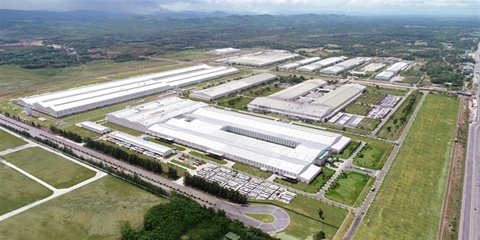
ĐÀ NẴNG GREEN-LIGHTS US$105 MILLION THAI DEVELOPMENT DEAL
The central city has approved an investment proposal by Thailand’s WHA Group to develop infrastructure for the 400ha WHA Đà Nẵng Industrial Park project on two communes of Thăng Bình and Đồng Dương, with an investment of more than VNĐ2.7 trillion (US$105 million). The city said it approved WHA Industrial Development International's status as an investor in the project, which is expected to take place between 2027 and 2034.
VIETNAM ECONOMY INVESTMENT
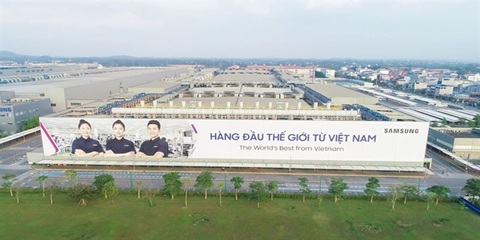
MOBILE PHONE EXPORTS RISE 20% TO $51.8 BILLION IN FIRST NINE MONTHS
Exports of mobile phones and components rose 20 per cent year-on-year to nearly US$51.8 billion in the first nine months of 2026, with China, the US and Republic of Korea accounting for more than half of the total. Shipments to the three markets reached a combined $26.18 billion, or 50.6 per cent of total exports of the product group during the period, according to data from the Vietnam Department of Customs under the Ministry of Finance.
INFRASTRUCTURE / CONSTRUCTION / LOGISTIC / PORT
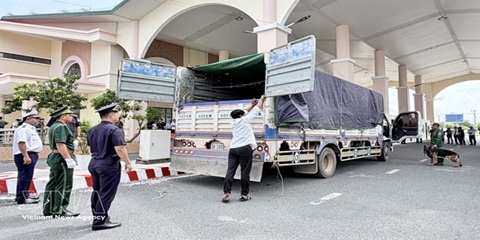
VIỆT NAM-CAMBODIA TRADE GATHERS PACE TOWARDS $20 BILLION TARGET
Trade between Việt Nam and Cambodia continues to grow, remaining a bright spot and a key pillar of bilateral cooperation as the two countries aim to raise two-way trade to US$20 billion in the coming years. After setting a record of more than $11.3 billion last year, bilateral trade reached about $8.7 billion in the first eight months of this year, up 8.3 per cent year on year.
VIETNAM ECONOMY INVESTMENT
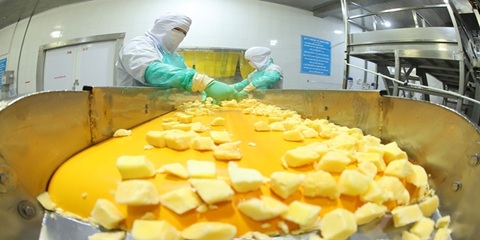
FRUIT AND VEGETABLE EXPORTS POISED TO HIT $10 BILLION IN 2026
Fruit and vegetable exports are on track to reach nearly US$10 billion in 2026, after rising 19.9 per cent year on year to nearly US$7.4 billion in the first nine months, driven by strong seasonal demand and abundant tropical fruit supplies. The Ministry of Agriculture and Environment said the growth reflected stronger international demand for fresh produce and processed agricultural products.
Events Sponsors






















