Want to be in the loop?
subscribe to
our notification
Business News
SMART-CITY DEVELOPMENT MUST BE LINKED WITH DIGITAL TRANSFORMATION PROCESS
Smart-city development in Việt Nam must be linked with the digital transformation process in localities.
Deputy Minister of Information and Communications Nguyễn Huy Dũng made the statement at the online ASOCIO Smart City Summit held on Tuesday morning.
The five-day summit was organised by the Asian-Oceanian Computing Industry Organisation (ASOCIO) and the Việt Nam Software and IT Services (VINASA). The summit will discuss modern technology trends applied in smart cities with five sessions on digital Government; smart real estate; smart industrial parks; digital platforms and solutions for smart cities; and start-ups.
Dũng said that smart-city development was an issue that had received the attention of many localities across the country.
Some localities had started to apply the smart city model and achieved initial results, he said.
“However, I think it is still a new model not only for Việt Nam but also for countries that applied the model before us,” he said.
It required us to constantly study, exchange experiences and draw lessons both domestically and internationally to serve the development of smart cities in Việt Nam, he said.
During the COVID-19 pandemic, some smart cities around the world failed to protect people's lives and health against the spread of the disease, he said.
The pandemic had given us an expensive but very valuable lesson to seriously review the limitations and then set directions for the deployment of smart cities in the future, he said.
Dũng also said the information and communications ministry, with the mission of leading and orienting the process of national digital transformation, including information and communications technology (ICT) for smart-city development, had made efforts to coordinate with relevant ministries, localities and international agencies to promote the deployment of smart cities in Việt Nam.
The ministry already issued guiding documents to create a legal framework for smart-city development, including the ICT Reference Framework, the Key Performance Indicators (KPIs) for Smart Cities and the guidance of the IT application to provide services and utilities in the smart city, he said.
Việt Nam was accelerating the national digital transformation process, he said.
“We believe that smart-city development is also the implementation of the digital transformation in localities,” he said.
Urgent demand
Speaking at the summit’s opening ceremony, Nguyễn Văn Khoa, President of VINASA, said that building smart cities was not only an inevitable trend but also an urgent demand in Việt Nam and in the world.
The pandemic over the past two years had been promoting the process of building and developing smart cities with many issues from data collection and management; solutions for pandemic prevention and control as well as the smart city's operation and management during the recovery period, he said.
Along with digital transformation, smart cities were becoming a new development trend of cities in the smart era, helping the cities to optimise resources, develop sustainably, bring more safety and convenience for people and contribute to socio-economic development, he said.
The summit was more meaningful as participants discussed recovery and growth while countries were struggling with the pandemic, of which, cities and urban areas suffered the most, he said.
In Việt Nam, the Government issued Decision No 950/QĐ-TTg in 2018, approving the Project of Sustainable Smart City Development in Việt Nam in 2018-25, with a vision towards 2030.
The Politburo issued Resolution No 52-NQ/TW in 2019 on a number of guidelines and policies to actively participate in the fourth industrial revolution. The resolution sets a target that by 2025 there will be at least three smart cities in the three key economic regions of the North, the South and Central.
By 2030, a number of smart cities will be formed in three regions and gradually connecting to the smart city network in the region and the world.
Source: VNS
Related News

BANKING / FINANCE / INSURANCE / TAX
REMITTANCES TO HCM CITY RISE NEARLY 40% IN Q3
Remittances to HCM City reached more than US$2.83 billion in the third quarter of this year, up 39.5 per cent from the previous quarter and 3.6 per cent year-on-year. This was the first quarter showing positive annual growth this year, helping narrow the decline in remittance inflows over the first nine months. According to the State Bank of Vietnam (SBV)’s Regional Branch 2, remittances transferred to HCM City through credit institutions and economic organisations totalled $2.835 billion in Q3, an increase of more than $802 million from the previous quarter.
TECHNOLOGY
TECH SECTOR GROWTH OPENS UP OPPORTUNITIES FOR VIỆT NAM TO GO GLOBAL
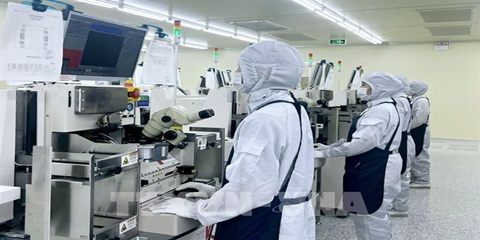
The growth of the electronics, semiconductor and high-tech sectors worldwide is opening up a variety of opportunities for Vietnamese enterprises to integrate more deeply into the global supply chain. However, to become suppliers for these corporations, domestic enterprises must meet rigorous standards regarding quality, technology, productivity and order fulfilment capabilities.
VIETNAM ECONOMY INVESTMENT
FOREIGN INVESTORS SEEKING A SYNCHRONISED MANUFACTURING ECOSYSTEM
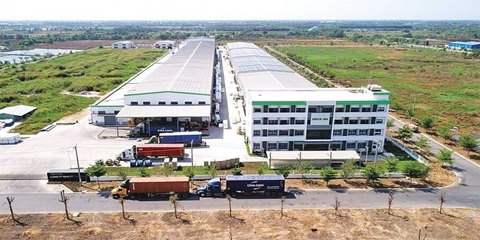
Instead of focusing only on land costs and incentives as usual, foreign investors are seeking a synchronised manufacturing ecosystem, from stable power supply and logistics to shared infrastructure and the convenience of completing residence procedures for experts to serve their long-term investment in the country.
MEMBER CORNER / PROMOTIONS
SENTRYSAFE FHW40200 – PROTECT YOUR VALUABLES, ENJOY PEACE OF MIND!
Looking for a reliable solution to protect your important documents, cash, and valuables from fire and water damage? Genuine SENTRYSAFE - Reliable protection for your valuables and peace of mind! Contact Sen Wai Vietnam for more information and personalized product recommendations.
PROPERTY / INDUSTRIAL ZONE
HCM CITY ATTRACTS US$5.7 BILLION INTO EXPORT PROCESSING AND INDUSTRIAL ZONES
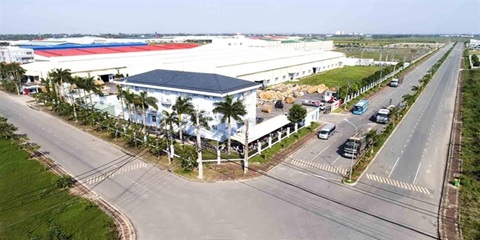
HCM City attracted US$5.7 billion in domestic and foreign investment into its export processing and industrial zones during the first nine months of 2026. The figure exceeded the city's full-year target by 31 per cent, highlighting strong momentum in high-quality industrial investment under Resolution No.10-NQ/TW. Total investment reached 131 per cent of the 2026 target of $4.25 billion and represented a 29 per cent increase compared with the same period in 2025, according to the city's Export Processing and Industrial Zones Authority (HEPZA).
INFRASTRUCTURE / CONSTRUCTION / LOGISTIC / PORT
DONG THAP PROVINCE STEPS UP INDUSTRIAL EXPANSION AND INFRASTRUCTURE CONNECTIVITY
Accelerating public investment, strengthening inter-regional connectivity, and expanding industrial land are helping Dong Thap efficiently bolster competitiveness and drive economic growth. Following the 2025 merger of the former Dong Thap and Tien Giang provinces, the expanded Dong Thap province in the Mekong Delta faces mounting pressure to accelerate infrastructure development and strengthen connectivity among local economic zones, urban areas, industrial parks (IPs), and production centres.
Events Sponsors






















