Want to be in the loop?
subscribe to
our notification
Business News
SEAFOOD EXPORTS RISE SHARPLY IN FIRST FIVE MONTHS
According to the Việt Nam Association of Seafood Exporters and Producers (VASEP), seafood exports to China surged by 57 per cent year-on-year, reaching US$716 million. As of the first four months of 2025, China overtook the US to become Việt Nam’s largest seafood export market.
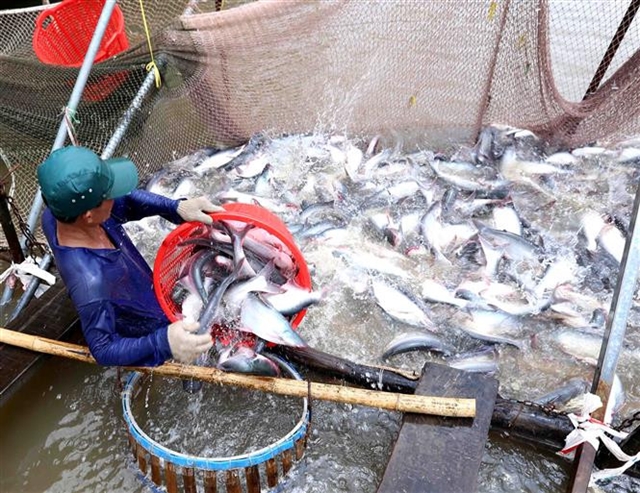
A fish farm in Cần Thơ Province. VNA/VNS Photo
HÀ NỘI - Việt Nam’s seafood export revenue reached US$4.07 billion in the first five months of 2025, marking a 14 per cent increase compared to last year.
China, the United States and Japan remained the country’s top three seafood export markets, accounting for 20 per cent, 16 per cent, and 15 per cent of total exports, respectively.
Shrimp and tra fish continued to be the country’s key exports.
The European Union emerged as a strong market, with imports of whiteleg shrimp, including frozen and value-added processed products, reaching 376,875 tonnes in 2024, up four per cent from 2023.
Việt Nam has seen a partial recovery in shipments to the EU. However, intense competition from Ecuador and India poses a significant challenge, prompting the country to focus on high-value products and market diversification to maintain its advantage and avoid disruptions.
According to the Việt Nam Association of Seafood Exporters and Producers (VASEP), seafood exports to China surged by 57 per cent year-on-year, reaching US$716 million. As of the first four months of 2025, China overtook the US to become Việt Nam’s largest seafood export market.
VASEP experts pointed out that climate change, water pollution and disease outbreaks are affecting the yield and quality of shrimp production. In addition, the global seafood market is becoming increasingly competitive, with strong players like Ecuador, India and Indonesia. As a result, Việt Nam’s seafood sector must improve output and quality to expand its presence in potential markets.
VASEP’s Communications Director, Lê Hằng, noted that exports to the US may see strong growth. She advised businesses to factor in rising transportation and logistics costs to reduce risks. In the meantime, exporters and US importers are urged to step up trade activities.
Diversification is key
Trình Trung Phi, Deputy Technical Director of commercial shrimp operations at Việt Úc Group, said that high production costs of Vietnamese seafood result from multilayered production processes. At the same time, international standards require not only lower prices but also socially responsible production. This presents a considerable challenge for the industry.
Economic experts have emphasised the need for the Government and businesses to invest in logistics infrastructure, technology, product diversification, and sustainable supply chains. These measures would help reduce costs and enhance profitability.
VASEP has proposed a series of initiatives for the tra fish segment, which must adapt to evolving global consumption trends. Previously overlooked niche markets are now being explored as potential targets.
“Enterprises should not limit themselves to producing frozen fillets. They need to diversify into value-added products such as fish balls, sausages, seasoned tra fish, canned braised fish, fish rolls and tra sushi to meet the growing demand for ready-to-eat and convenience foods, particularly in Asian urban centres like Japan, South Korea, Singapore and Malaysia,” VASEP said.
“Additionally, by-products, such as crispy fish skin, fish oil, collagen, gelatin and animal feed, are emerging as new trends.”
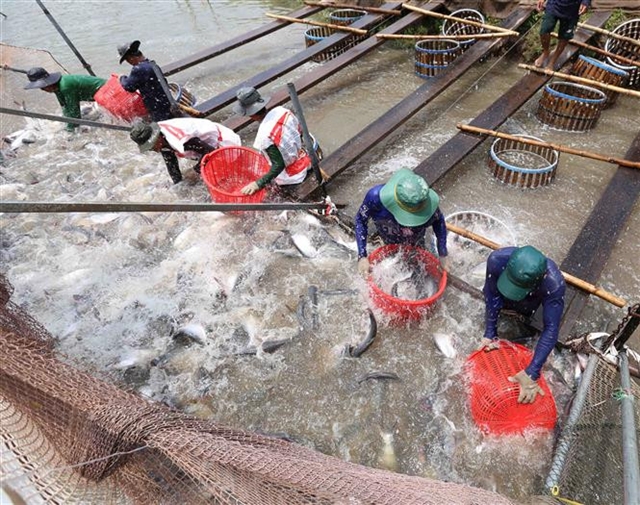
Farmers harvesting fish in Cần Thơ Province. VNA/VNS Photo
According to VASEP, consumers in the EU and North America are increasingly prioritising certified, eco-friendly and sustainable products. Tra fish raised under organic standards or certified by ASC, BAP, GlobalG.A.P, or RAS (Recirculating Aquaculture Systems) can command prices up to double those of conventional products.
VASEP also identified promising niche markets, including Islamic countries, Africa, and South America (excluding Brazil). Việt Nam has made initial inroads into the Brazilian market with tra fish exports, although the South American market remains largely untapped.
These regions offer favourable conditions for seafood consumption due to local tastes and demand for convenient food. Negotiations on a potential FTA between Việt Nam and the Mercosur bloc are expected to unlock export opportunities.
Deputy Minister of Agriculture and Rural Development Phùng Đức Tiến stressed that market diversification is not just an immediate necessity, but a long-term strategic goal. He urged enterprises to identify and develop high-potential products, enhance quality control, reduce production costs and strengthen processing capacity and trade promotion.
“Businesses must meet the diverse standards of export markets, including stringent ones like Halal. With proper preparation, we can overcome these trade barriers,” he added. VNS
Source: VNS
Related News

BANKING / FINANCE / INSURANCE / TAX
REMITTANCES TO HCM CITY RISE NEARLY 40% IN Q3
Remittances to HCM City reached more than US$2.83 billion in the third quarter of this year, up 39.5 per cent from the previous quarter and 3.6 per cent year-on-year. This was the first quarter showing positive annual growth this year, helping narrow the decline in remittance inflows over the first nine months. According to the State Bank of Vietnam (SBV)’s Regional Branch 2, remittances transferred to HCM City through credit institutions and economic organisations totalled $2.835 billion in Q3, an increase of more than $802 million from the previous quarter.

TECHNOLOGY
TECH SECTOR GROWTH OPENS UP OPPORTUNITIES FOR VIỆT NAM TO GO GLOBAL
The growth of the electronics, semiconductor and high-tech sectors worldwide is opening up a variety of opportunities for Vietnamese enterprises to integrate more deeply into the global supply chain. However, to become suppliers for these corporations, domestic enterprises must meet rigorous standards regarding quality, technology, productivity and order fulfilment capabilities.
VIETNAM ECONOMY INVESTMENT
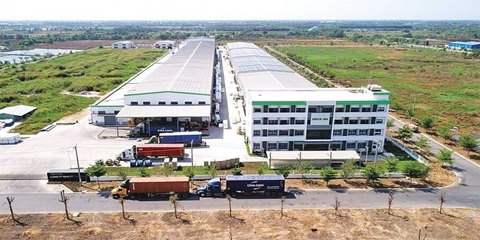
FOREIGN INVESTORS SEEKING A SYNCHRONISED MANUFACTURING ECOSYSTEM
Instead of focusing only on land costs and incentives as usual, foreign investors are seeking a synchronised manufacturing ecosystem, from stable power supply and logistics to shared infrastructure and the convenience of completing residence procedures for experts to serve their long-term investment in the country.

MEMBER CORNER / PROMOTIONS
SENTRYSAFE FHW40200 – PROTECT YOUR VALUABLES, ENJOY PEACE OF MIND!
Looking for a reliable solution to protect your important documents, cash, and valuables from fire and water damage? Genuine SENTRYSAFE - Reliable protection for your valuables and peace of mind! Contact Sen Wai Vietnam for more information and personalized product recommendations.
PROPERTY / INDUSTRIAL ZONE
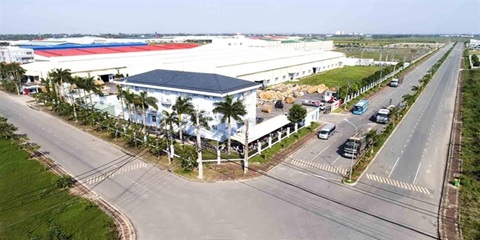
HCM CITY ATTRACTS US$5.7 BILLION INTO EXPORT PROCESSING AND INDUSTRIAL ZONES
HCM City attracted US$5.7 billion in domestic and foreign investment into its export processing and industrial zones during the first nine months of 2026. The figure exceeded the city's full-year target by 31 per cent, highlighting strong momentum in high-quality industrial investment under Resolution No.10-NQ/TW. Total investment reached 131 per cent of the 2026 target of $4.25 billion and represented a 29 per cent increase compared with the same period in 2025, according to the city's Export Processing and Industrial Zones Authority (HEPZA).
INFRASTRUCTURE / CONSTRUCTION / LOGISTIC / PORT
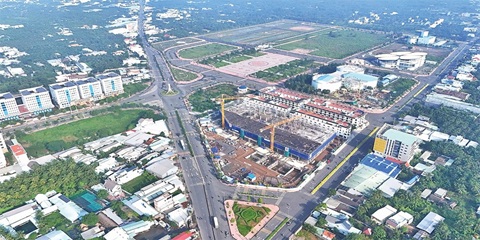
DONG THAP PROVINCE STEPS UP INDUSTRIAL EXPANSION AND INFRASTRUCTURE CONNECTIVITY
Accelerating public investment, strengthening inter-regional connectivity, and expanding industrial land are helping Dong Thap efficiently bolster competitiveness and drive economic growth. Following the 2025 merger of the former Dong Thap and Tien Giang provinces, the expanded Dong Thap province in the Mekong Delta faces mounting pressure to accelerate infrastructure development and strengthen connectivity among local economic zones, urban areas, industrial parks (IPs), and production centres.
Events Sponsors






















