Want to be in the loop?
subscribe to
our notification
Business News
SCAMS OF CRIMINALS USING HIGH TECHNOLOGY
At HSBC, we always try our best to protect our customers from NOT becoming the victims of increasing financial crimes. Therefore, we would like to share with you the latest popular methodologies that the scammers are using to attack the victims and how you can avoid them.
1. Law enforcement impersonation
The scammers use phone number with strange prefix “0840, 0882, …., pretending to be an officer of Procuracy, Police. Scammers notice the victims about the violation and request victims to deposit money to the bank account provided by scammers.
2. Romance scam in social network
The scammers pretending to be the soldier, or overseas businessman inform the victims that they want to send valuable gifts to Vietnam. The scammers then pretend to be customs and request the victims to pay fees to receive goods.
3. Donation scheme
The scammers pretend to be foreigners that want to transfer money into Vietnam for charity and offer the victims a commission of 30-40%. The scammers then pretend to be customs and request the victims to pay transaction fee.
4. Online shopping scam
The scammers send fake online-payment link and request the victims to log on for payment. Scammers will use this credential information to log in internet banking of the victim and transfer all fund out. Scammers can also ask victims to deposit fund then appropriate this deposit amount.
5. Impersonate bank staff to update bank app
The scammers pretending to be a bank staff or financial officer call the victims for guiding them to upgrade software. The scammers will collect credential information during call then appropriate victims’ money in their bank account.
6. Awarding scam
The scammers pretending to be a bank staff or financial officer call the victims to announce an award (Ex: motorbike, saving books, etc.). Scammers request the victims to pay fees (in order to receive the award) then appropriate victims’ money.
7. Hack Facebook account to borrow money
The scammers hack Facebook accounts and send message to users’ relatives/ friends to borrow money. Bank account name provided by scammers are always different from the real name of Facebook user.
8. Work from home (WFH) scam
The scammers announce recruitments for WFH position (Ex: assembling ballpoint pens, stamping lipstick’s logo, ....) and request the victims to deposit before receiving products. The scammers then disappear after receiving deposit.
9. Impersonate financial institutions for loan offer
Scammers offer loan service with low fee, simple process and request the victims to pay loan fee in advance. The scammers then appropriate the loan fee without any loan service provided.
10. Impersonate social insurance agency
The scammers inform the victims about a debt or loan related to social insurance fund. The victims are requested to pay fee, otherwise case will be reported the police. The scammers then appropriate the fee.
11. Intentional wrong transfer later claimed as a loan
The scammers intentionally make a transfer to the victim’s account but they pretend to have made transfer to a wrong beneficiary. Scammers ask the victim to return the fund to another account instead of the originated account. The scammers then claim the victims to pay interest for the loan which they have disbursed (transfer to victim’s account previously). The victims are threatened about the litigation.
12. Upgrade 4G sim to appropriate money
The scammers pretending to be an employee of a telecommunication network company instruct the victims to upgrade the sim. Following the instruction of the scammers, the victims’ mobile phone number will be controlled and used by the scammers who then will take over the victims’ bank accounts and transfer all the money out.
13. Scam in virtual currency exchange platform
The scammers over advertise about the investment profits to attract investors. Upon investors deposit large amount for investment, the platform collapses and investors cannot withdraw money.
14. Illegal lottery scam
The victims must pay a non-refundable fee to receive a good “number” with higher chance to win. In case of win, the victims must pay the scammers an additional commission.
15. Completing assignments on strange apps
Fee must be paid in advance to receive assignments. Fees will be refunded in the first 1 or 2 times. Assignments with higher fees will have technical issue and victims cannot receive the refund or victims have to pay more.
16. Recruiting collaborators to work on e-commerce apps
Scammers recruit collaborators to work on purchase orders on popular e-Commerce APPs. Collaborators are given login codes to APPs, links. In order to receive commission, collaborators (victims) have to transfer money, pretending to buy goods from these shops to increase interaction and prestige. The victims receive the refund and the commission for the first 1 – 2 times only. Later deals with higher value, victims will not receive any refund or commission.
17. Impersonate a telecommunications/ bureaucracy officer
The scammers pretending to be a telecommunications/ bureaucracy officer notify that the victims owe freight fee or bad debts. Then, the scammers self-claimed as Police to ask the victims to pay fee for the investigation.
18. Impersonate a traffic police officer
The scammers pretending to be a traffic police officer notify that the victim has an expiring fine or the victims are involved in a drug trafficking. The scammers request victims to provide bank credential information. Scammers access bank account and transfer all fund out.
19. Impersonate senior leaders of the government, department
The scammers set up social media accounts (Facebook, Zalo, etc.), using the leader’s images to build trust. Scammers send messages to the leader’s staffs then borrow money from victims.
20. Harassment calls for debt collections
Scammers self-claimed as employees of financial institutions send messages and make harassing calls to collect debts from both borrowers and their family or friends.
TIPS to protect yourselves
• DO NOT transfer money to anyone via phone or internet without knowing them well.
• Government agencies DO NOT work via phone; if necessary, they will invite the related persons to their offices.
• DO NOT provide OTP, E-banking account to anyone.
• When acquaintances or relatives ask to borrow money or transfer money, please call to confirm. BE SUSPECTED!
• Most of the easy ways to make money through social networks are "tricks". BE ALERTED!
Note:
Ensure that the contact information you provide to us is completed, accurate and up-to-date.
Regularly Check bank statements sent to your registered email address/ Online Banking: If there are any transactions that you don’t recognize, always contact us.
At HSBC, we strive to deliver the most secure and convenient banking services for our customers. As part of our effort to maintain the highest level of security on our site and for our customers, we ask that you read and be aware of the security information published on our official website https://www.hsbc.com.vn/en-vn/help/security/
If you’re worried about fraud on your account, please contact:
• Premier customers (operating 24/7): (84 28) 37 247 666 ; or contact your Premier Relationship Manager.
• HSBC Visa Platinum (operating 24/7): (84 28) 37 247 248.
• Personal customers:(84 28) 37 247 247 (in the South) or (84 24) 62 707 707 (in the North). Operating 24/7 for lost or stolen card or token, dispute transactions or card related complaints, and from 8:00 am to 10:00 pm daily for other matters.
Source: HSBC Bank
Related News

MEMBER CORNER / PROMOTIONS
AN ELECTRIFYING NIGHT WITH THE "QUEEN OF DANCE" THU MINH AT THE GRAND HO TRAM!
The stage at The Grand Ballroom is set to catch fire as Vietnam’s undisputed "Queen of Dance," Thu Minh, takes the spotlight. Renowned for her powerhouse vocals, magnetic stage presence, and sultry, high-energy performances, Thu Minh promises an evening of pure musical euphoria. The energy escalates with an exclusive appearance by special guest and The Voice champion, Vu Thao My.

HR / LABOUR/ EMPLOYMENT
HIGH-QUALITY HUMAN RESOURCES NEEDED TO ATTRACT NEW TECH INVESTMENT CAPITAL
Besides infrastructure, Việt Nam must also rapidly develop a highly skilled workforce to attract investment in AI, semiconductors and advanced manufacturing, experts have said. Don Lam, CEO and co-founder of investment management company VinaCapital, said that global technology investors were increasingly looking at the readiness of the entire ecosystem, with high-quality human resources a decisive factor.

HR / LABOUR/ EMPLOYMENT
HIRING OUTLOOK STRENGTHENS IN Q4 AS SKILLS SHORTAGES PERSIST
Hiring intentions among employers in Việt Nam strengthened in the fourth quarter, with 52 per cent of surveyed companies planning to increase headcount between October and December, according to a ManpowerGroup survey released this week. Việt Nam's hiring outlook was stronger than the Asia Pacific and Middle East (APME) regional average of 33 per cent and the global average of 29 per cent, ranking third in the region and 11th globally among 42 markets surveyed.

BANKING / FINANCE / INSURANCE / TAX
LARGE BANKS FORECAST TO GAIN HIGHER PROFITABILITY IN H2 2026
The return on average assets (ROAA) of the banking sector will likely remain stable at around 1.5 per cent in the second half of 2026, but profitability divergence among banks will increase, with large banks outperforming peers on stronger margins and diversified earnings, analysts forecast. In a recent report on the banking sector, analysts from the Vietnam Investors Service Rating said the sector’s ROAA rose by 10 basis points quarter-on-quarter to 1.51 per cent in the first half of this year, driven by net interest margin (NIM) improvements at some State-owned banks and large private banks.
GARMENT / TEXTILE
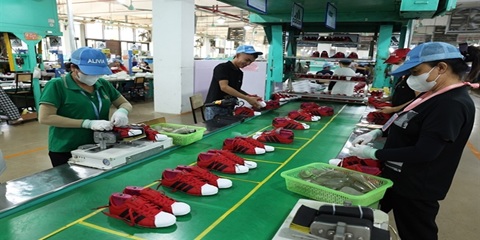
VIỆT NAM'S FOOTWEAR, BAG EXPORTS TO US TOP $8 BILLION IN EIGHT MONTHS
Việt Nam's exports of footwear and handbags to the US exceeded US$8 billion in the first eight months of 2026, as the US and EU remained the country's biggest markets despite sluggish growth in footwear shipments. Exports from Việt Nam's leather and footwear sector reached more than $2.45 billion in August, down 9 per cent from July but up 3 per cent from a year earlier, according to preliminary statistics.
VIETNAM ECONOMY INVESTMENT
LÂM ĐỒNG TARGETS DIGITAL ECONOMY TO ACCOUNT FOR 30 PER CENT OF GRDP BY 2030
Lâm Đồng Province aims to raise the digital economy’s contribution to around 30 per cent of its gross regional domestic product (GRDP) by 2030, as part of a five-year plan to develop digital economy and society issued recently. Under Plan No. 15358/KH-UBND, the province targets more than 60 per cent of small- and medium-sized enterprises (SMEs) to adopt digital technologies by 2030 while increasing the value of cashless payments to 30 times its GRDP.
Events Sponsors






















