Want to be in the loop?
subscribe to
our notification
Business News
SCALING UP THE ECO-INDUSTRIAL PARK MODEL IN VIETNAM
Eco-industrial parks (EIPs) are increasingly viewed as an optimal solution for transitioning industrial development toward sustainability, aligned with the goals of reducing emissions, developing the circular economy and enhancing national competitiveness. Beyond supporting international environmental commitments, the EIP model is becoming a key criterion for attracting foreign investors.
Currently, the EIP model is being incorporated into various long-term national development strategies like the Green Growth Strategy for 2021-2030 with a vision to 2050, the Strategy for Sustainable Production and Consumption to 2030, and Vietnam’s Nationally Determined Contributions (NDC) Action Program. More importantly, the development and replication of EIPs contribute directly to Vietnam’s commitments to achieving net-zero emissions by 2050 as announced at COP26 Conference.
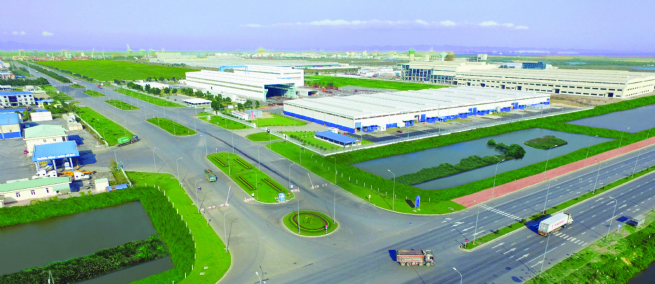
This demonstrates not only the strong political will of the Vietnamese government in addressing climate change but also opens up significant opportunities to mobilize international resources, including climate finance fund, energy transition partnerships, green development banks and technical assistance from such organizations as UNIDO, GIZ and JICA.
Traditional industrial park models are posing clear limitations, including high energy consumption, substantial waste generation, insufficient inter-firm linkages, and mounting pressure on the natural environment and local communities. Transitioning to EIPs is thus not only an environmental requirement but also a critical condition for improving the operational efficiency and sustainability of EIPs.
Ms. Le Thi Thanh Thao, Country Representative of the United Nations Industrial Development Organization (UNIDO) in Vietnam, said that EIPs exemplify an industrial approach that respects the limits of nature. She noted that the model helps businesses minimize environmental impacts while delivering tangible economic benefits by reducing production costs, optimizing resource use and boosting competitiveness. Especially as global investment and consumption trends shift toward environmentally friendly products and production models, the early adoption of EIPs will enable Vietnam to capture a new wave of high-quality FDI.
Despite their benefits, the development and transition to EIPs in Vietnam still face a lot of challenges. One of the most pressing issues is the lack of coherence in the legal framework, particularly regarding water reuse regulations, waste treatment and circularity, and technical standards for industrial symbiosis. The absence of unified guidelines from relevant ministries and agencies causes confusion for local authorities and businesses during implementation.
Moreover, the high upfront costs such as investments in water and gas treatment infrastructure, resource monitoring systems, and advanced technical solutions pose significant barriers to businesses, especially small and medium ones.
In this context, Vuong Thi Minh Hieu, Deputy Director of the Foreign Investment Agency (Ministry of Finance), emphasized the need for a comprehensive set of systemic solutions to accelerate the transition. First and foremost, it is essential to raise awareness and strengthen political commitment among all levels of government and the business community regarding the role of the circular economy within industrial parks. Next is enhancing commitment and collaboration between infrastructure developers and tenant businesses to build robust industrial symbiosis networks.
Notably, bold incentive policies need to be in place, including corporate income tax reductions or exemptions, preferential access to green credit, technology innovation support, and land lease reductions for businesses participating in or investing in EIPs. Alongside these efforts, Vietnam must actively mobilize resources from international financial institutions, development partners, commercial banks and climate support funds.
The development of industrial parks (IPs) and economic zones (EZs) not only meets economic growth demands but also ensures environmental sustainability, social equity and global competitiveness. According to the government’s strategic direction, by 2030, Vietnam aims to establish a stable and modern IP-EZ system that harmonizes economic development with environmental protection and social well-being. Expanding the EIP model is a critical step toward that goal, aiming to ensure that Vietnam's industrial growth is not only rapid but also sustainable. This approach affirms Vietnam’s role in the global value chain and demonstrates its capacity to fulfill sustainable development commitments to the international community.
Source: VCCI
Related News
MEMBER CORNER / PROMOTIONS
AN ELECTRIFYING NIGHT WITH THE "QUEEN OF DANCE" THU MINH AT THE GRAND HO TRAM!
The stage at The Grand Ballroom is set to catch fire as Vietnam’s undisputed "Queen of Dance," Thu Minh, takes the spotlight. Renowned for her powerhouse vocals, magnetic stage presence, and sultry, high-energy performances, Thu Minh promises an evening of pure musical euphoria. The energy escalates with an exclusive appearance by special guest and The Voice champion, Vu Thao My.
HR / LABOUR/ EMPLOYMENT
HIGH-QUALITY HUMAN RESOURCES NEEDED TO ATTRACT NEW TECH INVESTMENT CAPITAL
Besides infrastructure, Việt Nam must also rapidly develop a highly skilled workforce to attract investment in AI, semiconductors and advanced manufacturing, experts have said. Don Lam, CEO and co-founder of investment management company VinaCapital, said that global technology investors were increasingly looking at the readiness of the entire ecosystem, with high-quality human resources a decisive factor.
HR / LABOUR/ EMPLOYMENT
HIRING OUTLOOK STRENGTHENS IN Q4 AS SKILLS SHORTAGES PERSIST
Hiring intentions among employers in Việt Nam strengthened in the fourth quarter, with 52 per cent of surveyed companies planning to increase headcount between October and December, according to a ManpowerGroup survey released this week. Việt Nam's hiring outlook was stronger than the Asia Pacific and Middle East (APME) regional average of 33 per cent and the global average of 29 per cent, ranking third in the region and 11th globally among 42 markets surveyed.

BANKING / FINANCE / INSURANCE / TAX
LARGE BANKS FORECAST TO GAIN HIGHER PROFITABILITY IN H2 2026
The return on average assets (ROAA) of the banking sector will likely remain stable at around 1.5 per cent in the second half of 2026, but profitability divergence among banks will increase, with large banks outperforming peers on stronger margins and diversified earnings, analysts forecast. In a recent report on the banking sector, analysts from the Vietnam Investors Service Rating said the sector’s ROAA rose by 10 basis points quarter-on-quarter to 1.51 per cent in the first half of this year, driven by net interest margin (NIM) improvements at some State-owned banks and large private banks.
GARMENT / TEXTILE
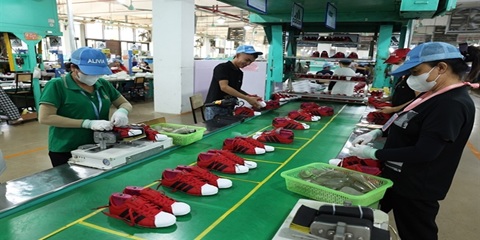
VIỆT NAM'S FOOTWEAR, BAG EXPORTS TO US TOP $8 BILLION IN EIGHT MONTHS
Việt Nam's exports of footwear and handbags to the US exceeded US$8 billion in the first eight months of 2026, as the US and EU remained the country's biggest markets despite sluggish growth in footwear shipments. Exports from Việt Nam's leather and footwear sector reached more than $2.45 billion in August, down 9 per cent from July but up 3 per cent from a year earlier, according to preliminary statistics.
VIETNAM ECONOMY INVESTMENT
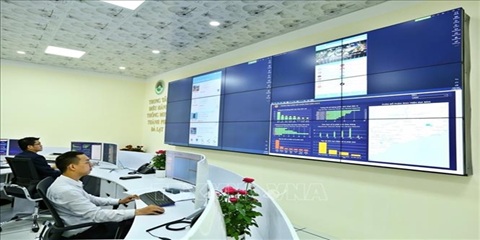
LÂM ĐỒNG TARGETS DIGITAL ECONOMY TO ACCOUNT FOR 30 PER CENT OF GRDP BY 2030
Lâm Đồng Province aims to raise the digital economy’s contribution to around 30 per cent of its gross regional domestic product (GRDP) by 2030, as part of a five-year plan to develop digital economy and society issued recently. Under Plan No. 15358/KH-UBND, the province targets more than 60 per cent of small- and medium-sized enterprises (SMEs) to adopt digital technologies by 2030 while increasing the value of cashless payments to 30 times its GRDP.
Events Sponsors






















