Want to be in the loop?
subscribe to
our notification
Business News
REOPENING OF INT’L FLIGHTS CONSIDERED
The Ministry of Transport will consider the reopening of international flight routes to countries and territories which have no new cases of COVID-19 in the community for 30 consecutive days, according to a ministry official.
Hanoi - The Ministry of Transport will consider the reopening of international flight routes to countries and territories which have no new cases of COVID-19 in the community for 30 consecutive days, according to a ministry official.
The official, who wanted to remain anonymous, told Vietnam News Agency that priority will be given to Japan, the Republic of Korea, China (mainland) and Taiwan (China) and some Southeast Asian countries which have controlled the disease.
“The COVID-19 pandemic is taking place in many countries around the world. Under the Government’s direction, the reopening of international flights needs to be considered carefully."
The resumption of international flights is scheduled to begin at the end of July, according to a proposal from the Civil Aviation Authority of Vietnam (CAAV) sent to the ministry recently.
Prime Minister Nguyen Xuan Phuc has recently directed that the reopening of international flights will have to ensure safety for people because just a small mistake will mean social distancing measures have to be implemented again.
“The reopening aims to serve investors, technical staff and skilled workers in Vietnam. It creates conditions for Vietnamese people living abroad to return home. However, all still have to follow strict control procedures to prevent the spread of the pandemic to the community,” the ministry official said.
“Vietnam Airlines has conducted one-way flights transporting Vietnamese people to the Republic of Korea for work and study, but it is difficult to restore all international routes.”
Head of CAAV Dinh Viet Thang said to maintain and ensure the feasibility of the reopening of international flights, it should not limit the number of passengers, including visitors, who will be required to follow safety rules.
He said transit passengers will not be allowed to enter Vietnam. Passengers are required to have stayed in countries and territories for at least 30 consecutive days before flight and have negative coronavirus certificates issued three days before the scheduled flight date.
In addition, passengers must be tested at the arrival terminal in Vietnam. Laboratory expenses are paid by the airline. Passengers must stay at locations determined by local People's Committees in cities and provinces for 14 days, for which they have to pay a fee.
Thang said when countries consider how to restart international travel amid the COVID-19 pandemic, the concept of a "travel bubble", which is an 'intra-zone movement or moving corridor', is becoming more attractive.
The travel bubble includes two or more countries successfully restraining COVID-19 to create a moving bloc or corridor. People living in the bloc can travel freely by road, sea and air transport, avoiding mandatory quarantine requirements.
Thang said Estonia, Latvia and Lithuania have opened their borders to the Baltic bloc, creating opportunities for businesses to reopen trade, meanwhile visitors from outside the bloc are still required to isolate themselves for 14 days.
Australia and New Zealand have also proposed a Trans-Tasman bubble, in which citizens of one country can work in the other without a visa. Meanwhile, China is considering expanding its "intra-regional movement" over mainland China to Taiwan, Hong Kong and Macau and the Republic of Korea.
Source: VIR
Related News

CHARITY / EXHIBITION / OTHER EVENTS
INVESTMENT OPPORTUNITIES IN CA MAU PROVINCE: 96 PROJECTS AND 20 STRATEGIC PROJECTS
We are pleased to share with you information on investment projects currently seeking investors in Ca Mau Province. Should your esteemed company or association be interested, we kindly invite you to review the project information and complete the registration form via the links provided. The Ho Chi Minh City Investment and Trade Promotion Centre (ITPC) will consolidate the expressions of interest and facilitate connections with the leadership of Ca Mau Province at a meeting tentatively scheduled for 13 November 2026 in Ho Chi Minh City.
MEMBER CORNER / PROMOTIONS
BẰNG KIỀU LIVESHOW - A SYMPHONY OF LOVE UNDER THE GOLDEN GLOW
A masterclass in live music that takes the audience on a soulful journey through immortal love songs, guided by the peerless artistry and emotive storytelling of renowned singer Bằng Kiều. The highlight of the night is his seamless musical chemistry with special guest Triệu Hồng Ngọc, promising passionate and deeply resonant duets inside the magnificent Grand Ballroom.
INFRASTRUCTURE / CONSTRUCTION / LOGISTIC / PORT
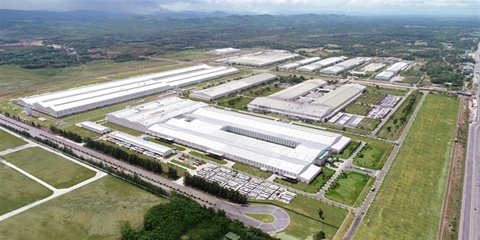
ĐÀ NẴNG GREEN-LIGHTS US$105 MILLION THAI DEVELOPMENT DEAL
The central city has approved an investment proposal by Thailand’s WHA Group to develop infrastructure for the 400ha WHA Đà Nẵng Industrial Park project on two communes of Thăng Bình and Đồng Dương, with an investment of more than VNĐ2.7 trillion (US$105 million). The city said it approved WHA Industrial Development International's status as an investor in the project, which is expected to take place between 2027 and 2034.
VIETNAM ECONOMY INVESTMENT
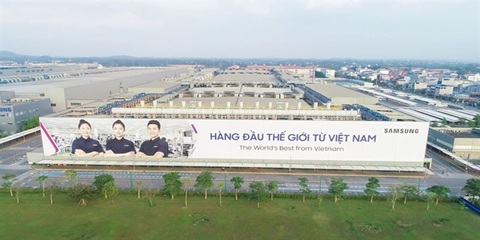
MOBILE PHONE EXPORTS RISE 20% TO $51.8 BILLION IN FIRST NINE MONTHS
Exports of mobile phones and components rose 20 per cent year-on-year to nearly US$51.8 billion in the first nine months of 2026, with China, the US and Republic of Korea accounting for more than half of the total. Shipments to the three markets reached a combined $26.18 billion, or 50.6 per cent of total exports of the product group during the period, according to data from the Vietnam Department of Customs under the Ministry of Finance.
INFRASTRUCTURE / CONSTRUCTION / LOGISTIC / PORT
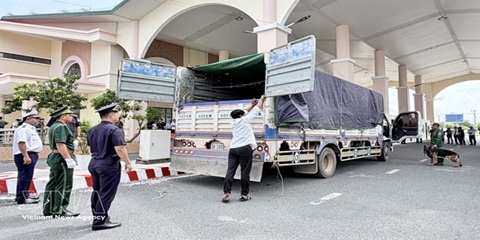
VIỆT NAM-CAMBODIA TRADE GATHERS PACE TOWARDS $20 BILLION TARGET
Trade between Việt Nam and Cambodia continues to grow, remaining a bright spot and a key pillar of bilateral cooperation as the two countries aim to raise two-way trade to US$20 billion in the coming years. After setting a record of more than $11.3 billion last year, bilateral trade reached about $8.7 billion in the first eight months of this year, up 8.3 per cent year on year.
VIETNAM ECONOMY INVESTMENT
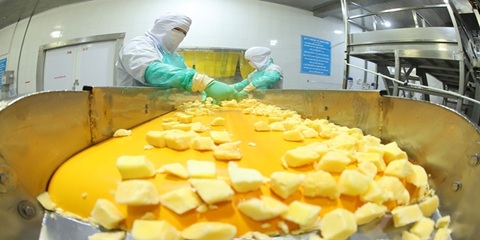
FRUIT AND VEGETABLE EXPORTS POISED TO HIT $10 BILLION IN 2026
Fruit and vegetable exports are on track to reach nearly US$10 billion in 2026, after rising 19.9 per cent year on year to nearly US$7.4 billion in the first nine months, driven by strong seasonal demand and abundant tropical fruit supplies. The Ministry of Agriculture and Environment said the growth reflected stronger international demand for fresh produce and processed agricultural products.
Events Sponsors






















