Want to be in the loop?
subscribe to
our notification
Business News
RECOVERY PROPOSALS SET OUT FOR BUSINESSES
Both individuals and businesses are in critical need of further reductions of fees and taxes as they attempt to claw their way out of 2021’s economic fallout.
According to the Vietnam Textile and Apparel Association (VITAS), although the trade surplus of the sector in the first nine months reported strong figures at $11 billion, textile and garment firms are still facing risks due to the on-month fall in export value of between 10-20 per cent since the worst pandemic outbreak emerged.
“If ceasing production for too long, partners will find new outsourcing for their orders, and we cannot know for sure that they come back to us when the pandemic is controlled,” said VITAS vice chairman Truong Van Cam. “Thereby, resuming production as soon as possible and providing proper fiscal policies is essential for them to recover.”
At last week’s conference on economic recovery and development in combination with enhancing internal capacity and economic autonomy, organised by the Ministry of Planning and Investment (MPI), Cam’s argument was highlighted amid great woes hitting the garment and textile industry – which grew only 4.8 per cent in the first nine months of this year, far lower than the average double-digit climb in the same period of recent years.
At the conference, experts and businesses from across all industries provided suggestions on stronger solutions related to fiscal and monetary policies.
Pham Huy Hung, vice chairman of the Vietnam Association of Small and Medium Enterprises, proposed lower interest rates to encourage businesses to borrow for resuming manufacturing and production. “The interest rate at present is too high for firms to approach. We should cut it down to 7-8 per cent next year for both new and old loans,” Hung said.
Hung added that the loan restructuring in Circular No.03/TT-NHNN dated April, giving exemption from or reduction of loan interests and charges, as well as maintaining classified loan groups in order to help clients affected by COVID-19, is not suitable enough.
Truong Van Cam of VITAS added that the association has proposed the state to allow enterprises to arrange overtime hours per month higher than the current legal regulations to boost production with fewer workers.
Other policies proposed by VITAS across various fields include lowering credit limits, reducing loan interest rates, removing shortcomings in social insurance and environmental protection laws, and eliminating unnecessary transport restrictions that hinder day-to-day business.
Vice chairman Cam underscored the need for firms to be exempted from contributing to social insurance, unemployment insurance, and union funds, as paying for them has become a massive burden while unable to carry out operations.
Economist Nguyen Dinh Cung added, “Such fees that have no relation to business results should be cancelled for the next two years, while some taxes and fees that are delayed should be exempted. In addition, there could be a reduction in electronic bills for some sectors and cancellation of paying for union fees for the next three years.”
A few days ago, Vietnam Social Security provided support for pandemic-hit employees and employers who are beneficiaries of the government’s new support package sourced from the unemployment insurance fund, worth about VND30 trillion ($1.31 billion).
The Vietnam General Confederation of Labour also proposed to consider using the surplus of the unemployment insurance fund to support all employees who have been participating in unemployment insurance for six months or more.
Elsewhere, the government’s Resolution No.68/NQ-CP dated July on policies to support employees and employers this year could add some more beneficiaries, such as employees who have not yet signed a labour contract and not yet participated in social insurance; and officials and employees in other public non-business units.
Previously, Resolution 68 reduced the compulsory contribution rate to the occupational accidents and diseases fund, and deferred compulsory contributions to the retirement and survivorship fund.
Since the pandemic began, the government has issued several fiscal and monetary policies related to taxes, fees, debt freezes, rescheduling, and more, expending around $6.7 billion from the state budget.
If including assistance from insurance funds, exemption and reduction of telecoms, water, electricity, and tuition, the total value of bailout packages this year is around $10.45 billion, equivalent to 2.84 per cent of GDP.
MPI Minister Nguyen Chi Dung noted that early support packages at the start of the pandemic were modest in comparison with other regional countries like Thailand and Malaysia, and acknowledged that more must be done.
“Previous support packages focused on removing short-term challenges for corporates and individuals. We need some more general measures for the long term, with enough huge resources to accelerate economic recovery and improve economic resilience,” said Minister Dung.
Source: VIR
Related News

BANKING / FINANCE / INSURANCE / TAX
REMITTANCES TO HCM CITY RISE NEARLY 40% IN Q3
Remittances to HCM City reached more than US$2.83 billion in the third quarter of this year, up 39.5 per cent from the previous quarter and 3.6 per cent year-on-year. This was the first quarter showing positive annual growth this year, helping narrow the decline in remittance inflows over the first nine months. According to the State Bank of Vietnam (SBV)’s Regional Branch 2, remittances transferred to HCM City through credit institutions and economic organisations totalled $2.835 billion in Q3, an increase of more than $802 million from the previous quarter.
TECHNOLOGY
TECH SECTOR GROWTH OPENS UP OPPORTUNITIES FOR VIỆT NAM TO GO GLOBAL
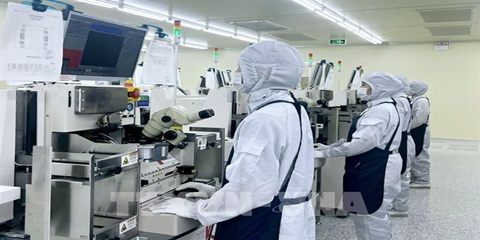
The growth of the electronics, semiconductor and high-tech sectors worldwide is opening up a variety of opportunities for Vietnamese enterprises to integrate more deeply into the global supply chain. However, to become suppliers for these corporations, domestic enterprises must meet rigorous standards regarding quality, technology, productivity and order fulfilment capabilities.
VIETNAM ECONOMY INVESTMENT
FOREIGN INVESTORS SEEKING A SYNCHRONISED MANUFACTURING ECOSYSTEM
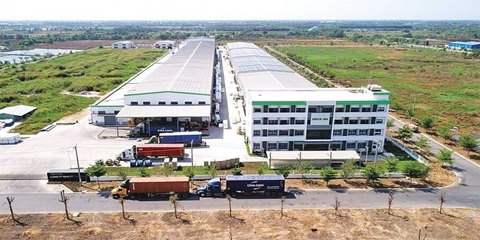
Instead of focusing only on land costs and incentives as usual, foreign investors are seeking a synchronised manufacturing ecosystem, from stable power supply and logistics to shared infrastructure and the convenience of completing residence procedures for experts to serve their long-term investment in the country.

MEMBER CORNER / PROMOTIONS
SENTRYSAFE FHW40200 – PROTECT YOUR VALUABLES, ENJOY PEACE OF MIND!
Looking for a reliable solution to protect your important documents, cash, and valuables from fire and water damage? Genuine SENTRYSAFE - Reliable protection for your valuables and peace of mind! Contact Sen Wai Vietnam for more information and personalized product recommendations.
PROPERTY / INDUSTRIAL ZONE
HCM CITY ATTRACTS US$5.7 BILLION INTO EXPORT PROCESSING AND INDUSTRIAL ZONES
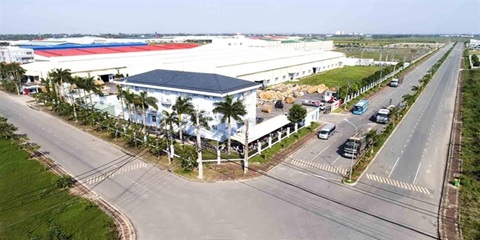
HCM City attracted US$5.7 billion in domestic and foreign investment into its export processing and industrial zones during the first nine months of 2026. The figure exceeded the city's full-year target by 31 per cent, highlighting strong momentum in high-quality industrial investment under Resolution No.10-NQ/TW. Total investment reached 131 per cent of the 2026 target of $4.25 billion and represented a 29 per cent increase compared with the same period in 2025, according to the city's Export Processing and Industrial Zones Authority (HEPZA).
INFRASTRUCTURE / CONSTRUCTION / LOGISTIC / PORT
DONG THAP PROVINCE STEPS UP INDUSTRIAL EXPANSION AND INFRASTRUCTURE CONNECTIVITY
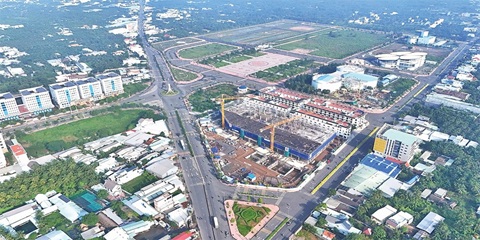
Accelerating public investment, strengthening inter-regional connectivity, and expanding industrial land are helping Dong Thap efficiently bolster competitiveness and drive economic growth. Following the 2025 merger of the former Dong Thap and Tien Giang provinces, the expanded Dong Thap province in the Mekong Delta faces mounting pressure to accelerate infrastructure development and strengthen connectivity among local economic zones, urban areas, industrial parks (IPs), and production centres.
Events Sponsors






















