Want to be in the loop?
subscribe to
our notification
Business News
REAL ESTATE MARKET TO RECOVER IN Q2 2024, ACCELERATE IN 2025, EXPERTS PREDICT
Việt Nam's real estate market will bounce back starting from the second quarter of 2024, and prosper into 2025, experts said.
Speaking at the Việt Nam Real Estate Summit 2023 held by Batdongsan.com.vn in HCM City last week, Nguyễn Quốc Anh, deputy general director of the property listing platform, said the Vietnamese real estate market in 2023 has been experiencing positive changes and mirroring a previous cycle.
Specifically, real estate inventory increased strongly while prices slumped in the 2008-2012 period, until a reversal signal appeared 2013 when credit was loosened, and a VNĐ30 trillion credit support package and the Amended Land Law were passed to support the real estate market.
Currently, in terms of interest rates, the State Bank of Việt Nam has adjusted the ceiling deposit interest rates three times and lowered the policy interest rates four times this year. Many commercial banks have reduced deposit interest rates by 3-5 per cent compared to the beginning of the year.
Credit growth of the entire banking sector reached 8.21 per cent as of November 22, lower that the credit growth target of 14-15 per cent for this year.
In addition, the Law on Real Estate Business and the Law on Housing were passed last month, and will take effect from the beginning of 2025, while the Government's policies to support the sector will boost the market, he said.
He predicted that the real estate market will show signs of a turnaround from Q2 to Q4 next year, with liquidity coming from apartment products meeting real housing needs.
The market will enter a consolidation period from Q4 2024 to Q1 2025 under the condition that monetary tools and policies are promoted on a large scale, helping to overcome difficulties in terms of capital resources. In addition, the Law on Real Estate Business and Law on Housing, which will take effect from the beginning of 2025, will contribute to freeing up money sources and resolving regulatory issues to create motivation for the market to develop in a sustainable manner.
The market will then enter a period of prosperity from Q2 to Q4 of 2025, he said, adding that this period will record strong economic development. Investors’ financial capacity and the monetary environment will also improve, leading to a strong recovery in supply and liquidity in the market.
He also forecast that the market will enter a stable development period after the first quarter of 2026. At that time, the market will continue to enjoy good growth in terms of liquidity and prices, and many real estate products will appear, he added.
Worst of the downturn has passed
In his recent report, Michael Kokalari, chief economist at VinaCapital, said: “The downturn in Việt Nam’s real estate market has bottomed out, partly because mortgage rates peaked and are now headed lower. While a full-scale revival in the market is not likely to take root until mid-2024, there are some signs that a rebound is already in the making, including significant increases in the prices of prime properties in downtown HCM City and Hà Nội and a pickup in the volume of land lots changing hands.”
“The latter is a segment of the market which had been completely dead for months, and the recent activity is a good indication that long term investors (as well as speculators) have started paying attention to the real estate market again,” he said.
He also highlighted that the prices of new housing units offered for sale in HCM City and Hà Nội are about flat year-on-year, but developers are reportedly offering mortgage assistance (e.g., extended grace periods) and other incentives to sell their units.
Furthermore, prices of apartments in the secondary market for which the seller does not have clear legal ownership status have seen a drop of circa 10 per cent.
This is just one example of how legal and regulatory issues continue to be the main impediment to real estate development in Việt Nam.
“While there has been some recent incremental progress towards resolving those issues, we do not expect meaningful progress until well into 2024; although we see green shoots in Việt Nam’s real estate market, a full recovery is by no means underway yet,” he said.
At the beginning of November, senior government officials held high profile meetings with major Vietnamese developers to address issues that are impeding real estate development. Industry executives identified legal and regulatory issues as the source of most of the industry’s current difficulties, identifying inconsistencies in the current regulations and legal framework as particularly problematic.
Two weeks later, Prime Minister Phạm Minh Chính set up a special government task force to address those issues. By the end of November, new legislation was enacted to clarify certain specific issues such as the exact options developers have in order to fulfill their obligation to produce affordable/social housing, and how much of a deposit developers are allowed to collect from home buyers before a project’s construction commences.
“We also remain hopeful that the Government will take the necessary measures to alleviate the legal and regulatory bottlenecks that currently impede development activity in Việt Nam. A recovery in the market would have broader implications for the overall economy, not just for real estate developers, and would go a long way toward boosting consumer confidence in Việt Nam, which would in-turn also help support stock prices next year,” Kokalari added.
Source: VNS
Related News

CHARITY / EXHIBITION / OTHER EVENTS
INVESTMENT OPPORTUNITIES IN CA MAU PROVINCE: 96 PROJECTS AND 20 STRATEGIC PROJECTS
We are pleased to share with you information on investment projects currently seeking investors in Ca Mau Province. Should your esteemed company or association be interested, we kindly invite you to review the project information and complete the registration form via the links provided. The Ho Chi Minh City Investment and Trade Promotion Centre (ITPC) will consolidate the expressions of interest and facilitate connections with the leadership of Ca Mau Province at a meeting tentatively scheduled for 13 November 2026 in Ho Chi Minh City.

MEMBER CORNER / PROMOTIONS
BẰNG KIỀU LIVESHOW - A SYMPHONY OF LOVE UNDER THE GOLDEN GLOW
A masterclass in live music that takes the audience on a soulful journey through immortal love songs, guided by the peerless artistry and emotive storytelling of renowned singer Bằng Kiều. The highlight of the night is his seamless musical chemistry with special guest Triệu Hồng Ngọc, promising passionate and deeply resonant duets inside the magnificent Grand Ballroom.
INFRASTRUCTURE / CONSTRUCTION / LOGISTIC / PORT
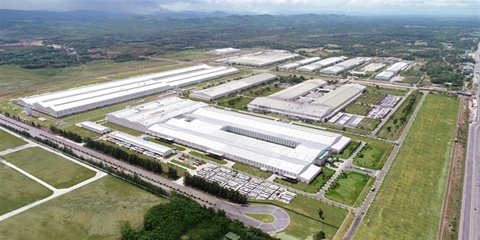
ĐÀ NẴNG GREEN-LIGHTS US$105 MILLION THAI DEVELOPMENT DEAL
The central city has approved an investment proposal by Thailand’s WHA Group to develop infrastructure for the 400ha WHA Đà Nẵng Industrial Park project on two communes of Thăng Bình and Đồng Dương, with an investment of more than VNĐ2.7 trillion (US$105 million). The city said it approved WHA Industrial Development International's status as an investor in the project, which is expected to take place between 2027 and 2034.
VIETNAM ECONOMY INVESTMENT
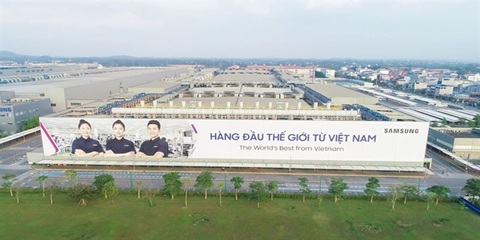
MOBILE PHONE EXPORTS RISE 20% TO $51.8 BILLION IN FIRST NINE MONTHS
Exports of mobile phones and components rose 20 per cent year-on-year to nearly US$51.8 billion in the first nine months of 2026, with China, the US and Republic of Korea accounting for more than half of the total. Shipments to the three markets reached a combined $26.18 billion, or 50.6 per cent of total exports of the product group during the period, according to data from the Vietnam Department of Customs under the Ministry of Finance.

INFRASTRUCTURE / CONSTRUCTION / LOGISTIC / PORT
VIỆT NAM-CAMBODIA TRADE GATHERS PACE TOWARDS $20 BILLION TARGET
Trade between Việt Nam and Cambodia continues to grow, remaining a bright spot and a key pillar of bilateral cooperation as the two countries aim to raise two-way trade to US$20 billion in the coming years. After setting a record of more than $11.3 billion last year, bilateral trade reached about $8.7 billion in the first eight months of this year, up 8.3 per cent year on year.
VIETNAM ECONOMY INVESTMENT
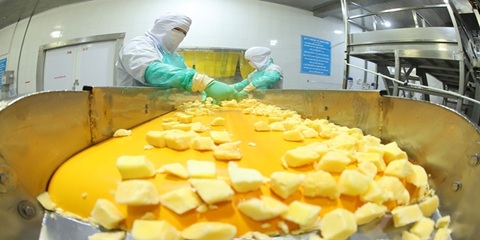
FRUIT AND VEGETABLE EXPORTS POISED TO HIT $10 BILLION IN 2026
Fruit and vegetable exports are on track to reach nearly US$10 billion in 2026, after rising 19.9 per cent year on year to nearly US$7.4 billion in the first nine months, driven by strong seasonal demand and abundant tropical fruit supplies. The Ministry of Agriculture and Environment said the growth reflected stronger international demand for fresh produce and processed agricultural products.
Events Sponsors






















