Want to be in the loop?
subscribe to
our notification
Business News
REAL ESTATE MARKET GETS MORE STABLE
The Vietnamese real estate market is entering the last quarter of 2018. Remarking on market performance from the beginning of the year, an official from the Ministry of Construction said that the market had relatively stable growth, abundant supply and more practical product valuation. Hence, the actual demand also picks up significantly. The Ministry said that a potential boom in land demand may be seen in areas with good cooperation, but the market will be generally stable.
Data from the Ministry of Construction, collected from real estate exchanges, showed that Hanoi had about 8,650 successful deals in the first two quarters of 2018, up 24.6 per cent year on year, while Ho Chi Minh City had about 9,550 deals, up 31.4 per cent.
Many opportunities and challenges
In Hanoi, the second quarter saw a slight increase in apartment segment from the previous quarter, but suffered a little decrease from the same period of 2017. In contrast, the personal housing segment expanded by 1.84 per cent from the first quarter, and 3.01 per cent from the same period a year ago.
In Ho Chi Minh City, the apartment segment rose 1.4 per cent from the first quarter and 3.43 per cent from the same period of 2017. Similarly, the personal housing segment climbed 3.24 per cent quarter on quarter and 10.42 per cent year on year.
Real estate inventories continued to show positive signs as this index fell sharply. Real estate inventories valued only VND24,072 billion (over US$1 billion) as of the end of June 2018, down 5 per cent (equivalent to VND1,310 billion) from late 2017 and down 81.27 per cent from the peak of VND104,476 trillion (US$4.5 billion) in the first quarter of 2013.
The decline in real estate inventories has reduced burdens on the economy and all segments have continually improved their stock exposures over the past three years, resulting in a sharp rise in projects under construction and pending for licence. The number of newly established property enterprises also increased rapidly.
According to industry experts, in the 2018 - 2020 period, the real estate market will further improve the demand and supply balance, which is considered an important condition for the market to develop sustainably. In major cities, strong fluctuations in the real estate market will focus on the synchronous infrastructure development that generates the room for medium and long-term development investment.
In addition to solutions aimed to stabilise the real estate market and prevent a market bubble, a lot of shortcomings are yet to be resolved, including unreal buying spree and slowly responded policies. For example, when the market has new real estate products like condotel and officetel, policymakers feel baffled in administration. Moreover, policies on small-size houses are still inconsistent. Even, policies on preferential loans for social housing development have been introduced for a long time, but we still lack guidance for application or lack funds for carrying out. Property derivatives like mortgage refinancing system, mutual savings bank, or trust fund have been long planned but they are still on the table rather than in life.
Mr Can Van Luc, a member of the National Advisory Council on Financial and Monetary Policies, said, like Thailand or Singapore, Vietnam should have a common housing savings fund. At the same time, the country needs to concentrate on perfecting and developing the capital market to create medium and long-term funds to balance the financial market structure and give seed money for housing savings funds and social housing programmes.
Ensuring stable market development
Deputy Construction Minister Le Quang Hung affirmed that the Ministry of Construction will continue to keep a close watch on the real estate market in order to timely introduce solutions to control the market and speed up the common software development to connect and integrate data into the system to portray a more panoramic picture of the real estate market; and will urge, supervise and coordinate with relevant ministries, branches and localities to guide market data system construction, management, operation and updating.
The Ministry of Construction will soon complete and submit to the Prime Minister the project “Economic security in social security-ensured housing and real estate market”, and “Development assessments, trend forecasts, market solutions and policies recommended for stable and healthy real estate market development”.
According to property specialists, in late 2018 and 2019 when credit availability is limited, capital access will be harder for investors and customers. This will affect transactions and, coupled with objective factors like higher land price and higher input costs, will slow down the market growth. Especially, condotel projects or financially viable projects will be largely affected, while M&As may thrive in the period.
Mr Nguyen Viet Cuong, President of KOSY Group, said that real estate businesses now need to be more flexible to meet real demands. They should first of all focus on active solutions and comparative advantages like building and developing corporate values, and building the creditability with customers and partners. This is the core factor to be different from their peers and enhance their reputation and position. In addition, they need to step up investment research and market surveys before making investment decisions, choosing appropriate segments and strategies to their competences.
Source: VCCI
Related News

CHARITY / EXHIBITION / OTHER EVENTS
INVESTMENT OPPORTUNITIES IN CA MAU PROVINCE: 96 PROJECTS AND 20 STRATEGIC PROJECTS
We are pleased to share with you information on investment projects currently seeking investors in Ca Mau Province. Should your esteemed company or association be interested, we kindly invite you to review the project information and complete the registration form via the links provided. The Ho Chi Minh City Investment and Trade Promotion Centre (ITPC) will consolidate the expressions of interest and facilitate connections with the leadership of Ca Mau Province at a meeting tentatively scheduled for 13 November 2026 in Ho Chi Minh City.

MEMBER CORNER / PROMOTIONS
BẰNG KIỀU LIVESHOW - A SYMPHONY OF LOVE UNDER THE GOLDEN GLOW
A masterclass in live music that takes the audience on a soulful journey through immortal love songs, guided by the peerless artistry and emotive storytelling of renowned singer Bằng Kiều. The highlight of the night is his seamless musical chemistry with special guest Triệu Hồng Ngọc, promising passionate and deeply resonant duets inside the magnificent Grand Ballroom.
INFRASTRUCTURE / CONSTRUCTION / LOGISTIC / PORT
ĐÀ NẴNG GREEN-LIGHTS US$105 MILLION THAI DEVELOPMENT DEAL
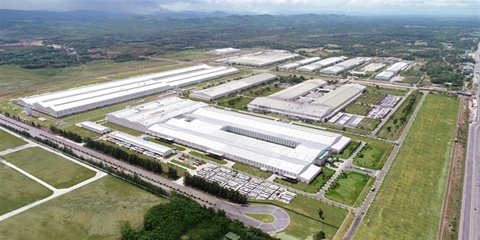
The central city has approved an investment proposal by Thailand’s WHA Group to develop infrastructure for the 400ha WHA Đà Nẵng Industrial Park project on two communes of Thăng Bình and Đồng Dương, with an investment of more than VNĐ2.7 trillion (US$105 million). The city said it approved WHA Industrial Development International's status as an investor in the project, which is expected to take place between 2027 and 2034.
VIETNAM ECONOMY INVESTMENT
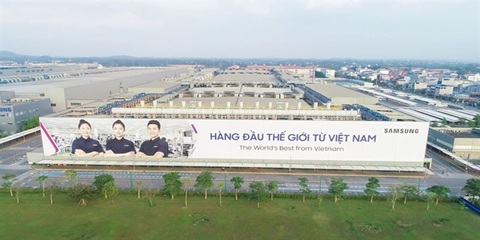
MOBILE PHONE EXPORTS RISE 20% TO $51.8 BILLION IN FIRST NINE MONTHS
Exports of mobile phones and components rose 20 per cent year-on-year to nearly US$51.8 billion in the first nine months of 2026, with China, the US and Republic of Korea accounting for more than half of the total. Shipments to the three markets reached a combined $26.18 billion, or 50.6 per cent of total exports of the product group during the period, according to data from the Vietnam Department of Customs under the Ministry of Finance.
INFRASTRUCTURE / CONSTRUCTION / LOGISTIC / PORT
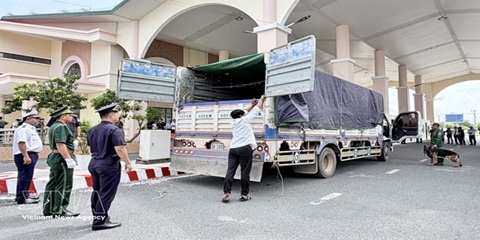
VIỆT NAM-CAMBODIA TRADE GATHERS PACE TOWARDS $20 BILLION TARGET
Trade between Việt Nam and Cambodia continues to grow, remaining a bright spot and a key pillar of bilateral cooperation as the two countries aim to raise two-way trade to US$20 billion in the coming years. After setting a record of more than $11.3 billion last year, bilateral trade reached about $8.7 billion in the first eight months of this year, up 8.3 per cent year on year.
VIETNAM ECONOMY INVESTMENT
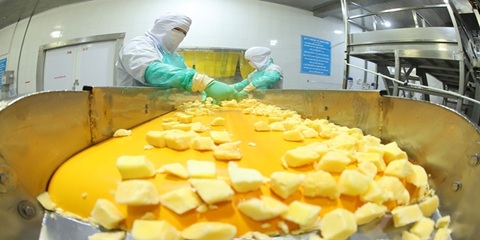
FRUIT AND VEGETABLE EXPORTS POISED TO HIT $10 BILLION IN 2026
Fruit and vegetable exports are on track to reach nearly US$10 billion in 2026, after rising 19.9 per cent year on year to nearly US$7.4 billion in the first nine months, driven by strong seasonal demand and abundant tropical fruit supplies. The Ministry of Agriculture and Environment said the growth reflected stronger international demand for fresh produce and processed agricultural products.
Events Sponsors