Want to be in the loop?
subscribe to
our notification
Business News
REAL ESTATE FDI SURGE SET TO CONTINUE
Vietnam’s recent real estate reforms are underscoring its commitment to modernisation, with new figures hinting at a promising trajectory.
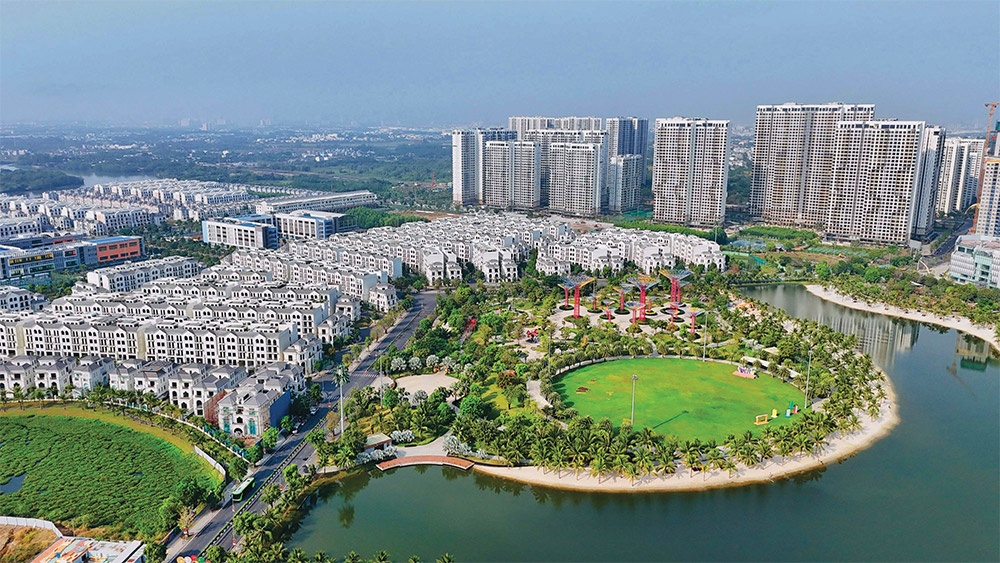
Recent venture commitments show that big corporations are willing to choose Vietnam for many reasons, Le Toan
Vietnam’s real estate business more than doubled on-year in the first half of 2025 to over $5.17 billion thanks to growing confidence, according to the latest figures released by the Foreign Investment Agency under the Ministry of Finance.
The sector accounted for 24 per cent of the country’s total registered foreign direct investment (FDI), which stood at over $21.5 billion.
According to Ivan Kalungi Clausen, co-founder of Civitas and House of Tech, while transitional challenges are expected, Vietnam’s recent reforms underscore its commitment to modernisation and long-term growth.
“This is a pivotal moment that will redefine Vietnam’s urban landscape and open up compelling opportunities for the real estate sector,” Clausen said.
Vietnam’s National Assembly reduced the number of cities and provinces from 63 to 34 as of July 1, marking a decisive reform aimed at building a more efficient two-tier local government system.
“This shift is expected to have a significant impact on urban planning and real estate development by streamlining bureaucracy and enhancing administrative efficiency, critical factors for large-scale projects,” Clausen cited.
For urban planning, he added, this signals a new era of cohesive regional strategies. Integrated provinces enable comprehensive master plans that transcend outdated boundaries, paving the way for interconnected urban centres, industrial zones, and transportation networks. This facilitates development of strategic economic corridors and logistics hubs, Clausen added.
The real estate implications are equally substantial. The creation of new urban hubs can drive demand across residential, commercial, and industrial sectors, resulting in larger and more vibrant economic centres.
Infrastructure-led growth, combined with streamlined governance, will accelerate key projects such as highways, railways, and ports, unlocking new development areas and increasing property values.
Unified planning will also allow for more strategic land use, optimising zoning for mixed-use developments, smart cities, and sustainable urban expansion, thereby unlocking significant value.
“Most importantly, the overall improvement of the investment climate, through greater transparency, administrative efficiency, and clear long-term urban visions, will substantially enhance Vietnam’s attractiveness to both domestic and foreign real estate investors,” Clausen said.
Ben Gray, partner and head of Capital Markets at Knight Frank Vietnam, said that existing active funds and investors continue to allocate capital into Vietnam.
“This trend is likely to continue over the next six months. I believe FDI disbursement will remain high this year despite ongoing concerns over potential US tariffs,” said Gray.
He also pointed out that while 30 per cent of Vietnam’s exports go to the United States, there remains real demand as companies restructure supply chains across Asia. The remaining 70 per cent of Vietnam’s exports are still bound for other promising markets.
“I expect FDI disbursement in Vietnam to remain strong. Recent project commitments show that global corporations are choosing Vietnam not only for its low costs, but also for its increasingly professional investment environment,” Gray said.
“Vietnam is intentionally moving from low-value manufacturing to higher-value-added sectors, in line with regional supply chain diversification trends. The domestic workforce is also being upskilled to meet new demands, helping the country maintain high industrial occupancy rates and stay attractive to long-term investors,” Gray added.
In terms of overall FDI sources, Singapore remains the top investor in Vietnam’s real estate market, followed by South Korea, China, and Japan. Singapore’s CapitaLand Development in June launched its first low-rise residential project in northern Vietnam, the $800 million Fullton, a 25-hectare luxury enclave in the Vinhomes Ocean Park 3 in the northern province of Hung Yen.
Its initial phase, The Fullton Edition, will introduce 342 residential units in 2026, with approximately 350 additional residences to follow in the second phase, scheduled for completion in 2027.
Meanwhile, the CapitaLand SEA Logistics Fund, the investment arm of CapitaLand Investment, in June signed a land use right sublease agreement to develop Avatar Vietnam, its first ready-built factory development within Song Khoai Industrial Park, developed by Thailand’s Amata Corporation. CapitaLand Investment will invest $23.3 million to develop the 6.4-hectare Avatar Vietnam site, which will feature eight factories and supporting facilities. The first zone is projected to be ready for construction to start by the end of 2025, with operations to commence by 2027.
Malaysia has emerged significantly in the list of large foreign investors into the Vietnamese market, particularly through Gamuda Land with of a series of quick-return residential projects in Vietnam, in addition to its two townships of Gamuda Gardens in Hanoi and Celadon City in Ho Chi Minh City.
Source: VIR
Related News

MEMBER CORNER / PROMOTIONS
AN ELECTRIFYING NIGHT WITH THE "QUEEN OF DANCE" THU MINH AT THE GRAND HO TRAM!
The stage at The Grand Ballroom is set to catch fire as Vietnam’s undisputed "Queen of Dance," Thu Minh, takes the spotlight. Renowned for her powerhouse vocals, magnetic stage presence, and sultry, high-energy performances, Thu Minh promises an evening of pure musical euphoria. The energy escalates with an exclusive appearance by special guest and The Voice champion, Vu Thao My.
HR / LABOUR/ EMPLOYMENT
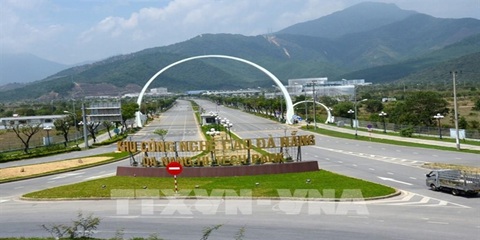
HIGH-QUALITY HUMAN RESOURCES NEEDED TO ATTRACT NEW TECH INVESTMENT CAPITAL
Besides infrastructure, Việt Nam must also rapidly develop a highly skilled workforce to attract investment in AI, semiconductors and advanced manufacturing, experts have said. Don Lam, CEO and co-founder of investment management company VinaCapital, said that global technology investors were increasingly looking at the readiness of the entire ecosystem, with high-quality human resources a decisive factor.

HR / LABOUR/ EMPLOYMENT
HIRING OUTLOOK STRENGTHENS IN Q4 AS SKILLS SHORTAGES PERSIST
Hiring intentions among employers in Việt Nam strengthened in the fourth quarter, with 52 per cent of surveyed companies planning to increase headcount between October and December, according to a ManpowerGroup survey released this week. Việt Nam's hiring outlook was stronger than the Asia Pacific and Middle East (APME) regional average of 33 per cent and the global average of 29 per cent, ranking third in the region and 11th globally among 42 markets surveyed.

BANKING / FINANCE / INSURANCE / TAX
LARGE BANKS FORECAST TO GAIN HIGHER PROFITABILITY IN H2 2026
The return on average assets (ROAA) of the banking sector will likely remain stable at around 1.5 per cent in the second half of 2026, but profitability divergence among banks will increase, with large banks outperforming peers on stronger margins and diversified earnings, analysts forecast. In a recent report on the banking sector, analysts from the Vietnam Investors Service Rating said the sector’s ROAA rose by 10 basis points quarter-on-quarter to 1.51 per cent in the first half of this year, driven by net interest margin (NIM) improvements at some State-owned banks and large private banks.
GARMENT / TEXTILE
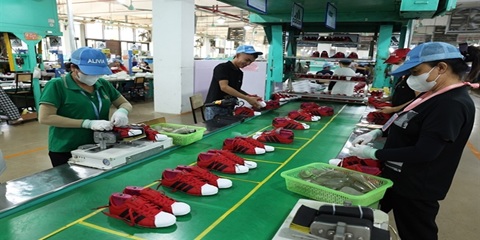
VIỆT NAM'S FOOTWEAR, BAG EXPORTS TO US TOP $8 BILLION IN EIGHT MONTHS
Việt Nam's exports of footwear and handbags to the US exceeded US$8 billion in the first eight months of 2026, as the US and EU remained the country's biggest markets despite sluggish growth in footwear shipments. Exports from Việt Nam's leather and footwear sector reached more than $2.45 billion in August, down 9 per cent from July but up 3 per cent from a year earlier, according to preliminary statistics.
VIETNAM ECONOMY INVESTMENT
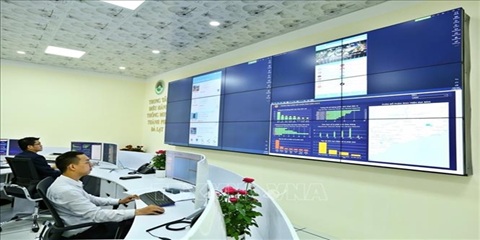
LÂM ĐỒNG TARGETS DIGITAL ECONOMY TO ACCOUNT FOR 30 PER CENT OF GRDP BY 2030
Lâm Đồng Province aims to raise the digital economy’s contribution to around 30 per cent of its gross regional domestic product (GRDP) by 2030, as part of a five-year plan to develop digital economy and society issued recently. Under Plan No. 15358/KH-UBND, the province targets more than 60 per cent of small- and medium-sized enterprises (SMEs) to adopt digital technologies by 2030 while increasing the value of cashless payments to 30 times its GRDP.
Events Sponsors






















