Want to be in the loop?
subscribe to
our notification
Business News
PUBLIC FUNDING A LIFELINE FOR CONSTRUCTION AMBITIONS
Public investment is being deemed a lifeline for construction materials manufacturers such as cement and steel producers, which are currently under mounting pressure from fierce competition and shrinking export markets.
Vietnam’s construction sector was anticipated to enter a more promising growth phase this year, following two challenging years marked by a stagnant real estate market, legal bottlenecks, and capital shortages.
A key driver behind this anticipated rebound is the surge in public infrastructure projects, most notably the North-South High-Speed Railway, estimated to require a staggering $67 billion in investment.
Of that, the construction component alone could account for up to $40 billion, unlocking major opportunities for domestic contractors and thousands of subcontractors.
Nguyen Quoc Hiep, chairman of the Vietnam Association of Construction Contractors, projected that the railway undertaking could be split into more than 20 bidding packages corresponding to planned stations, with each package worth approximately $2 billion.
“More than just the financial upside, the project offers Vietnamese contractors a valuable chance to grow in management and adopt advanced construction technologies,” Hiep said.
In April, the government issued Resolution No.77/NQ-CP, which tasks the Ministry of Construction (MoC) with devising policies to stimulate domestic consumption of materials like cement and steel, including a potential tax reduction on clinker.
Experts believe this high-level policy attention could serve as a much-needed catalyst. Long remarked that Vietnam still lags in cement usage, with current consumption below 650kg per capita, compared to over 1,000kg in countries with GDP per capita exceeding $4,000.
Vo Quang Diem, chairman of the Vietnam Roofing Sheet Association, acknowledged ongoing challenges for the industry but voiced optimism about domestic demand. The association aims to boost production and sales of fibre cement roofing sheets by 5-6 per cent annually.
“With Resolution 77 in place, I am confident the policy environment will become more predictable, allowing enterprises to focus on investment and quality manufacturing,” Diem said.
The MoC forecasts domestic cement demand in 2025 to rise by 2-3 per cent on-year to 95-100 million tonnes, including 60-65 million tonnes for local consumption and the rest for export.
Luong Duc Long, vice chairman and secretary general of the Vietnam Cement Association, noted that public investment, particularly in transport and infrastructure, continues to provide positive signals for cement production and consumption, although a more visible growth is expected in the second half of 2025.
“Vietnam’s cement consumption has yet to peak and is likely to do so around 2031. The industry still has room to grow, especially as newer plants with modern production lines and energy-saving technologies outperform outdated facilities in both efficiency and cost,” Long said.
To address material supply challenges, especially the shortage of sand in southern provinces, authorities are considering the construction of viaducts to replace embankments. Additionally, the MoC has proposed export tax cuts on cement, with the prime minister assigning the Ministry of Finance to review the proposal. If approved, this could further boost domestic consumption in 2025.
According to Vietnam Report, construction materials positioned at the end of the real estate, construction, supply chain are highly sensitive to macroeconomic trends. Enhanced public investment and infrastructure upgrades are anticipated to be major growth enablers for material producers. However, price volatility remains a pressing concern. Between the start of 2019 and February this year, housing and material prices surged over 25 per cent.
As of early 2025, prices appear to have stabilised, with steel hovering around VND13,800 (50 US cents) per kilogramme and cement ranging from VND70,000-220,000 ($2.70-8.50) per tonne. Sand prices continue to climb by 5-15 per cent. This relative price stability has enabled construction projects to resume momentum, yet the materials sector still requires new growth drivers through pricing control and tapping infrastructure-led demand.
Viglacera, a major player in the sector, projects the real estate market will transition into a stable, sustainable growth stage, led by mid-end apartments, social housing, and industrial real estate. The company targets consolidated net revenue of $577 million in 2025, up 21.3 per cent on-year, and pre-tax profit of $69.7 million, up 7 per cent.
Vicem Ha Tien, another key cement producer, also expects a brighter outlook for 2025, spurred by governmental efforts to resolve sector bottlenecks and improving market dynamics in late 2024. The company aims for a 206 per cent jump in after-tax profit, reaching $7.36 million.
Despite some optimism, the steel sector faces a more complex landscape. The World Steel Association forecasts global steel demand to grow modestly by 1.2 per cent to nearly 1.8 billion tonnes in 2025. Yet, the market remains unpredictable due to a mix of global uncertainties.
Pham Cong Thao, deputy general director of Vietnam Steel Corporation, noted that the ASEAN steel market continues to struggle with slow demand and mounting pressure from Chinese exports.
“Several new steel plants coming online in Southeast Asia have further intensified competition,” Thao said. “Still, as Vietnam pursues urbanisation and large-scale projects like high-speed rail, seaports, and urban zones, construction steel demand is expected to grow steadily at 5-7 per cent annually, buoyed by both domestic and export needs.”
Source: VIR
Related News

BANKING / FINANCE / INSURANCE / TAX
REMITTANCES TO HCM CITY RISE NEARLY 40% IN Q3
Remittances to HCM City reached more than US$2.83 billion in the third quarter of this year, up 39.5 per cent from the previous quarter and 3.6 per cent year-on-year. This was the first quarter showing positive annual growth this year, helping narrow the decline in remittance inflows over the first nine months. According to the State Bank of Vietnam (SBV)’s Regional Branch 2, remittances transferred to HCM City through credit institutions and economic organisations totalled $2.835 billion in Q3, an increase of more than $802 million from the previous quarter.

TECHNOLOGY
TECH SECTOR GROWTH OPENS UP OPPORTUNITIES FOR VIỆT NAM TO GO GLOBAL
The growth of the electronics, semiconductor and high-tech sectors worldwide is opening up a variety of opportunities for Vietnamese enterprises to integrate more deeply into the global supply chain. However, to become suppliers for these corporations, domestic enterprises must meet rigorous standards regarding quality, technology, productivity and order fulfilment capabilities.
VIETNAM ECONOMY INVESTMENT
FOREIGN INVESTORS SEEKING A SYNCHRONISED MANUFACTURING ECOSYSTEM
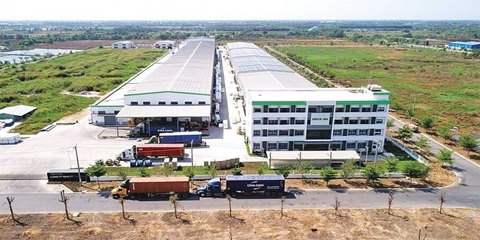
Instead of focusing only on land costs and incentives as usual, foreign investors are seeking a synchronised manufacturing ecosystem, from stable power supply and logistics to shared infrastructure and the convenience of completing residence procedures for experts to serve their long-term investment in the country.
MEMBER CORNER / PROMOTIONS
SENTRYSAFE FHW40200 – PROTECT YOUR VALUABLES, ENJOY PEACE OF MIND!
Looking for a reliable solution to protect your important documents, cash, and valuables from fire and water damage? Genuine SENTRYSAFE - Reliable protection for your valuables and peace of mind! Contact Sen Wai Vietnam for more information and personalized product recommendations.
PROPERTY / INDUSTRIAL ZONE
HCM CITY ATTRACTS US$5.7 BILLION INTO EXPORT PROCESSING AND INDUSTRIAL ZONES
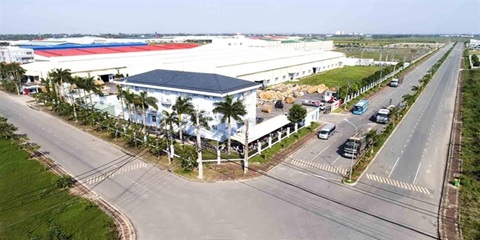
HCM City attracted US$5.7 billion in domestic and foreign investment into its export processing and industrial zones during the first nine months of 2026. The figure exceeded the city's full-year target by 31 per cent, highlighting strong momentum in high-quality industrial investment under Resolution No.10-NQ/TW. Total investment reached 131 per cent of the 2026 target of $4.25 billion and represented a 29 per cent increase compared with the same period in 2025, according to the city's Export Processing and Industrial Zones Authority (HEPZA).
INFRASTRUCTURE / CONSTRUCTION / LOGISTIC / PORT
DONG THAP PROVINCE STEPS UP INDUSTRIAL EXPANSION AND INFRASTRUCTURE CONNECTIVITY
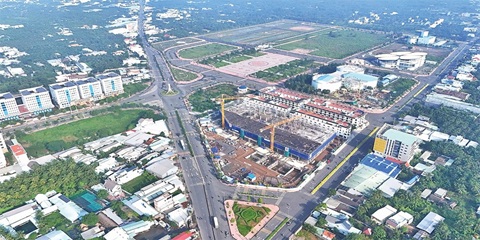
Accelerating public investment, strengthening inter-regional connectivity, and expanding industrial land are helping Dong Thap efficiently bolster competitiveness and drive economic growth. Following the 2025 merger of the former Dong Thap and Tien Giang provinces, the expanded Dong Thap province in the Mekong Delta faces mounting pressure to accelerate infrastructure development and strengthen connectivity among local economic zones, urban areas, industrial parks (IPs), and production centres.
Events Sponsors






















