Want to be in the loop?
subscribe to
our notification
Business News
PROSPECTS REMAIN BRIGHT OVER DENTED REMITTANCE INFLOWS
After years of constant rise, inward remittance volume to Vietnam slightly retreated last year, but remained at a fairly significant level.
Based on forecasts from the World Bank as well as information from commercial banks and organisations working on inward remittance transfer, the inward remittance volume to Vietnam may have reached as much as $15.5 billion in 2020, placing the country ninth among the top 10 inward remittance recipients worldwide. Vietnam averaged a 35.6-per-cent hike a year during 2016-2020 compared to the 2011-2015 period.
The figure more than tripled since 2000-2010 and shot up by nearly 22 times compared to 1993-2000.
The overseas remittance volume to Vietnam last year was almost 110-fold compared to that in 1993, the first year such information in the country was notified. Since 1993, Vietnam received around $182.65 billion worth in total inward remittance, averaging $7.084 billion annually.
Overall in the past decade, except in 2009 during a global financial crisis and 2020’s woes with COVID-19, inward remittance to Vietnam saw an on-year constant rise. The inward remittance structure has also been transforming in a positive direction, with capital volume mainly coming from overseas Vietnamese and from the country’s labourers sent abroad on contract for work.
About 4.5 million overseas Vietnamese are living in about 100 countries and territories, concentrating in developed nations with a high level of per-capita GDP such as the US, Australia, Canada, France, and Germany.
About 3,000 businesses run by overseas Vietnamese have been operating abroad with a total capital injection amounting to $4 billion.
In addition, about 580,000 Vietnamese labourers are working abroad in diverse fields such as construction, manufacturing, agriculture, fisheries, and elderly care, among others.
The money that contracted labourers have sent back home amount to about $3-4 billion per year, accounting for around 20 per cent of total inward remittance volume to Vietnam. The average monthly income of these labourers comes to around $1,000, depending on the market. For instance, it ranges from $1,200-1,400 per month in South Korea, or from $700-800 per month in Japan.
The nations topping the list with the biggest amount of inward remittance to Vietnam are the US followed by Australia, Canada, Germany, South Korea, France, and Saudi Arabia.
Policy support is deemed the key reason for the constant rise in inward remittance volume. Up until now, two positive points in the legal aspect are noted. Firstly, the recipients are not required to pay personal income tax as applied to other kinds of personal income that is regarded as an advantage compared to many other countries.
Secondly, the recipients can decide on receiving the money in the original currency or converting it into VND to use or to later deposit into banks.
Since the interest rate of VND-denominated deposits is set higher compared to that of deposits in foreign currency, and remains positive over time, recipients often convert the money into VND for use.
Another favourable factor is service facilitation by organisations providing inward remittance transfer, plus a stable exchange rate situation in the domestic market.
Lower volume of inward remittance to Vietnam in 2020 was mainly due to impacts of COVID-19 which is plaguing countries around the world, particularly those which accommodate big volumes of Vietnamese guest workers under long-term contracts. This cash flow, however, is expected to bounce back in the following years after the pandemic impacts are lessened thanks to vaccine advances.
Source: VIR
Related News

BANKING / FINANCE / INSURANCE / TAX
REMITTANCES TO HCM CITY RISE NEARLY 40% IN Q3
Remittances to HCM City reached more than US$2.83 billion in the third quarter of this year, up 39.5 per cent from the previous quarter and 3.6 per cent year-on-year. This was the first quarter showing positive annual growth this year, helping narrow the decline in remittance inflows over the first nine months. According to the State Bank of Vietnam (SBV)’s Regional Branch 2, remittances transferred to HCM City through credit institutions and economic organisations totalled $2.835 billion in Q3, an increase of more than $802 million from the previous quarter.

TECHNOLOGY
TECH SECTOR GROWTH OPENS UP OPPORTUNITIES FOR VIỆT NAM TO GO GLOBAL
The growth of the electronics, semiconductor and high-tech sectors worldwide is opening up a variety of opportunities for Vietnamese enterprises to integrate more deeply into the global supply chain. However, to become suppliers for these corporations, domestic enterprises must meet rigorous standards regarding quality, technology, productivity and order fulfilment capabilities.
VIETNAM ECONOMY INVESTMENT
FOREIGN INVESTORS SEEKING A SYNCHRONISED MANUFACTURING ECOSYSTEM
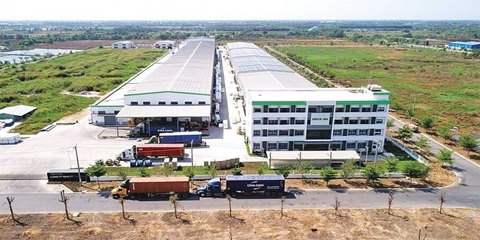
Instead of focusing only on land costs and incentives as usual, foreign investors are seeking a synchronised manufacturing ecosystem, from stable power supply and logistics to shared infrastructure and the convenience of completing residence procedures for experts to serve their long-term investment in the country.

MEMBER CORNER / PROMOTIONS
SENTRYSAFE FHW40200 – PROTECT YOUR VALUABLES, ENJOY PEACE OF MIND!
Looking for a reliable solution to protect your important documents, cash, and valuables from fire and water damage? Genuine SENTRYSAFE - Reliable protection for your valuables and peace of mind! Contact Sen Wai Vietnam for more information and personalized product recommendations.
PROPERTY / INDUSTRIAL ZONE
HCM CITY ATTRACTS US$5.7 BILLION INTO EXPORT PROCESSING AND INDUSTRIAL ZONES
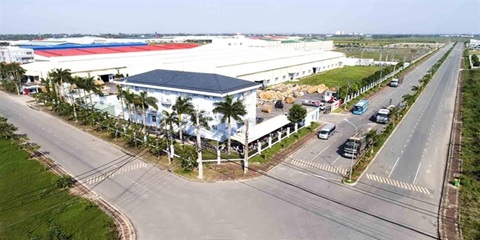
HCM City attracted US$5.7 billion in domestic and foreign investment into its export processing and industrial zones during the first nine months of 2026. The figure exceeded the city's full-year target by 31 per cent, highlighting strong momentum in high-quality industrial investment under Resolution No.10-NQ/TW. Total investment reached 131 per cent of the 2026 target of $4.25 billion and represented a 29 per cent increase compared with the same period in 2025, according to the city's Export Processing and Industrial Zones Authority (HEPZA).
INFRASTRUCTURE / CONSTRUCTION / LOGISTIC / PORT
DONG THAP PROVINCE STEPS UP INDUSTRIAL EXPANSION AND INFRASTRUCTURE CONNECTIVITY
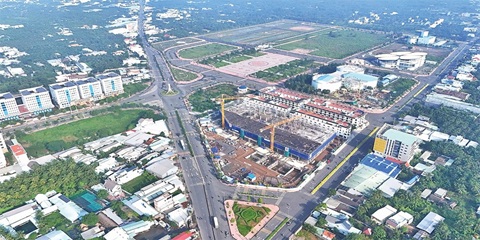
Accelerating public investment, strengthening inter-regional connectivity, and expanding industrial land are helping Dong Thap efficiently bolster competitiveness and drive economic growth. Following the 2025 merger of the former Dong Thap and Tien Giang provinces, the expanded Dong Thap province in the Mekong Delta faces mounting pressure to accelerate infrastructure development and strengthen connectivity among local economic zones, urban areas, industrial parks (IPs), and production centres.
Events Sponsors






















